Searching for meaning after a year away from La Salle

Commentary

Alina Snopkowski, Editor

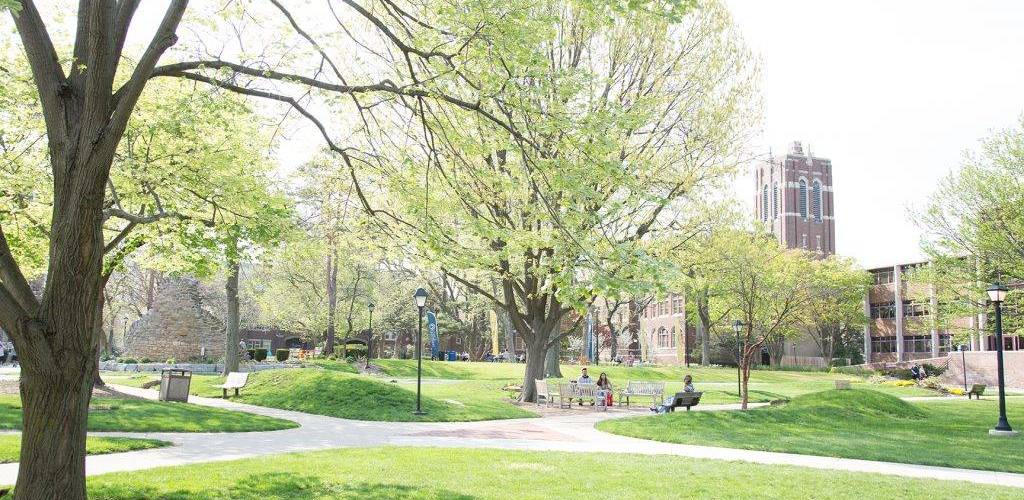
Header Image: lasalle.edu

My friends and I had a conversation the other day lamenting what we missed and what we missed out on over this past year since none of us were on campus. We talked about dinners at B&G, the recycling situation at the townhouses and the Late Night La Salle events we used to attend. Every week on Wednesdays, I remember the long nights (trapped) in the basement of the Union, editing the Collegian with a buffalo chicken Subway sub beside me while Bianca cloncked around the room in her high heeled boots throwing around ideas for the editorial. Every so often, a professor or student in one of my classes will begin a sentence with “Well, back when we were on campus,” or “So, if we were still on campus, we could” and I remember the “good old days” back when we could talk face-to-face and chat in the hallways before classes and office hours were “just show up” and not “wait for me to email you a Zoom link.”

And then I get all sad about it. I think it’s pretty easy to get into that sort of mindset. I think it’s pretty justified. I can’t lie and say there haven’t been times where I think about everything I did freshman year or the beginning of sophomore year and I’m hit with “wait a second, did I just lose an entire year of college?”

Did I? Did we?

I think the answer is no. But I also think I understand why I (and a whole lot of other people) think that’s not the case.

I don’t need to go on and on about how these aren’t ideal circumstances for anyone, how this has been hard on all of us, how this has certainly affected some people and some situations more than others. We all know it and have heard it before. This article isn’t supposed to be a rehashed sob story or some cheesy “It’s all alright!”

I guess I’ve just been feeling dejected. I think the end of the semester will do that to you in general, but I suppose I should’ve expected it more now, when we can’t pull all-nighters in the Connelly Library or beg the printers in Wister Hall to work because please, please, it’s 8:27 a.m. and my philosophy class is on the third floor and I still have five pages that haven’t made it off of the computer yet.

And so I’m looking for something. I’m not sure what, exactly. Probably a sign, like I usually am, because I’m big on signs. Some sign that this past year and change wasn’t a total wash (I know it wasn’t, somewhere in my real brain — I still learned and experienced a lot of things, both academically and not — but my emotional brain is still wishing I was playing bingo in the Union Ballroom or eating chicken nuggets with my roommates at Treetops or just existing around a community of other people who aren’t my family or my coworkers).

So here are my end of the semester thoughts: I’m searching for something. Maybe it’s guidance, maybe it’s a more specific sense of purpose, maybe it’s some sort of direction or explanation. I’m not sure what it is, exactly; I just know I’m seeking something that I feel like I’m missing.

And in a religion class last night, where the topic was spirituality, religion and those who drift away (and sometimes come back) to organized faiths, Brother Mike posed a question about the intrinsic value of that looking for something, both within and outside of organized religious traditions.

And he said something that I think applies not only to religious searching but to searching for meaning, anywhere and everywhere and especially now:

“The search is part of the experience.”

Which states have the most say in elections? It depends on how you count.

Politics

Alina Snopkowski, Editor

With the talk about Washington, D.C. possibly becoming its own state, conversations have arisen about D.C., which traditionally votes strongly Democratic, gaining its own senators and representatives. “Taxation without representation” (or, in some cases, “end taxation without representation”) is the slogan on D.C. license plates, and a reason often given for why D.C. should have representatives in Congress. But with a population greater than only Vermont and Wyoming, D.C.’s representation in congress, which would almost certainly mean two more Democratic senators and an additional Democratic representative, means many Republicans are opposed to the plan.

Writer’s note: There would still be 435 representatives, but D.C. would get one, which means another state would lose one of theirs. To be honest, I’m not sure how they calculate that, and it’s not really the point of this article, so I’m not going to go into it here.

But how valid are these claims, anyway? And are there states that are better off than D.C. in terms of how many votes they get compared to the size of their population? I was curious.

So, using the 2019 state population estimates from the U.S. Census Bureau (the most recent numbers available) and some Excel tables, I determined which states get the most “bang for their buck,” so to speak, in terms of how much of their population is represented by a single representative in the House of Representatives and electoral vote in presidential elections. Here’s what I found.

How many people are represented by one electoral vote?

Image by Alina Snopkowski, created with mapchart.net

Here, I divided the state’s total population by the number of electoral votes that state (and D.C.) gets. I used the total population, not the voting-age or voting-eligible population. Oftentimes the claim arises that the electoral college favors the states with smaller populations and gives them more than their ‘fair share’ of electoral votes, which appears to be pretty true — large states such as California and Texas have over 700,000 people to each electoral vote, while Wyoming has less than 200,000 — but, as shown in the map above, some states are certainly ‘better off’ under this system than others.

Which states are above and below average for representation per electoral vote?

Image by Alina Snopkowski, created with mapchart.net

By dividing the country’s total population by 538, the total number of electoral votes, I got the average amount of people that one electoral vote would represent if these votes were allocated based on that system (if you’re curious, it comes out to about 610,000 people per electoral vote). The above map shows which states are currently above and below that average.

In 2020, which party got more votes than they ‘should have?’

Image by Alina Snopkowski, created with mapchart.net

Here’s where it gets interesting. To find the numbers for this map, I divided the state’s total population by the average-per-vote number I found earlier (the ~610,000). By subtracting the state’s actual number of allocated electoral votes from that new number, I was able to see how many votes each state would get if they were divided up this way. Using this system, each state would get at least one vote (we’d have to round up just a little bit for Wyoming, since the state’s population is less than 610,000), and some would get many more — Texas and California would both gain ten votes, bringing their totals from 38 to 48 and 55 to 65, respectively.

The above map compares the current system for dividing electoral votes with the division system I used and breaks down which states, by party, received more or fewer electoral votes in the real 2020 election than they would have using the other system. For example, in the current system of allocating electoral votes, Pennsylvania gets 20. If these votes were divided up using the ~610,000 number, Pennsylvania would have roughly 21 electoral votes — a difference of one that, in 2020, would have gone to the Democrats. In Delaware the situation is opposite — the state currently has three electoral votes, but with the other calculations it would get two, which means the Democrats in 2020 got an ‘extra’ vote there.

When all these ‘extra’ and ‘missing’ votes are tallied up, states that voted Republican in 2020 had about 21 ‘extra’ votes and about 19 ‘missing’ ones. For states that voted Democrat in 2020, they were ‘missing’ about 20 and had about 18 ‘extra.’

Note about Nebraska and Maine: These states split their electoral votes instead of having a winner-take-all system, and I wasn’t sure how to deal with that. Nebraska’s votes were 4 republican and 1 democrat and Maine’s were 3 Democrat and 1 Republican, and each state has one ‘extra’ vote, so I just factored Nebraska into the Republican count and Maine into the Democrat one).

How many people are represented by each state’s representatives in the House?

Image by Alina Snopkowski, created with mapchart.net

Last but not least, let’s go back to D.C. I did the math on this one in the same way as the first electoral college map: total population divided by number of representatives in the House. I found this one a little bit perplexing — Delaware and Montana are at the bottom of the list with the most people ‘sharing’ a representative, and, while Wyoming is, not surprisingly, again in the category with the fewest people to one representative, West Virginia, which also had a fairly low number of people to one electoral vote, but not that low, is also included at a similar level as Wyoming in this map. The state with the fewest people to each representative is actually Rhode Island, with about 530,000 people sharing a representative. Montana, at the opposite end, has a whopping 1,068,778 people for their sole representative.

Where does D.C. fall into all of this? If D.C. got one representative, the district’s population of about 706,000 would all be represented by that single person — putting it in twelfth place overall when states are ranked by the fewest-to-highest number of people accounted for by their representatives.

So, what’s the point of all of this information? Really, I just like math and maps and was curious about how the states compare to each other. I’m not a political scientist and I’m not suggesting we change the current electoral college allocation system to the one I used for my calculations, but I do think it’s interesting to think about.

Writer’s note: If you’re interested in any of my numbers and whatnot, email me and I’ll send you the Excel spreadsheet.

Do you smoke in grocery stores?

Commentary

Alina Snopkowski, Editor

Fair warning: this article isn’t about smoking or grocery stores, at least not really. It’s about the rules and requirements that businesses have in place, and why being asked to wear a mask in certain places shouldn’t be a big issue.

For those of you who like charts and statistics, this site tracks, among other things, what percentage of the country’s population says they always wear a mask in public; here is the specific page for the state of Pennsylvania. In Delaware, where I am currently living and working, the last updated numbers show that a little over 80% of the people in the state say they always wear a mask in public. In the restaurant where I work, the vast majority of customers come in with their masks on or, if they forget, a simple “do you have a mask you can wear while you’re inside?” has them immediately scrambling in their pockets or purses to find their masks and put them on. When I’m working at the register up front, it’s my responsibility to make sure people are following the rules when they come in, and most customers are totally fine with it. A few months ago a man grumbled “are you serious? This is America” before reluctantly putting his mask on after I reminded him, but, for the most part, people are completely on top of the requirements.

And then here comes Paula (not her real name, of course, although I doubt anyone would be able to find her anyway). Paula calls and orders some food for takeout and I tell her it’ll be ready in about ten minutes. When she arrives, she’s not wearing her mask. We have signs on the windows but people forget. “Good morning,” I say, “do you have a mask you can wear while you’re in here?”

Paula flatly says “no.” Before I can say anything else, she launches into “it’s against the Constitution, so I’m not going to wear one. I don’t want to live in a communist country.”

I’ll be on record here and now saying I don’t particularly want to live in a communist country, either. But I don’t think asking someone to wear a mask while within a business that requires it is communism. The restaurant I work at didn’t invent these rules, but we have to follow them if we want to stay open. 99 percent of people understand this.

Back to Paula. She’s shoving her money at me and grabbing the plastic bag of her food off the front desk. “We appreciate you coming in but you have to wear a mask,” I say, probably a little meekly, because I was kind of rattled at the communism comment, “we have to follow these rules or we could get in trouble.”

“It’s not real, sweetheart,” she says, in the kind of tone that one might use to correct someone who said the moon is made of cheese, “wake up.”

And then she’s gone.

The whole interaction lasted barely a minute and the front desk is far over six feet away from any of the tables, so I doubt any customers even heard the conversation. But for the rest of the morning I was thinking about what else I should have said:

Do you smoke in grocery stores?

If there’s a sign on a store that says “no shoes, no shirt, no service,” do you walk in anyway in your bare feet and then get angry when they tell you to put some shoes on or leave? Or, more likely, do you not even bat an eye, because businesses having some level of requirements on what’s allowed (and not allowed) in their buildings is completely reasonable?

I don’t need to say that small businesses are struggling in this pandemic. We all know it. I also don’t need to say that these rules don’t necessarily come from us — usually a governor tells us what we have to do — but we’re required to follow them and enforce them in order to stay open. By patronizing a particular business, you pretty much agree to follow the rules while you’re on their premises. I don’t want to tell Paula not to come back, but the fact is she’s not allowed in if she refuses to wear her mask. I suppose it’s her right not to wear one, but it’s our responsibility not to let her in if she doesn’t. I, like most people, am looking forward to the day where we don’t have to wear masks anymore. But for the time being, this is the situation we have to deal with.

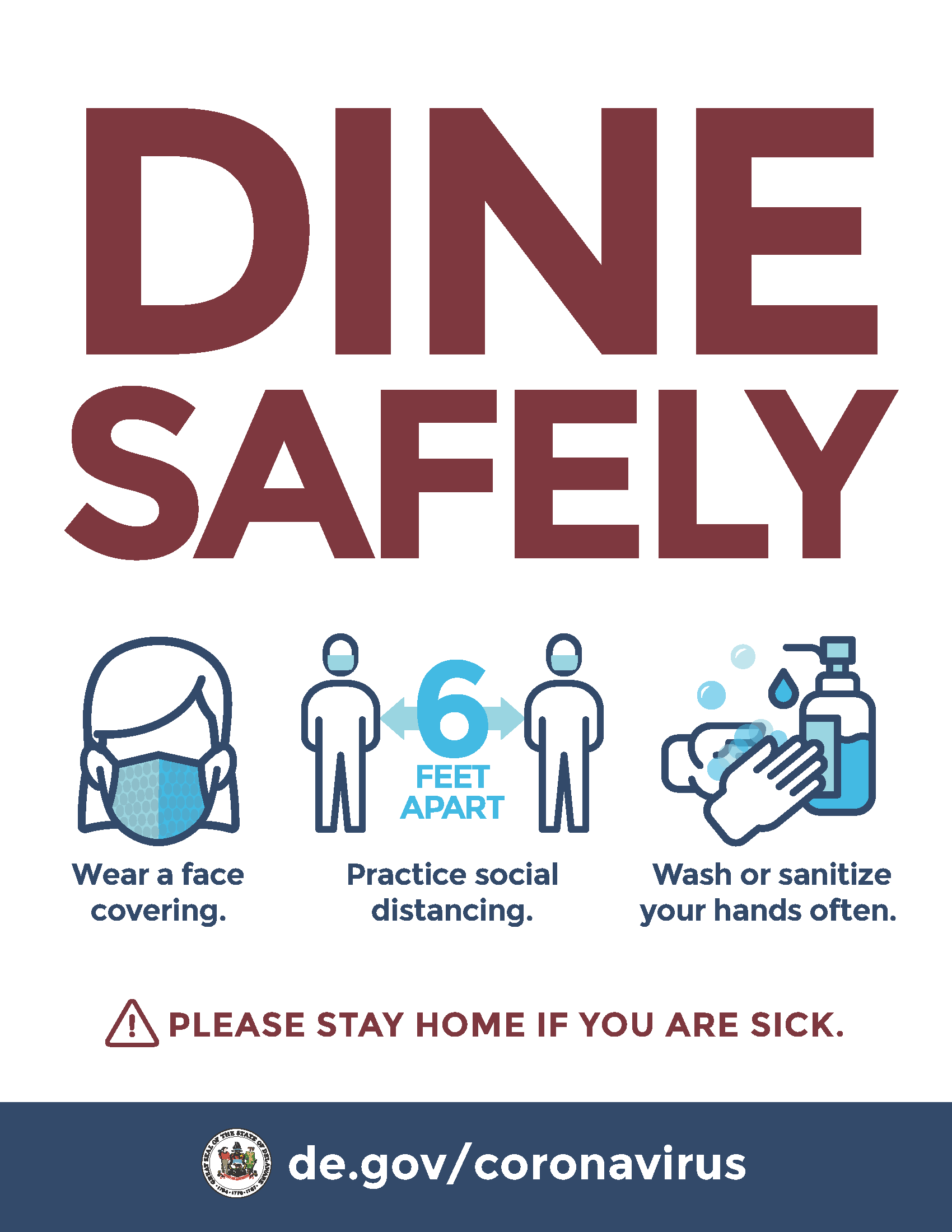
Delaware.gov

Signs like this one are on display in many restaurants in Delaware.

So, forgive me for the clickbait title for this article, but I want you to think about this mask situation not as ‘communism’ or some sort of infringement on personal freedoms but in this way — how different is it, really, from being told you must wear shoes in a particular store or that you can’t smoke in certain places? For the time being, “no mask, no service” has been added to these commonplace requirements. You’re allowed to spend your money and your time wherever you see fit, but if there’s a rule at a place you want to go to, you have to follow it. If you don’t want to, you can choose to go somewhere else. Small businesses are hurting enough — please don’t make it any more difficult by refusing to follow simple, clearly posted requirements.

And, believe it or not, Paula came back about a week later. She called again one morning, I recognized her name on the caller ID on the phone, and her order was identical to last time’s. I tell her ten minutes, give or take, and I wait at the front desk watching the parking lot for her car.

She pulls up and parks, then sits in her car for what seems like ten more minutes checking something on her phone. She isn’t wearing a mask yet. Okay, fine, she’s still in her car. She opens her door. Still no mask. Crosses the parking lot. Still no mask. I’m ready now — I’m prepared to tell her to go back outside, that she can give me her money out on the sidewalk and I’ll bring her food out to her there, but I can’t let her into the building.

And then, at the very last second, she pulls a mask up from around her neck. She gives me her money and takes her food and that’s that.

I don’t know why she changed her behavior, but I’m glad she did.

We won’t have to wear masks forever. One of my favorite websites at the moment is this one by Bloomberg, which estimates how long it’ll take to vaccinate 75 percent of the country’s population based on the current speed of vaccinations. Last I checked, they’re clocking it at about six months. That’s a while, but it’s certainly not forever.

Someday this will all be over, but until then, I ask you to please support your local small businesses in any way you can — and that includes wearing a mask.

snopkowskia1@lasalle.edu

Write a story

Commentary

Alina Snopkowski, Editor

Let me set the scene:

It’s late March or early April, 2020. The coronavirus “everyone leave school, go home, and stay there” has been going on for a little while. My parents, both employees of different school districts, are more or less working completely virtually. Everyone is trapped inside with nowhere to go and not much to do. Somehow my mom stumbles across an advertisement in a southern Delaware newspaper about a ‘beach mysteries’ themed short-story writing contest.

My parents do not describe themselves as writers. They write, of course — things like reports, presentations and professional emails — but not short stories. But they want to enter this contest, partially for bragging rights and partially for a chance at the $500 grand prize. So they write, creatively, for the first time in who knows how long. Each comes up with an idea for what they consider a ‘beach mystery.’ My three sisters and I read these stories with multicolored pens in hand and ask questions like “what does this mean?” and “why did she think that?” and “what’s the point of this story, really?”

From April through the end of June, we lived and breathed these stories (we can still recite lines of them from memory). The competition was against all those other nameless people who would be submitting their own short stories to this contest, but if you asked anyone in my family, the real competition was between my parents, because each was convinced their story was going to win the $500 grand prize and be featured in the book of winners.

Neither of my parents’ stories won first prize. Neither story even ended up in the top twenty and included in the book. That could’ve been the end of it — “we tried, we didn’t win, this proves we aren’t “real” writers.”

But, for the next few months, both of my “non-writer” parents kept writing short stories. I started to see some common themes in their writing. My mom writes about family, commitment and dreams. My dad writes about memory, obligation and responsibility. Both write about the connections between the past and the present. Sometimes they brought their stories to me for critique, but sometimes I had to ask them if I could read what they’d written, because they were writing for themselves — because they’d found something they wanted to say.

So here’s my proposal: find the time to write. Even if — especially if — you don’t consider yourself a “writer.” We all have to write papers and slideshows and discussion board replies. That’s a completely different type of writing. Write something for yourself. Write something you’d like to read. Even if you don’t think you know the “right” way to do it. We’ve all read at least one book in our lives. We’ve all watched movies and TV shows and know what a story is. You don’t need to write a novel. It’s probably better if you don’t, at least to start. Write a page of short story. That’s all.

I’m not trying to stress anyone out, or take time away from your schoolwork, or add another “assignment” to what probably seems like an endless pile of things to do. Just the opposite, really. I want you to write a short story because it’s a “reset button” from all the academic writing we have to do. I want you to take some time on a day you don’t have much classwork to do, or a Saturday you have off from work, or the time you usually spend mindlessly browsing social media to write a short story. If you want some more structure or inspiration, an online search for “writing prompts” will give you anything from phrases to lines of dialogue to single words or objects to base stories around. See where that takes you. There’s a nice feeling of accomplishment when you finish writing a short story — “I did this. I said something.”

You might learn more about yourself, too. Everyone is drawn to something — some idea or question or experience. You might notice that the same sorts of things keep showing up in your writing, and then you can ask yourself why. “What is it about these things that just gets to me?” Writing can bring both relaxation and self-reflection.

So, if you can, find the time to clear your mind and think of just one thing:

“What do I want to say?”

snopkowskia1@lasalle.edu

I think I’m doing Lent wrong

Commentary

Alina Snopkowski, Editor

The “What are you giving up for Lent this year?” conversation in my family is always fun because there’s always someone we think is playing the system and giving up something the rest of us don’t think is “enough.” It’s like the whole experience is some sort of competition of who can be the “best” Catholic. “I’m going to give up YouTube,” one of my sisters says. “You watch maybe one YouTube video a week,” someone replies. “I’m gonna give up ice cream,” my brother says. “We don’t even buy ice cream in February,” our dad reminds him. “I’m giving up fish,” one of my other sisters says. “But you hate fish,” is the immediate response.

I’ve “cheated” at Lent too. When I was about 12, I gave up TV, and I was doing pretty well, too, until I watched a few minutes of an episode of Arthur reflecting in the window in the wall opposite the TV. I thought I was going straight to Hell for that one.

This year for Lent I’m giving up soda and Jetpunk.com, which is a trivia website I spend all my free time taking geography and history quizzes on. I’ve given up the same things for the past three years, and I’m starting to think I might be missing the point.

Recently I’ve been hearing that instead of giving something up for Lent, an alternative is to do something extra that you wouldn’t normally do, such volunteering somewhere or saying an extra prayer or reflection. The idea is that you end up continuing to do that after Lent, therefore bringing you closer to God or more involved in your community or both. I’ve heard that the ‘giving something up’ part is supposed to have a similar affect — you end up continuing it, to some degree, after Lent is over. You give up sweets for Lent and then, after Lent, you find yourself eating less chocolate and desserts because you realize you can do fine without them. I think that sounds pretty good. Except every Easter Sunday, after I eat breakfast and go to church with my family, I open up my laptop and take the forty days’ worth of Jetpunk quizzes I missed. While drinking a can of soda, probably. And that’s it. Lent is over, I’m back to my old habits, and there’s no long-term change in my behavior. Is that wrong? I don’t know if I’m qualified to answer, but I’ve been thinking about it a lot.

Lent, the way I understand it, is supposed to be about sacrifice, giving something up and giving of yourself in a way that brings you closer to God. But I realize I’ve fallen into a pattern of just going through the motions — I stop drinking soda and playing online trivia because it’s expected, I don’t eat meat on Fridays, I say I’m trying to do Lent the right way, but, after Lent is over, there’s no real change in my life. I see myself falling into these patterns a lot when I think about my relationship to religion — how much of what I do is done only because it is expected of me?

Today is Ash Wednesday. Thanks to Covid there’s no churches nearby holding in-person Mass where I can get my ashes, and that in and of itself got me thinking about Lent, and my relationship with religion, in a way I don’t think I have before. Today is the first Ash Wednesday I can remember where I won’t have a physical symbol of my faith on my forehead. I’ll have to rely on my actions — how I treat others, how I conduct myself — if I want to show others what I believe. I suppose that’s the way it should always be? I could go to Mass every morning and eat nothing but water and oatmeal for the next forty days, but those outward, physical actions are probably pretty meaningless if I’m not doing them for the right reasons. I’ve spent a fair amount of time thinking about how much of what I do is between me and God, like I think it should be, and how much is a performance for others, me trying to ‘prove myself’ in some way to those around me. I was taught not to hide my faith, but I also believe that religion is a very personal thing. Where is the line between not being ashamed or embarrassed for your beliefs, and where does it become “rubbing your religion in someone’s face?” I used to think the distinction was pretty obvious, but now I’m not so sure.

I don’t know a lot of things about religion. I do know that I won’t be playing online trivia for the next month and a half, and I’ll be drinking water instead of soda at the diner I work at, and on Fridays on my lunch break I’ll have to ask the cooks for tuna fish sandwiches instead of turkey or roast beef. I also know that this year in particular I’ll be reflecting a little bit more about why I’m doing those things — and I hope that, by the time Easter rolls around, I’ll understand a little bit better.

snopkowskia1@lasalle.edu