US Senate Confirms top military leaders despite pro-life Tuberville’s blockade 

Politics

Cole Welsh, Staff

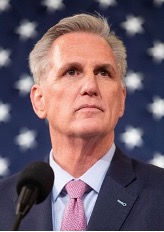
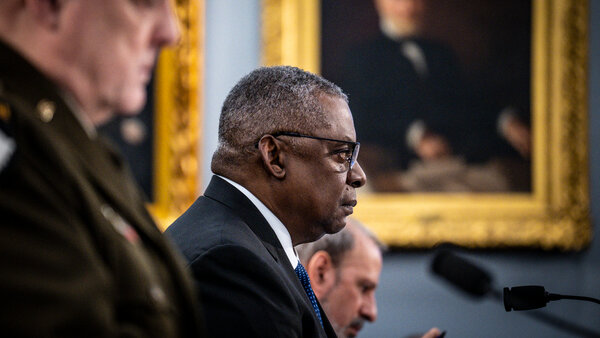
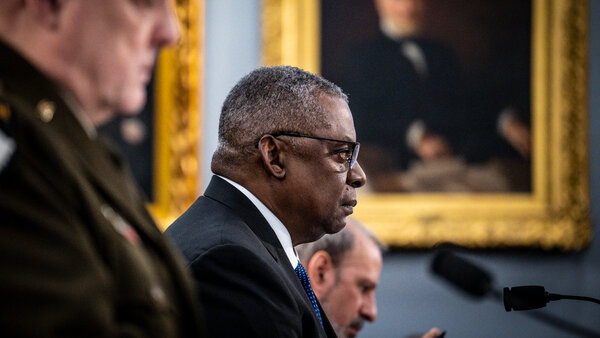
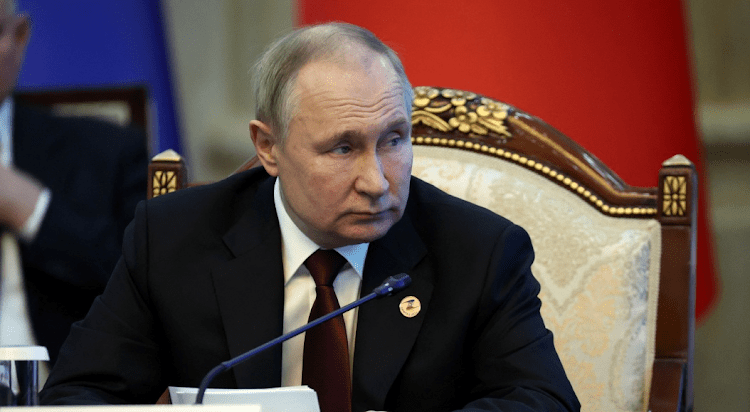
After a months-long blockade by Alabama Senator Tommy Tuberville, the US Senate has confirmed the nomination of Air Force General C.Q. Brown to be the next chairman of the Joint Chiefs of Staff.

To proceed with the vote and circumvent the hold, Senate Majority Leader Chuck Schumer decided to have three essential military promotions voted on individually, rather than as a group. In addition to General Brown’s confirmation to succeed outgoing chairman Mark Milley, the Senate also voted to confirm General Randy George to be the chief of staff of the Army and General Eric Smith to be the commandment of the Marine Corps.

Senator Tuberville, a Republican who previously was a well-known college football coach before entering politics, commenced this freeze as a way to protest the Pentagon’s abortion policy. Specifically, Tuberville objects to the Department of Defense policy that provides leave and travel reimbursements for military members seeking non-covered abortion services, which includes travel to states where abortion is still legal following the US Supreme Court’s overturning of Roe v. Wade last year.

For those currently serving in leadership positions at the Pentagon, some have been critical of Tuberville’s actions. In an interview with CNN, Secretary of the Navy Carlos Del Toro accused Tuberville of, “Playing Russian Roulette with the very lives of our service members by denying them the opportunity to actually have the most experienced combat leaders in those positions to lead them in times of peace and in times of combat.”

However, in the Senate, the sentiment has been mixed. While Democrats such as Mark Kelly of Arizona have argued that the hold is “having an impact on our national security,” Republicans such as Mike Rounds of South Dakota are hopeful that both sides may be able to find “some middle ground.”

Regardless, Schumer’s eventual decision to allow for these three individual votes, which has long been suggested by Tuberville, does little to actually resolve the deadlock caused by the blockade. With Tuberville seemingly unwilling to alter his stance, the Senate remains unable to approve the remaining promotions, which are typically uncontroversial and agreed upon together by unanimous consent, in a singular vote. As approximately 300 military promotions still require Senate approval, the chamber would need to spend roughly 700 hours of floor time to individually process and vote on each military officer’s promotion. This being said, while these individual votes remain an option, they could take months to complete and could potentially delay other legislation in the chamber.

Despite this, Tuberville has warned that the blockade will continue “as long as the Pentagon’s illegal abortion policy remains in place.” At the same time, Schumer has not revealed any interest in holding individual votes. Thus, until either side budges, it appears that the procedural chaos in the Senate will continue.

Jill Biden has COVID-19 and mask mandates are back in the news

national politics

Aidan Tyksinski, Staff

Last Monday, the White House announced that First Lady, Jill Biden, had tested positive for COVID-19. According to both CNN and AP News, Dr. Biden is experiencing only mild symptoms, and President Biden has tested negative multiple times. Multiple sources have claimed that both Bidens have been fully vaccinated and boosted, and after both fighting off Covid last year with no issues, there is no reason at this time to think either of them are in any danger.

The First Lady’s positive test comes at a time when cases around the country are on the rise. The CDC stopped putting out weekly reports of COVID-19 data in May of this year, making it much harder to find accurate numbers for hospitalization rates and deaths. What is known is that the increase in cases, hospitalizations and deaths are still much lower now than they were at the peak of the pandemic. With the rise in cases, though, is a new wave of masking policies. One company who crept into the national spotlight recently due to bringing back masking was Lionsgate, an entertainment company based in Santa Clara, CA. The large corporation was required by the LA County Department to have most of their staff members use medical grade masks while around other staffers, according to both The Guardian and The Hollywood Reporter.

While some colleges and companies are also asking for citizens to wear masks, Huntington Beach in Orange County, CA went a different route. Last Wednesday, the City Council voted in a close 4-3 decision to ban mask mandates for any resident who does not have Covid. The Los Angeles Times and NBC Los Angeles have reported that both Orange County and Los Angeles County have seen a rise in cases, making the move even more controversial. ? can be enforced, since the state health departments are the ones that create health guidelines.

The debate on mask mandates has gone from local politics to the national election, with current Florida Governor Ron DeSantis leading the charge. Early in the pandemic, Governor DeSantis was both celebrated and criticized for his choice to stop mandates in Florida during the deadliest months of the pandemic. In a recent press conference, DeSantis said, “We stood for people’s children, businesses and the ability to earn a living. We stood for people’s right to decline taking a COVID vaccine”. Later in the same press conference, DeSantis said “Now we are in a situation where you start to see around the country kids being kept out of school, forced masking of children around the country. These comments, as well as Dr. Biden’s positive test for covid, make it very clear that the virus is still very prominent as we enter three and a half years since the start of the pandemic.

Mitch McConnell dismisses health questions after interview freeze-up

national politics

Maya Martin, Editor

Mitch McConnell Via Wikimedia Commons: https://commons.wikimedia.org/File:Mitch_McConnell_May26.Webp

COVINGTON, Ky. – Senate Minority Leader Mitch McConnell freezes in front of reporters for a second time, raising health concerns for the 81-year-old.

During a press event held in Kentucky, Mitch McConnell appeared to pause for over 30 seconds when being questioned by reporters. While aides tried to regroup McConnell, he continued to freeze and stare off into the distance.

This event occurred just over a month after the senator froze up again while speaking with reporters at Capitol Hill in July. The freeze-up lasted around 15 seconds and caused many questions for those watching. Both instances, recorded and shared across media platforms, have been widely viewed and raise concerns for McConnell’s health.

McConnell suffered from a concussion in March after tripping at a dinner event, so many Americans are wondering if the three incidents are correlated. After the fall, “He was hospitalized for several days and received additional treatment at an inpatient rehabilitation facility,” CBS News reported. “McConnell returned to the Senate more than a month after the fall.”

Worried about McConnell’s health, President Biden commented on the freeze-up saying, “Mitch is a friend… so I’m going to try to get in touch with him later this afternoon.”

With these ongoing concerns for McConnell’s health, it opens up the question: Is he healthy and able enough to hold his position? McConnell’s senate minority leader position goes through 2024, while his term in the senate runs through 2026, according to The New York Times.

“I am going to finish my term as leader, and I’m going to finish my Senate term,” McConnell said to reporters. He continues to dismiss questions from reporters about his health after both freeze-up occurrences.

The Capitol Hill attending physician, Brian Monahan, evaluated McConnell after his repeated health scares. McConnell’s office released Monahan’s physician’s note where he states that the senator underwent, “Brain MRI imaging, EEG study and consultations with several neurologists for a comprehensive neurology assessment.”

After thorough assessment, however, Monahan’s analysis concluded, “There are no changes recommended in treatment protocols as you [Mitch McConnell] continue recovery from your March 2023 fall.”

Although the Capitol Hill physician invalidates any possible health issues Mitch McConnell may have, onlookers still have doubt, especially considering McConnell’s age. According to the New York Times, “Several medical professionals who watched video of Mr. McConnell’s episodes suggested he had been experiencing focal seizures or mini strokes.”

Senator Rand Paul of Kentucky also agrees that the health analysis made by Brian Monahan was not reliable. In addition to his position in the Senate, Paul is also a well credited physician. In response to the medical examination, Paul said, “I don’t think it’s been particularly helpful to have the Senate doctor describing it as dehydration, which I think even a non-physician seeing that probably aren’t really accepting that explanation.”

Although Rand Paul and Mitch McConnell seem to frequently clash within the GOP, Paul still is a praised physician. Paul said, “Everybody’s seen the clips, it’s not a valid medical diagnosis for people to say that’s dehydration.”

Although Senator Mitch McConnell himself and the Capitol Hill physician claim McConnell is healthy enough to continue his term, only time will tell how McConnell’s health progresses. With ongoing concerns about current politicians’ older ages, this health scare is yet another reason Americans are questioning the abilities of many American political figures.

Political Commentary: The Debt is No Reason to Panic

Politics

Brian Murphy, Staff

The United States is currently $31.4 trillion dollars in debt. This is a terrifyingly large number, but there is no reason to worry. The debt and deficit conversation are more political issues than economical.

Each year, the federal government is responsible for setting a budget. Simply, this budget is agreed upon and states where the government will be spending its money, and where the sources of it are. Since 1998, the government budget has not taken in more money than it spends (called a surplus). Yes, that means for the last 25 years, the United States government has been spending more money that it receives (a deficit), and the summation of these deficits is what is known as the debt.

When the government spends more than it takes in, it needs to borrow money to finance the extra spending. The US government does this through selling securities, commonly treasury bonds. These bonds can be purchased by anyone: citizens, businesses or foreign governments.

With the debt growing each year, there is no reason to panic. The United States has monetary sovereignty, or full control, over its currency. The US can print money to do anything it needs to finance. Think about the stimulus checks. The government did not tax you extra to fund this spending. The Federal Reserve simply decided it was going to fund the checks and printed more money to cover the costs. This too can happen to cover its debt. If the US government one day decided to pay off the debt, it could with the click of a button. All the Federal Reserve would have to do is increase the money, and transfer money to all of the debt holders. Additionally, the United States doesn’t even need to borrow money in the first place. The Federal Reserve could just decide to fund this money if it wants to. 

The reason this is all possible is because the US is monetary sovereign. If the United States used the Euro, for example, they could not simply just increase the supply of Euros, since the US Government does not control the Euro. The debt would be a potential issue if this was the case.

So, why doesn’t the United States just pay off the debt? Simply, there is no reason to. Further, there is a potential for inflation if they were to do this. So, the United States continues to practice the same policy of borrowing. 

The debt is a hot topic each year in Congress, but it is never a reason to panic. It is used for politics. Used to push agendas. The economics of debt is simple, and the United States is safe.

US Contractor Killed in Syria

international politics, Politics

Elizabeth Boyle , Staff

Five American Service members were wounded and a US contractor was killed in Syria on a coalition base near Hasakah, Syria by an Iranian-made missile on Thursday, March 23. The US military and supporting contractors have been directly involved in Syria since 2015 when they entered the country to help the Syrians fight against ISIS. Currently, there is more than 900 US personnel there.


Pete Marovich, The New York Times

The attack came from Iran’s Revolutionary Guard, led by Ayatollah Ali Khameneior groups affiliated with them. This was not the only attack from them over the last few months. They have hit various targets across the Middle East. There have been 78 attacks since January of 2021 and all are speculated to be from Iran or organizations supported by Iran. Iran has denied the previous attacks on US facilities, and they have not publicly acknowledged the attacks from Thursday.

John Kirby the Assistant to the Secretary of Defense for Public Affairs said, “It’s pretty clear to us and to the intelligence community and to the Pentagon that this was an Iranian one-way drone attack. We’ve been able to identify that with certainty.” The US responded quickly with “precision attacks” into eastern Syria that were approved by President Biden. General Michael Kurilla, the commander of US Central Command, reported that the US was explicitly responding to the attacks on facilities housing US service members. Kurilla expressed his concern for Iranian drones. He stated that they are being used by Russia in the War against Ukraine currently. Kurilla says, “The Iranian regime now holds the largest and most capable unmanned aerial vehicles force in the region.” 

Brigadier General Patrick Ryder, the Pentagon’s press spokesman, in an interview about the US response to the attacks stated, “The [US] priority in Syria is on the defeat of ISIS mission and that will remain our focus. We do not seek conflict with Iran. We do not seek escalation with Iran. But the strikes that we took last night were intended to send a very clear message that we will take the protection of our personnel seriously and we will respond quickly and decisively if they are threatened.” Ryder also stated that the US attacks were based on multiple attacks from Iran against coalition forces in Syria that are associated with the Iranian Revolutionary Guard. 

The Syrian humanitarian group, the Syrian Observatory for Human Rights, is based out of London and was upset with the US response to the attacks. They stated that the US response strikes killed eleven people on the ground. They believe that 6 people were near the Harabesh neighborhoods, three more in the town of Boukamal, and two near the town of Mayadeen. These reports have not been confirmed.

Military specialists are worried about the conflict escalating. In addition to the use of Iranian drones by Russia to fire missiles at Ukraine, Russia has been flying planes into Syrian airspace. This is violating an agreement made four years ago. These attacks also happened at a poor time for Saudi Arabia as they were discussing with Iran the possibility of reopening their embassies.

Putin Attempts to Use Strategic Arms Pact to Erode NATO Support for Ukraine

international politics, Politics

Elizabeth Boyle, Staff

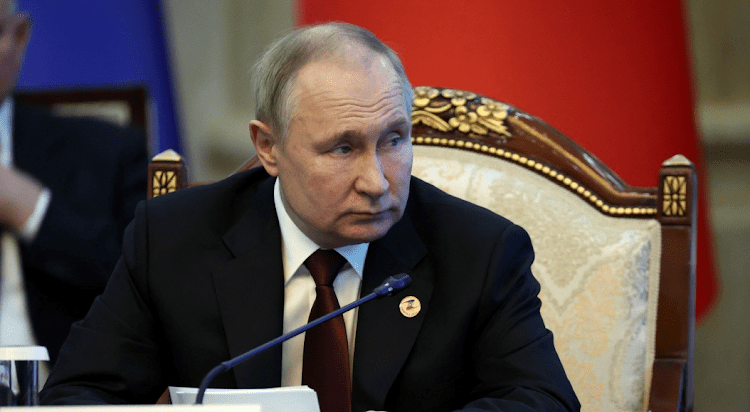
On Tues., Feb. 21. Russian President Vladimir Putin gave his State of the Union address to the Russian National Assembly. The alarming news for the Western world is that Putin announced Russia would be pulling out of the Strategic Arms Reduction Treaty (START) nuclear arms pact. Putin stated that “[the West] wants to inflict a strategic defeat on us and claim our nuclear facilities… In this regard, I am forced to state that Russia is suspending its participation in the strategic offensive arms treaty.”

Sergei Bobylyob | AFP/Getty Images

Strategic Arms Reduction agreements between the US and Russia (or its predecessor state, the Soviet Union) has a tumultuous history. The original START nuclear arms treaty between the US and the Soviet Union was effective between December 1994 and December 2009. This treaty limited each country to deploying 6,000 nuclear warheads and 1,600 intercontinental ballistic missiles and bombers, also known as Strategic Nuclear Delivery Vehicles. A New START treaty, also referred to as START II, was put in place in January 1993 and formalized the agreement as applying to the US and the Russian Federation, which succeeded the Soviet Union. In Mar. 2002, US President George W. Bush and Russian President Vladimir Putin signed the Strategic Offensive Reductions Treaty which set a Dec. 2012 deadline for each country to reduce their stockpiles of strategic nuclear warheads to between 1,700 and 2,200 warheads. In 2010, as the original START was lapsing, the US and Russia agreed to a treaty called New START, that would limit each side to 1,550 deployed strategic warheads on up to 800 strategic nuclear delivery vehicles (deployed and nondeployed). All variations of Strategic Arms Reduction pacts allow both countries to visit and inspect each other’s weapons sites.

In Feb.of 2021, the US and Russia agreed to extend the New START treaty until 2026. This is why Putin’s announcement came as a shock. Additionally, weapons site inspections had been halted since 2020 due the limitations on travel during the COVID-19 pandemic.

In his speech Putin stated that the decision to stop cooperation with the New START treaty is reversible. The Russian Foreign Ministry said the Russia is not completely pulling out of the treaty but they will refuse to cooperation with the treaty until “Washington must show political will, make conscientious efforts for a general de-escalation and create conditions for the resumption of the full functioning of the Treaty and, accordingly, comprehensively ensuring its viability.”

Many Western countries have spoken out about Putin’s decision. US secretary of state Anthony Blinken said Putin’s decision is “deeply unfortunate and irresponsible.” Blinken said that the Biden Administration is open to speak with Russia about Putin’s decision. A representative and spokesperson for the British Prime minister Rishi Sunak said that England hopes Putin will “reconsider his rash decision.” British newspaper The Economist called Putin’s decision “both predictable and reckless.”

Putin’s decision about the New START action is an expression of his anger at NATO siding with Ukraine during his ongoing “Special Military Operation.” Putin also strategically timed his State of the Union address to coincide with news that Russia may be wearing down Ukrainian troops in and around the city of Bakhmut and may be close to taking over the city. There is speculation that Putin is gaining confidence as he believes Russia is using its numerical advantages in soldiers and weapons systems, as well as its ability to conduct operations from up-to-now safe Russian territory to finally wear down the Ukraine military and population. CIA Director William Burns stated, “I think Putin is, right now, entirely too confident of his ability to wear down Ukraine.”

There appears little diminution in NATO support for Ukraine after Putin’s strategic move. Most western observers believe he is attempting to leverage western fear of Russia using a tactical nuclear weapon in Ukraine to erode NATO support, but in the short term he will be unsuccessful. Western analysts concede, however, that an authoritarian leader, such as Putin, can often play a waiting game with western democracies who may grow tired of funding a military enterprise that appears to have no near-term resolution.

One year of the war in Ukraine, President Biden visits Kyiv

international politics, Politics

PBS

Elizabeth Boyle, staff

It has been almost a year since Russia Invaded Ukraine, and the war is still raging on. The annual Munich Security Conference took place from Feb. 17 to 19 at the Bayerischer Hof Hotel in Munich Germany. The war in Ukraine was the main topic of the event. Vice President Kamala Harris attended and used her speech to talk about Russian war crimes in Ukraine.  China’s top diplomat, the Director of the Office of the Central Commission for Foreign Affairs, spoke out with concern for the war. Ukrainian President Volodymyr Zelenskyy spoke, as well, asking the western countries to send more weapons to Ukraine. Although Russia was the main topic of discussion Russian representatives were not invited.

Vice President Harris condemned Russia’s actions in Ukraine calling them “crimes against Humanity.”Harris stated that “justice must be served,” and those at fault must be held responsible. Harris’s statement is pushing the condemnation of Russian actions a step further than just war crimes by calling them “crimes against humanity.” Harris went into detail by saying, “Let us be clear: Russian forces have pursued a widespread and systemic attack against the civilian population – gruesome acts of murder, torture, rape, and deportation. Execution-style killings, beating, and electrocution.” Harris said that supporting Ukraine and speaking out against Russia’s violent acts and pushing for justice to be served is “[in the US’s] moral interests.” US Secretary of State Anthony Blinken spoke as well stating that Russia is hurting its own citizens with the war it started. 

In response to Harris’s comments, the Russian Ambassador to the US, Anatoly Antonov, claimed that the US is working to “demonize” Russia. Russia continues to deny claims of attacking civilians and claims that the gruesome acts Harris mentioned in her speech were committed by Ukrainian forces against their own people to harm Russia’s reputation.

Chinese diplomat Wang Yi spoke saying that China was concerned about the “long-term effect of this war” and claimed that it was in the interest of all parties that peace talks should be seen in the near future. He also reiterated President of China Xi Jinping’s condemning any nation that threatens nuclear violence. The US State Department responded to China by warning that if China helped Moscow with military material it would result in sanctions or worse. The US still fears the Chinese invasion of Taiwan if the relationship with China and Russia continues to grow.

Ukrainian President Zelenskyy joined the conference by video call and urged the Western leaders to act instead of talk. He once again said Ukraine is in need of weapons as soon as possible. Ukraine doesn’t have the time to wait months. European Commission President Ursula von der Leyen responded to Zelenskyy by stating that European countries must work quickly to produce and distribute weapons to Ukraine.

Although no Russians were in attendance, prominent critics of the Kremlin were invited such as Yulia Navalnaya, the wife of jailed politician Alexey Navalny, and Mikhail Khodorkovsky, an exiled businessman, and opposition activist.

In light of this recent conference, President Biden visited Ukraine on Monday, Feb. 20. This was President Biden’s first visit to Ukraine since the war began. Biden assured Zelenskiy that military assistance is on the way and that the US will be implementing more sanctions against Russia. This is a rare occasion for a US president to visit an active war zone when there is not a large presence of US military personnel. Biden said he risked the dangerous travel because he wanted to declare “unwavering” support for Ukraine and spread the message that “Putin’s war of conquest is failing.”

State of the Union Frames 2024 Election

national politics, Politics

Elizabeth Boyle, Staff 

This past week, President Biden gave the annual State of the Union address. The Speech is given in front of all of Congress. In the speech, the current President will address the state of the country, talk about the administration’s accomplishments of the past year, and speak about his upcoming plans for the next year. On Feb. 7 President Joe Biden gave his second State of the Union address and three important points he talked about were bipartisanship, the economy, and healthcare.

            Biden talked about wanting the Democrats and Republicans in Congress to work together. After the historic election of Kevin McCarthy to Speaker of the House, which took 5 days and 15 rounds of voting, Biden repetitively mentioned that he wants to continue to work with this new Congress as it starts a new chapter with McCarthy as Speaker of the House. Biden emphasized that his administration was working to end the zero-sum political game by saying, “and, in fact, I signed over 300 bipartisan pieces of legislation since becoming President, from authorizing the Violence Against Women Act to the Electoral Count Reform Act.” Biden continued “And to my Republican friends, if we could work together in the last congress, there is no reason we can’t work together and find consensus on important thing in this congress as well.”  

            President Biden talked about the economy and the historically low unemployment rate. He started off by talking about the importance of the middle class in America. He said, “that’s always been my vision of our country, and I know it’s many of yours: to restore the should of this nation; to rebuild the backbone of America, America’s middle class; and to unite the country.” Biden said that working to fix the economy is a large reason why he ran for President. He explained, “[He wanted] to make sure the economy works for everyone so we can all feel that pride in what we do.” Biden went on to talk about his administration’s employment record and his future plans to improve the economy. Biden said, “We’re not finished yet, by any stretch of the imagination. But the unemployment rate is at 3.4 percent – a 50-year low.” He referred to the inflation and high gas prices and supply chain shortages, vowing that it cannot happen again which was why he proposed and passed the CHIPS and Science Act that has “already created 800,000 new manufacturing jobs.” 

            Biden talked about how his efforts to improve the economy are also a push for improved healthcare prices. He stated, “With the Inflation Reduction Act that I signed into law, we’re taking on a powerful interest to bring healthcare costs down so you can sleep better at night with more security. Biden says he will be working over the next year to bring down the prices of prescriptions in the US. He says, “We pay more for prescription drugs than any major nation on Earth.” Biden used insulin as an example saying that under Medicare, insulin prices will have a price cap of $35 per month for seniors. Biden emphasized his priority of making sure everyone is able to get the healthcare and prescriptions they need at an affordable price. 

Based on the State of the Union address it looks as though in the next year the American public will be seeing some increased efforts to bring down inflation which could include some adjustments to the tax code. Many viewers saw the State of the Union address as a signal of President Biden’s campaign strategy should he decide to run for a second term. In particular, Biden tried to draw a distinction between Democrats and Republicans concerning the handling of Medicare and Social Security. His claim that Republicans want to end/or limit both entitlement programs for seniors was met with jeers by the Republicans in the House chamber. Biden used the verbal outrage expressed by Republicans to claim that it looked like both programs would therefore remain untouched since both parties agreed on their ultimate importance. That was a rhetorical moment for the crowds watching on TV that was belied by the President’s actions on subsequent days when he claimed Republicans want to “sunset,” i.e., place an end date on Medicare and Social Security. The race for the 2024 Presidential election may have started at the State of the Union.

NATO Expansion Hits a Speed Bump

international politics, Politics

Elizabeth Boyle, Staff 

The Northern Atlantic Treaty Organization (NATO)’s once positive and unifying rule of the unanimous vote is now being manipulated to prevent Sweden and Finland from gaining NATO membership. Turkish President Recep Tayyip Erdogan voting down the admittance of Sweden and Finland has caused other member states to pick sides and show their support. 

NATO was created after World War II in the hope to prevent another world war. According to the US Department of Defense, there are 5 regulations that must be met to join NATO. The country must be a democracy, members must be actively moving towards a market economy, national military forces must be under civilian control, nations must be good neighbors to those on their border and nations must work towards compatibility with NATO forces. 

Turkey has voted against Sweden and Finland’s acceptance into NATO. Finland and Sweden petitioned to join NATO in May of 2022 after Russian President Vladimir Putin invaded Ukraine. At that time, Erdogan placed conditions on the US in order for him to give his approval of Finland and Sweden’s membership. Erdogan wants the US military to stop arming and funding the Democratic Union Party (PYD) and the People’s Defense Units (YPG) in Syria. Experts have commented that Erdogan has a legitimate security concern about Syria but trying to force the US into abiding by his wishes by attempting to punish Sweden and Finland is not the correct course of action.

NATO is extremely concerned by Erdogan’s actions because of Putin in Ukraine. NATO has worked hard to show a unified front and Erdogan could disrupt that. If Turkey is angered by NATO or prospective NATO entrants, it could choose to launch a military attack into northern Syria against the Kurdish people who were crucial in helping the US defeat the Islamic State in various battles. Although Turkey has helped Ukraine by supplying some drones used to attack Russian forces, it has also increased trade with Russia and welcomed almost 5 million Russian refugees. This leaves room for doubt about Erdogan’s intentions.

The reaction to Turkey’s vote has caused concern for tension on the pact between Sweden and Finland. The two countries originally agreed they would join NATO to ensure the two countries’ safety and continued alliance. When petitioning for NATO membership, Sweden and Finland signed an agreement in June 2022 stating that they would take action against terrorist organizations such as the Kurdistan Workers’ Party (PKK) and the Fetullah Terrorist Organization (FETO), which are aligned with Turkey. Turkey has stated it believes Finland has fulfilled its obligation of acting against the PKK and FETO but Sweden has not. Erdogan’s reasoning is that during a protest in Stockholm, the Swedish Government allowed the burning of the Quran, the religious book of Islam, offending Turkish citizens who are majority Muslims. 

This dispute has pushed speculation that Finland is considering joining NATO without Sweden. However, on Thursday, Feb. 2 the Prime Ministers of Finland and Sweden held a press conference announcing, “I think it’s very important that we send today a clear message: Finland and Sweden applied together and it is in everybody’s interest that we will join together in NATO” said Finnish Prime Minister Sanna Marin.

Sweden responded to Turkey’s vote by broadening its anti-terror laws and announced the change at the press conference. The Swedish Justice Minister talked about the new laws stating, “It’s a broader criminalization, targeting a large number of activities within a terrorist organization that is not concretely connected to a particular terrorist crime.”

The US has also responded to Turkey’s recalcitrance by postponing the sale of F-16 fighter jets that were supposed to be sold to Turkey. Congress wrote a letter stating they “cannot consider future support for [Turkey until] completing the ratification of the accession protocols.” They explained, “Failure to ratify protocols or present a timeline for ratification threatens the alliance’s unity at the moment in history, as Russia continues its unprovoked invasion of Ukraine.” Congress further wrote, “A productive and mutually beneficial bilateral security relationship with [Turkey] is in the interest of the United States, and we are awaiting the government’s ratification of NATO accession protocols for Sweden and Finland.” The US Secretary of State, Anthony Blinken “reiterated US support for Finland’s and Sweden’s NATO accession.”

Russia Retreats from Kherson

international politics, Politics

Elizabeth Boyle, Staff

Another retreat by the Russian military, this time from Kherson. This past week Russian troops were ordered to evacuate from Kherson. Kherson is a port city located where the Dnipro River meets the Black Sea, and it was a central focus in Russia’s attempt to control the southern coast of Ukraine.

When Russia initially assaulted and captured Kherson it tried to assimilate the people into its sphere. But the Ukrainians of Kherson fought back and would not accept Russia’s efforts to strip the city and region of Ukrainian language, currency, and education. When Russia claimed to “annex” parts of Ukraine including Kherson, after a sham election, the citizens of Kherson stood defiant. This past week as Russian troops evacuated and Ukrainian soldiers entered the city the people of Kherson celebrated their return to Ukrainian control. One townsman reported to a New York Times reporter on scene, “people walk on the streets and congratulate each other, it’s just a holiday!”

There are a few schools of thought forming over Russia’s retreat. Some believe that Russia is moving to regroup and reposition its soldiers before the incoming winter, and in doing so avoid personnel and equipment losses from Ukrainian attacks and its own inability to adequately sustain forces over an extended battlefield. By moving its troops to the eastern side of the Dnipro River which borders Kherson, Russia is attempting to improve the survival odds for its troops using the river as a defensive barrier. 

President Biden spoke about the Russian retreat during a Press conference on Nov. 9 when he also answered questions about the midterm elections. Biden seemed to insinuate that the timing of the Russian retreat was linked to the US midterm elections. He pointed out that he thought it was interesting that Russia waited until after the US congressional election was complete to announce the retreat. Biden said, “it’s evidence of the fact that they have some real problems with the Russian military. 

In addition to this retreat, Russia is having problems on the home front. Hundreds of thousands of men have fled the country to avoid the draft. As of Nov. 4 the Kremlin reported over 700,000 men had left in approximately two weeks. Many believe Russian President Putin’s announcements that new military conscripts will not be sent to the vicinity of Kherson and that college students would be exempt from the military mobilization are an effort to deflect some criticism of the Russian military’s ongoing failures. Despite the tensions in Russia Putin has still managed to fill his military personnel quota to sustain his so called “special military operation” in Ukraine. Putin spoke to the media in early November saying that “mobilization is complete.” Defense Minister Sergei Shoigu also claimed that Putin’s goal of calling up 300,000 reservists had been achieved. However, as Ukraine continues to push back, a portion of the Russian public and military are not happy. 

To show his support for ongoing Ukrainian military advances and to celebrate the liberation of Kherson, Ukrainian President Volodymyr Zelenskyy visited Kherson on Monday, Nov.14. Zelenskyy commented that he believes this (i.e., the liberation of Kherson) is the “Beginning of the end of the war.” Zelenskyy continued, “Ukraine was ready for peace, but peace for all of our country, all of our territory.…That is why we’re fighting against Russian aggression.” Now that the Ukrainian flag once again flies over Kherson and Zelenskyy has visited to celebrate the Russian retreat, morale is high in southern Ukraine. Zelenskyy’s presence continues to be motivating to Ukrainian citizens. He is a symbol of the resilience and courage of Ukraine as demonstrated in Kherson when Russia was firing missiles at entrenched troops less than a mile away.