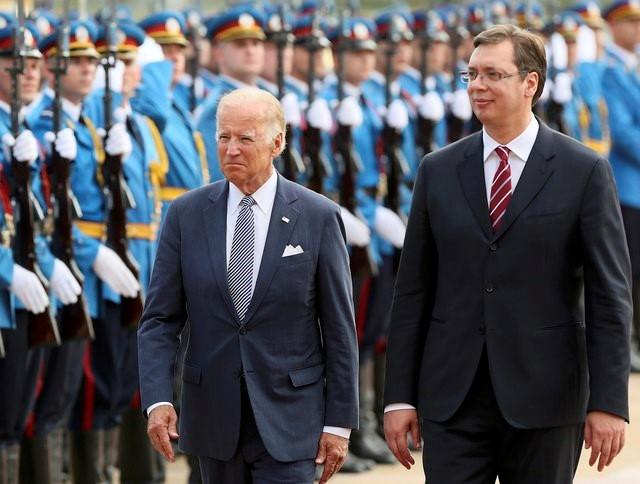
Reuters Image of President Biden and President Vučić.
In Southeast Europe there is a small country called Serbia. Serbia is approximately the size of South Carolina and has roughly 7.2 million people. Serbia is a neutral country that has alternated between close communications with major East and West powers.
Recently, Serbia has captured the attention of U.S. national security experts. Last year Serbia received Chinese military aviation equipment. They were the first to be given the CH-92A combat drones armed with laser-guided missiles. China has been working on improving its drone technology to continue its economic growth by being a part of the European defense market. China has invested in Serbia to help with coronavirus relief and sustainable energy projects. Serbian President Aleksandar Vučić has referred to Chinese President Xi Jinping as his brother.
Serbia has also received MiG-29 fighters which were donated by Russia. The Mikoyan MiG-29 is a twin-engine fighter jet developed by the Soviet Union in the 1970s.. Moscow has maintained a close relationship with Belgrade, the capital of Serbia. Russia has also sold Serbia the Pantsir S1 short-range air defense systems. This system uses 57E6 missiles to defend against fixed-wing planes and rotary-wing helicopters that may be a threat to the country. President Vučić has spoken of his close personal ties with Russian President Vladimir Putin.
This week a U.S. Special Forces team, for the first time since the start of the COVID-19 pandemic, arrived in Belgrade to train with the elite Serbian counterterrorism units. The U.S. Special Forces will be focusing on helping train the Serbian military to be able to handle potential threats.
Seeing as Russia and China currently have strong ties with Serbia, the U.S. is making an effort to improve its relationship as well. By helping the Serbian military, the U.S. could see an increase in trade and military ties with Serbia. Serbia welcomes U.S. support as it tries to become a member of the European Union through economic growth, modernization and a Western-focused international stance.
Foreign Policy Former Vice President Biden and Former Iraqi Vice President Nouri Al-Maliki in 2009.
Since President Biden has taken office, one can see a string of international communications with many countries including Germany, China and now Iraq. The U.S. military and the United Nations (U.N.) will be working with Iraq to help the country recover from a recession, move forward with the Parliamentary election and help prevent the resurgence of the Islamic State extremist group (ISIS).
In 2014 ISIS moved into Iraq, took control of Iraqi cities and militarily acquired large portions of Iraqi and Syrian territory. The U.S. and Iraq worked together in a military campaign to reclaim Iraqi territory and save innocent civilians. In the campaign, the U.S. led the airstrikes and Iraq led the ground action. ISIS was finally pushed out of Iraq in 2017, but many cities had been destroyed and thousands of people were killed.
In order to move forward in rebuilding Iraq, solidifying government control and deterring future attacks, Iraq is now focusing on its government elections scheduled for Oct. 10, 2021. Iraq does not have a history of free, fair or accurate elections. In an effort to enhance the upcoming election’s legitimacy, the Iraqi government has recently sent a letter to the United Nations Assistance Mission for Iraq (UNAMI) asking for election observers. The U.S. has agreed to provide $9.7 million to UNAMI to help with the election and its preparations. In addition, Iraq will enhance its own security.
The Special Representative of the U.N. Secretary General for UNAMI, Jeanine Hennis-Plasschaert, has said that the Iraqi parliament has passed legislation for funding of the election, to include registration of all the eligible people in Iraq. This legislation still needs to go through the Iraqi Federal Supreme Court to be finalized. The Federal Supreme Court also certifies election results.
In the upcoming months, the U.S., in coordination with UNAMI and the Iraqi government, is planning to recover from the pandemic, have economic and political reform and keep its citizens safe while preparing for the election.
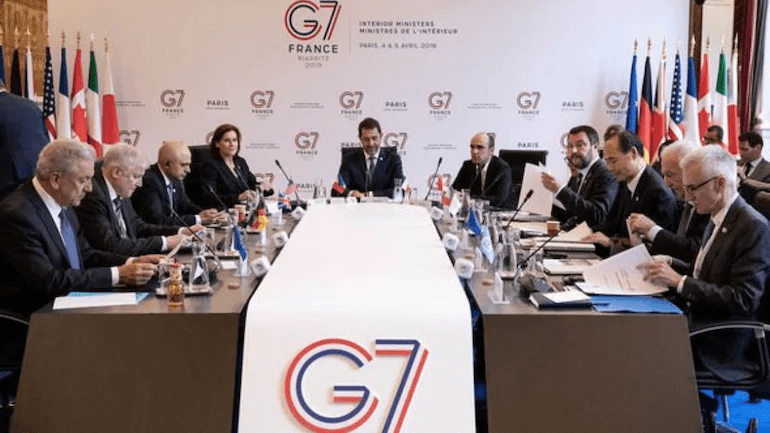
India Today Image of the 45th G7 Summit Meeting, the last in-person summit prior to the pandemic.
Over the weekend, the Biden administration made massive changes to world diplomacy that contradicted many of the changes made by former President Donald Trump. On Thursday, the Biden administration announced its interest in negotiating to rejoin the Iran Nuclear Deal. The next day, the United States officially rejoined the Paris Climate Agreement and on Saturday said America would give $4 billion to a global COVID-19 vaccine program.
In his first speech at the G7 as U.S. President, Biden declared to the European leaders that “America is back.” This is a stark message compared to President Trump, whose “America first” policy often made the U.S. seem isolated from many of its allies. In June 2017, when President Trump announced America was pulling out of the Paris agreement, the French president said the United States pulling out was a mistake, and when President Trump pulled out of the Iran Nuclear Deal, German chancellor Angela Merkel said that the deal was the best way to keep an eye on Iran’s nuclear program.
Both the Paris agreement and the Iran Nuclear Deal were created for different issues. However, they both have support from many other countries around the world. The Paris Climate Agreement is a legally binding document created in 2014 with the goal of limiting global temperature changes to 1.5℃. To do this, each country creates a five-year plan to show how they will reduce carbon emissions into the atmosphere. These plans are created by each individual country that can change their goals during meetings set up about every five years.
The Iran Nuclear Deal was created to keep an eye on Iran and make sure no illegal weapons were being created by the country. The deal places certain limits on Iran, such as the amount of uranium the country can have at a time and the stopping of mining for new uranium. In return, all nuclear-based sanctions against Iran were dropped. The country was strictly looked over by the International Atomic Energy Agency, who made sure Iran was being compliant. When the United States pulled out of the deal, there were no records of Iran breaking any agreements set in place.
Both policies were something Biden pushed to go back to during his campaign. Not only does he think they are good for the country, but they were also policies he helped create during his time as vice president of the Obama administration. In the past, Biden called the Paris Climate Agreement “the most ambitious, inclusive climate agreement in history.” He was also a big defender of the Iran Nuclear Deal when the idea was first created.
Unfortunately for President Biden, rejoining international deals will not be as easy as he hoped. Domestically, many House and Senate Republicans have pushed back on both policies; they fear the Paris agreement is too restrictive for businesses and will get rid of many American jobs, while the Iran Nuclear Deal does not do enough to surveil Iran’s nuclear programs. Internationally, the United States will be greeted with open arms for rejoining the Paris agreement, but there are still issues with the Iranian government, who feel the United States broke their promise by getting rid of the deal and placing tariffs on Iranian goods, crushing Iran’s economy. Many Iranians are also still very angered with what they view as the assassination of Iranian general Qasem Soleimani last January. With many pressures coming from within the United States and internationally, it remains to be seen if Biden can successfully reconnect with old allies and create new ones from some of our most feared rivals.
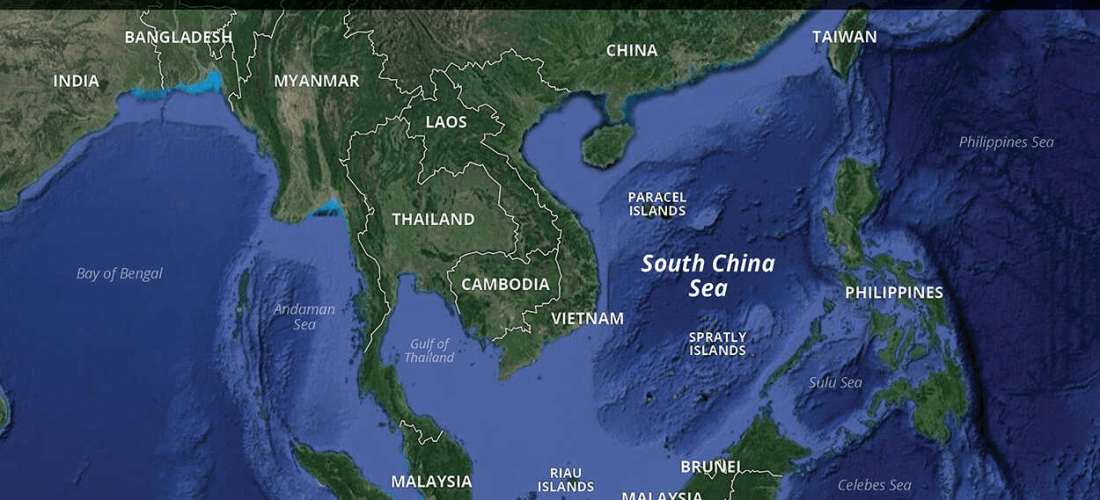
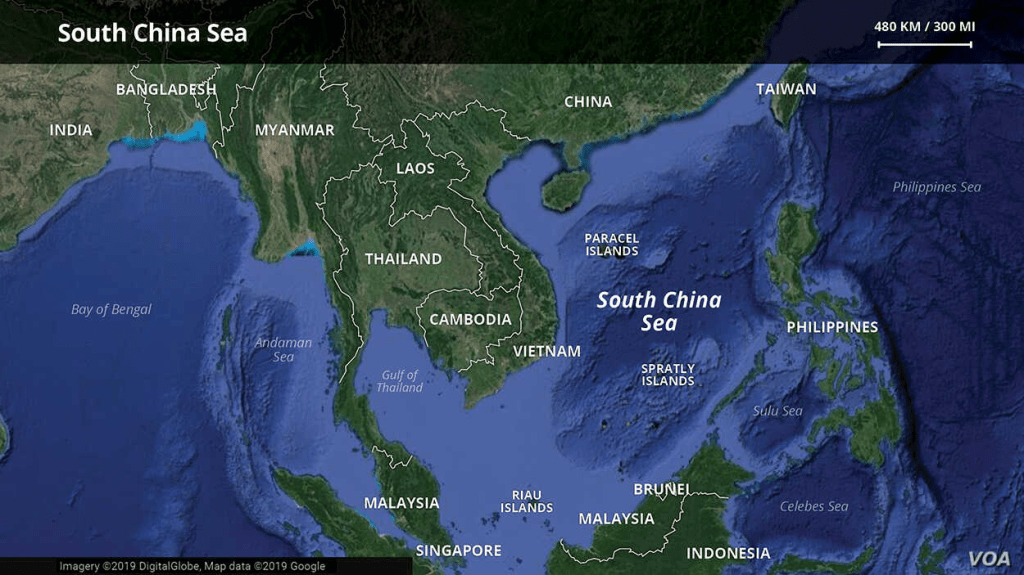
With all the cold weather here in Philadelphia, I’m sure we are all dreaming of warm weather and sunny beaches. Recently, there has been activity out at sea other than tourists enjoying a vacation. Activity in the South China Sea could be increasing tension between the United States and China. Over the past few months, China has been unhappy with U.S. Naval ships sailing in the South China Sea near islands claimed by China. There have been claims of the U.S. purposefully trying to increase tension with China but, when asked, Rear Admiral Jim Kirk, commander of the Nimitz Carrier Strike Group, assured that the U.S. is only focusing on lawful use of the sea.
Recently in the South China Sea, China complained that two U.S. aircraft carrier strike teams were allegedly doing tactical drills. The commanders of the U.S. aircraft carrier strike groups had a conference call. Rear Admiral Doug Verissimo, commander of the USS Theodore Roosevelt strike group, made it clear that they were focusing on tactical proficiency and working to improve how well the two ships, the USS Theodore Roosevelt and the USS Nimitz, can work together. He emphasized there was no malicious intent. Verissimo went on to explain the reason for the drill in that location and at that time was because of the travel plans of each ship. The Nimitz was preparing to head home after a 250 day deployment. As the Nimitz was on its way home, the Theodore Roosevelt arrived to patrol the area. The Commanders decided it would be efficient to perform a drill because the ships were crossing paths.
The tension between the U.S. and China in the South China Sea is not something new. The U.S. has accused China of showing military force in the South China Sea to intimidate its neighbors, such as the Philippines and Malaysia. Similarly, China has accused the U.S. of using its navy as a “show of force.” As we enter President Joe Biden’s second month as president, the U.S.’s relationship with China may be on the path to significant change. President Biden, along with Secretary of State Blinken and Secretary of Defense Austin, has used the first few weeks of the new administration to improve the U.S.’s international relations. The U.S. has contacted many countries including Canada, The United Kingdom, France, Japan and China. On Feb. 6, 2021, President Biden and President Xi Jinping had their first conversation of the Biden presidency. The American public should keep an eye out for future discussions between President Biden and President Xi Jinping as they sort out how the U.S. and China will address a relationship dealing with the countries’ economies, human rights and military competition.
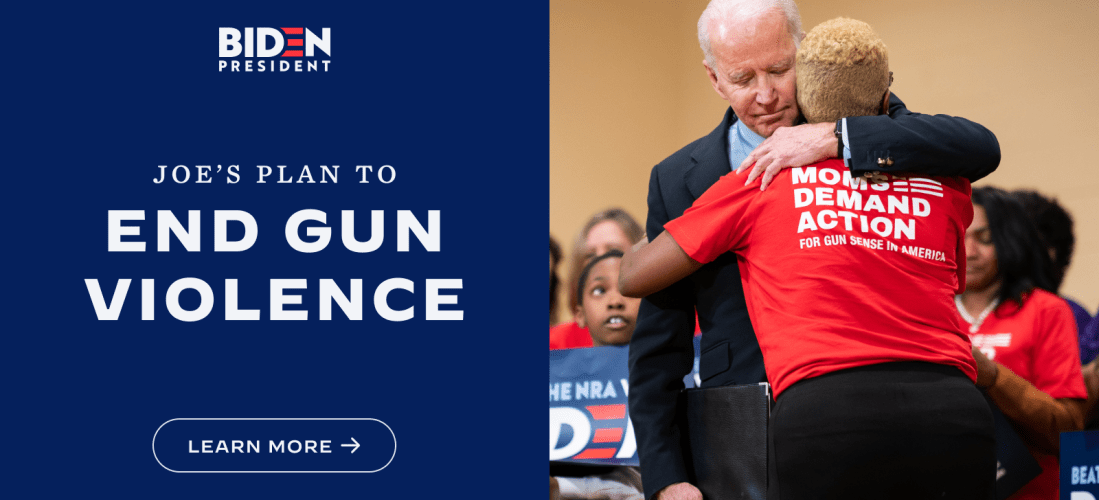
Joe Biden for President Biden Administration campaigning on a gun reform platform.
Lost in the chaos due to former president Donald Trump’s impeachment trial, last Sunday marked the three-year anniversary of the deadly Parkland shooting. The attack was carried out by a former Stoneman Douglas high school student, who killed 14 students and three teachers. The attack led to many protests around the country for more restrictive gun laws, or to ban the owning of semi-automatic rifles altogether.
On Sunday, to remember the victims, President Joe Biden put out a statement on the @POTUS Instagram account to show his sympathy for the victims as well as his plans for gun reform. In the statement, Biden says “The Parkland families have spent birthdays and holidays without their loved ones.” He then shows his support for what their families have done, saying they “have showed us how to turn our grief into purpose — to march, organize, and build a strong, inclusive, and durable movement of change.” Biden ends the statement by calling on Congress to pass bills that require background checks, ban assault weapons, ban high-capacity magazines and eliminate immunity to gun manufacturers, who Biden says have “knowingly put weapons of war on our streets.”
Politicians and groups were quick to come out with responses following the statement. The NRA Instagram page issued a post highlighting the Biden administration’s plan for gun reform, then ended the post by saying “NRA will NEVER stop fighting for the 2nd Amendment.” Freshman congresswoman Marjorie Taylor Green posted a picture of a line from the Second Amendment from the U.S. Constitution, which states “The right of the people to keep and bear arms shall not be infringed.” However, not every statement was politically motivated. Florida Senator Marco Rubio said that the parents’ “grace in the face of the most traumatic loss has been humbling.”
On Jan. 8, former house representative Gabrielle Gifford, who was shot during the Tucson shooting in 2011 that killed her staffer Gabe Zimmerman and nine-year-old Christina-Taylor Green, sent out a tweet for the ten-year memorial of the shooting. Biden responded to the tweet by saying “I pledge to continue to work with you — and with survivors, families, and advocates across the country — to defeat the NRA and end our epidemic of gun violence.” This tweet also got swift pushback from Republicans.
Like many issues Congress is dealing with, gun reform is a very partisan issue that seems to have no end in sight. During the 2020 primary, many Democrats had different plans for gun reform, such as using the federal government to buy guns back from citizens, to acquiring gun licenses and background checks through the federal government. Republicans, on the other hand, have called for red flag laws and some universal background checks, but have failed to pass several gun laws that have reached the senate and house floors. There is also the issue of the Second Amendment, which states that citizens have the right to own weapons. The NRA’s goal is to protect the Second Amendment, which puts Republican lawmakers in a tight spot, since the NRA donated close to $30 million to Republican campaigns in 2020. It seems that President Biden and the Democrats will once again be facing an uphill battle to pass gun reforms that are opposed by a huge Republican donor and several Congress members currently serving.
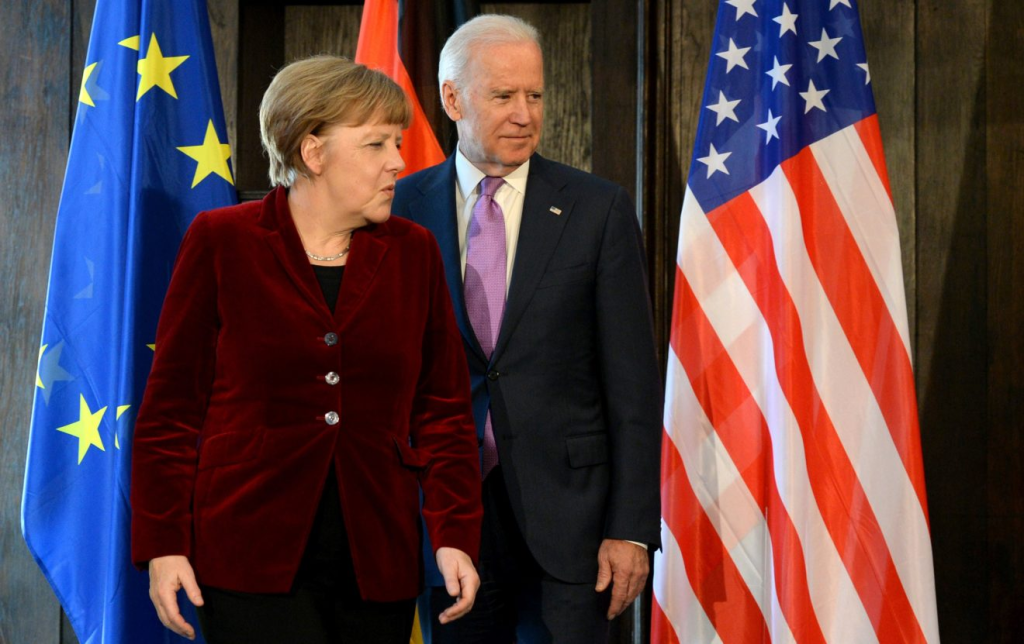
Politico President Biden and Prime Minister Merkel
With the recent inauguration of President Biden, the United States has seen many changes implemented very quickly. President Biden has been prioritizing a change in U. S. international relations. One way President Biden has shown this is through his appointment of the new U. S. Secretary of Defense, Lloyd Austin. Since Austin has taken office, he has been communicating with the North Atlantic Treaty Organization (NATO) and trying to strengthen the U.S. bond with the organization.
A significant shift with NATO left behind from the Trump administration was the removal of U.S. military personnel from Germany. President Trump wanted to pull out over ten thousand troops from Germany. The U.S. has twenty-one bases in Germany including ones in Ansbach, Bamberg, and Grafenwoehr. The U.S. also has the Landstuhl Regional Medical Center which is the largest American hospital outside of the country. Two elements of President Trump’s motivation for this decision to remove U.S. personnel were his frustration with NATO countries, including Germany, not applying their agreed upon 2% of GNP to defense spending and his disagreements with German Chancellor Angela Merkel. During his time in office, President Trump was very vocal about his dispute with NATO and made claims that NATO countries were not giving the amount of money to military spending that was previously agreed upon.
President Biden has recently stopped the withdrawal of nearly twelve thousand troops from various bases in Germany. This essentially reverses President Trump’s plans for action against NATO. Presidents Biden’s actions demonstrate his plans to improve the U.S.’s relationship with NATO. It looks as though he is using his actions with the military to back up the communication he has had with NATO. It also shows that he is making an effort to stay true to the goals of his campaign, such as enhancing relationships with traditional allies.
Now that U.S. troops will be staying in Germany, the U.S. will be able to watch as the country moves out of a semi-isolated position and potentially has more communication and agreements internationally, especially with long-term allies.
Politico Biden’s Secretary of Defense is four-star general Austin J. Lloyd III.
After a year of quarantine, masks and working from home, people are looking for big changes in 2021. Government officials have been busy since the election in November 2020. One notable difference since the change in administrations, is the strengthening of the United States’ relationship with the North Atlantic Treaty Organization (NATO).
Former President Donald Trump pushed towards an isolationist approach when it came to international communications. A common theme President Trump mentioned, which can be particularly seen within his Republican National Convention speech in August 2020, where he voiced his disappointment in the size of NATO spending. President Trump believed that the United States’ partners in NATO were behind on their payments. President Trump and his administration wanted to distance the U.S. from NATO until its members were able to increase the amount of money put towards their national defense. With the Biden administration this could be changing.
President Joe Biden, inaugurated on Jan. 20, 2021, quickly went to work appointing a new Secretary of Defense. On Jan. 22, Lloyd J. Austin was sworn in as the 28th Secretary of Defense. Prior to his cabinet position, Austin attended West Point and served in the Army for 41 years before retiring as a four-star General.
Austin’s first call as Secretary of Defense was to NATO’s Secretary General, Jens Stoltenberg. Austin discussed wanting to keep the NATO alliance strong and the current missions in Afghanistan and Iraq. Austin wants to continue a strong defense position in NATO as a method to deter potential and known threats. Austin also told Stoltenberg that he wanted to re-strengthen the U.S.’s relationship with Europe. Stoltenberg congratulated Biden after his inauguration and told Austin that he feels positive about President Biden’s policy goals mentioned during his campaign.
This sequence of events could be indicative of a change in U.S. foreign relations over the next four years. Whereas the Trump administration focused on isolationism and taking a stern approach with foreign relations, one can assume President Biden is planning for a return to normalcy in American foreign policy. The call to Secretary General Stoltenberg, change in US Secretary of Defense and the policy plans President Biden has mentioned are showing a focus on increasing international communications for some upcoming potential changes.
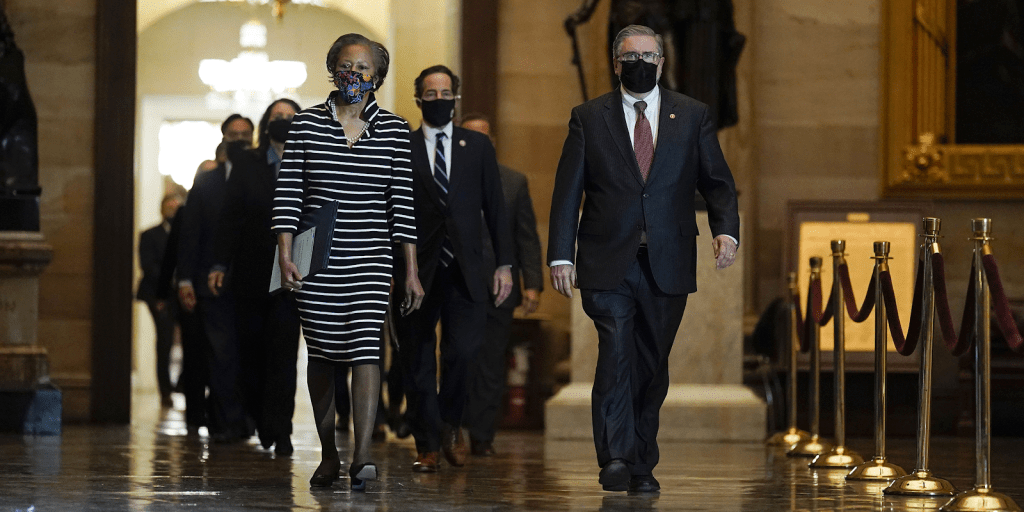
NBC Democratic impeachment managers delivering the articles of impeachment to the Senate.
Last week, new House Majority Leader Chuck Schumer announced that the articles of impeachment against former President Donald Trump would be delivered to the Senate floor early in the week. This comes two weeks after the House pushed the articles through, making the impeachment official. In total, 232 Democrats and 10 Republicans voted yes to impeach, 197 Republicans voted no and 4 Republicans did not vote. Former President Donald Trump has made US history with this trial, becoming the first president ever to be impeached twice.
The beginning stages of the trial are set to start almost three weeks after the deadly insurrection on Capitol Hill on Jan. 6, in which many people wearing Trump gear and carrying pro-Trump signs broke into the building to stop the certification of the 2020 election due to voter fraud claims. None of the claims made by anyone on the Trump legal team or claims made by his supporters about the election rigging have been proven true. Many Democrats blamed then President Trump for inciting the riot, and the official reason for this impeachment trial is incitement of an insurrection. Senator Benie Sanders said that President Donald Trump was directly responsible for what happened at the Capitol. At the same time, Senator Elizabeth Warren called on the Senate to impeach and convict Trump on her Instagram page.
Just like the first impeachment trial, there have been few Republicans to speak out against the former president. Senator Marco Rubio called the trial stupid and counterproductive, while South Dakota Senator Mike Rounds told Meet the Press, “There are other things we’d rather be working on instead.” One Republican figure who is in favor of the impeachment trial is Senator Mitt Romney of Utah. Romney, who appeared on CNN on Sunday, said that the trial is constitutional, contrary to what some of his Republican colleagues have said. The Republican candidate in the 2012 election was the only Republican to vote yes to impeach the first time around.
If found guilty, Trump would risk the chance of never being able to run for public office again and would also lose presidents perks, such as travel expenses of $1 million and a pension. The Democrats are fighting an up-hill battle at the moment. There must be a two thirds majority yes for a guilty verdict and with the senate split 50-50; this seems unlikely to happen.
There is also a question about whether this trial is worth it. The trial is set to take place while the Biden administration is starting up, potentially delaying the hearings of candidates for important cabinet positions and the passing of COVID relief packages. With Schumer and McConnell disagreeing on what to do with the filibuster, this trial could potentially take a long time.
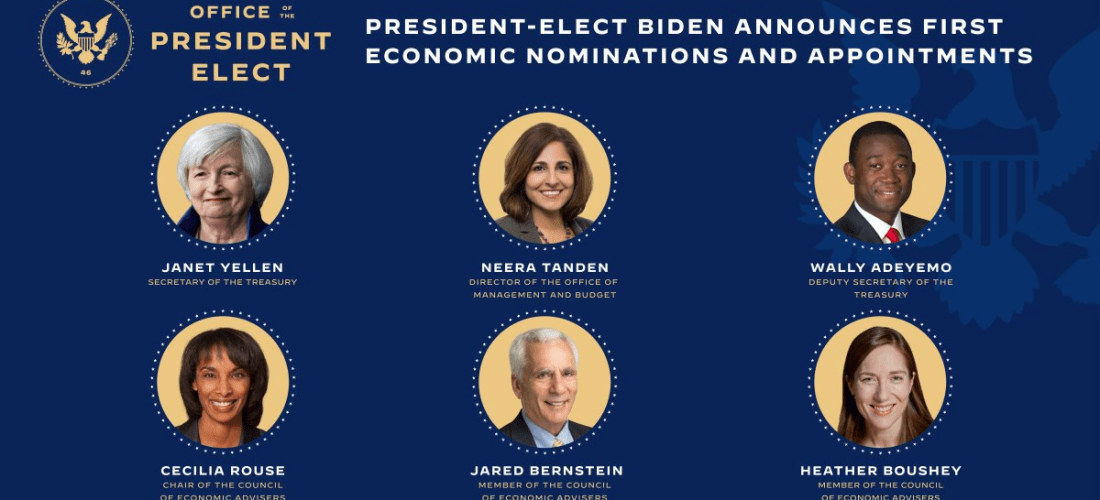
Morning Brew Pictured above are Biden’s economic nominations and appointments.
Soon after being sworn into office, President Joe Biden began appointing his cabinet members and various other positions. Some of these appointments may need to be approved by the Senate, while others have been approved or do not require approval. La Salle Alum William Burns has been appointed to be the director of the Central Intelligence Agency. Burns is president of the Carnegie Endowment for International Peace. He had a 33-year career in the foreign service, including serving as ambassador to Russia and earlier to Jordan. “Bill Burns is an exemplary diplomat with decades of experience on the world stage keeping our people and our country safe and secure,” Biden said. Burns was a member of La Salle’s Honors Program and studied history, which he says “gives you perspective.” Antony Blinken was approved to serve as Biden’s secretary of state. The two worked together closely during Biden’s vice-presidency as Biden worked on the Senate Foreign Relations Committee while Blinken served as deputy national security adviser. In addition, Retired Gen. Lloyd Austin has been appointed and approved to be the secretary of defense. Austin is a retired U.S. Army four-star general who served in the military for 41 years. He is the first African American to fill this position. Biden’s administration continues to have “firsts” in the appointment of Rachel Lavine as assistant health secretary. If confirmed by the Senate, Levine, a pediatrician by trade, would become the first openly transgender federal officer in the United States. According to Biden, “She is a historic and deeply qualified choice to help lead our administration’s health efforts.” Janet Yellen seeks Senate approval to be secretary of the treasury. Yellen was the first female to run the Federal Reserve, and, if confirmed, would be the first woman to run the Treasury Department. Ron Klain will serve as Biden’s chief of staff. Klain was a longtime aide to Biden during the Obama administration and oversaw the White House response to the Ebola epidemic in 2014. Pete Buttigieg, who endorsed Biden after dropping out of the presidential race, will serve as secretary of transportation. Buttigieg makes a jump from local politics in South Bend, IN to national-level politics with his appointment to this position. Jen Psaki will serve as press secretary. In the past, she served under the Obama administration as communications director and as the spokesperson for the State Department. There are various other positions that Joe Biden has appointed to fill his staff and some of these appointments make history.
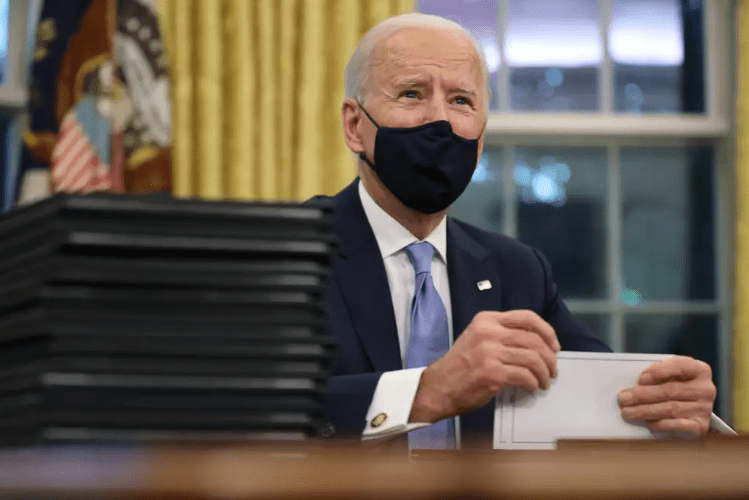
Chip Somodevilla/Getty Images President Biden pictured with a stack of executive orders on his desk within hours of his inauguration.
As the 46th President of the United States was inaugurated this past Wednesday, Jan. 20, former President Trump’s legacy — already quite controversial — began to crumble, not only throughout the Oval Office, but also through executive orders overturning previous ones conducted under the Trump administration. As of Jan. 27, President Biden has instituted thirty-three executive orders, ten of which directly reverse the executive orders instituted by the Trump administration. The executive orders cover topics from environmental issues, immigration, and the economy, to the ongoing pandemic. It is important, not only to review these orders, but to understand what they command in their power as well.
Environmentally,President Biden has reentered the United States into the Paris Climate Accord, which the Trump Administration considered too costly . Furthermore, the President has halted construction of the Keystone XL pipeline, which posed a clear environmental threat to the Antarctic.
Immigration wise, President Biden has lifted the “Muslism-ban” which has restricted the traveling of citizens from seven Muslim-majority countries. Furthermore, President Biden has undone former President Trump’s expansion of immigration enforcement through programs such as 297 (g) and universal victim techniques employed by ICE. President Biden has also ended the national emergency financial funding used to construct the southern border wall and has extended deferrals for Liberian-immigrants threatened with deportation and work permits until June of next year. Finally, he has reinstated DACA as a program undocummented citizens can now re-apply to.
Economically, the president has enforced a pause on the payments of student loans and the accruing interest for said loans, implemented holds on bill collectors from enforcing evictions foreclosures until at least March 31 supported food banks and the unemployed, and finally has officially laid the foundation for a $15 minimum wage as well as protecting federal workers.
Related to the pandemic, President Biden has signed orders to create federally-supported community vaccination centers, established the Pandemic-testing board, put into place a preclinical program to boost the development of therapeutics, expanded the federal financial support for states to distribute the COVID-19 vaccine, accelerated the distribution of vaccines through manufacturing and development, reentered the U.S into the World Health Organization, enhanced the communication of data of COVID-19, and most notably, enforced a mask mandate on federal property. President Biden has already set goals to accomplish within his first 100 days related to the pandemic, such as administering 100 million vaccines. This goal seems plausible to the CDC considering vaccinations have increased to over 1.3 million per day compared to a 900,000 a day average under the Trump administration.
There are many more executive orders to be included in this long list such as: making the national census inclusive of undoccumented Americans, enforcing prevention of workplace discrimination, requiring appointees of the executive branch to sign an ethics pledge and even overturning the Trump administration’s ban on transgender Americans enlisting in the military.
With most of these executive orders put in place within the first 48 hours of Biden’s inauguration, in overturning the last 48 months, the future of the Biden administration seems to hold a lot of potential. Addressing the economy, the pandemic, crucial environmental issues, racial injustice issues and overall Biden’s plan for “healing this country” are the main priorities set by the Biden administration, which it has already started to act on. This list of executive orders is only expected to increase within the upcoming days. The Biden administration will have plenty of trials and tribulations to overcome in its path with the looming global pandemic, and now with the second impeachment trial of former President Trump consuming the Senate. Nevertheless, it seems the administration will tackle these issues with a fast pace as exemplified through President Biden’s first 48 hours, hinting to an underlying theme of getting right to work within the new administration.