Trial of the Century: Part 2

Politics

Aidan Tyksinski, Staff
NBC
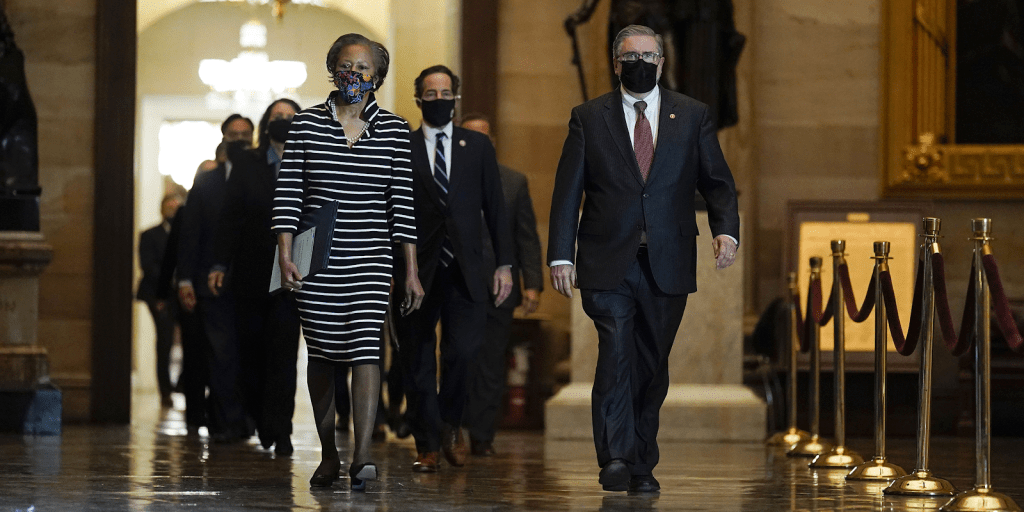
Democratic impeachment managers delivering the articles of impeachment to the Senate.

Last week, new House Majority Leader Chuck Schumer announced that the articles of impeachment against former President Donald Trump would be delivered to the Senate floor early in the week. This comes two weeks after the House pushed the articles through, making the impeachment official. In total, 232 Democrats and 10 Republicans voted yes to impeach, 197 Republicans voted no and 4 Republicans did not vote. Former President Donald Trump has made US history with this trial, becoming the first president ever to be impeached twice. 

The beginning stages of the trial are set to start almost three weeks after the deadly insurrection on Capitol Hill on Jan. 6, in which many people wearing Trump gear and carrying pro-Trump signs broke into the building to stop the certification of the 2020 election due to voter fraud claims. None of the claims made by anyone on the Trump legal team or claims made by his supporters about the election rigging have been proven true. Many Democrats blamed then President Trump for inciting the riot, and the official reason for this impeachment trial is incitement of an insurrection. Senator Benie Sanders said that President Donald Trump was directly responsible for what happened at the Capitol. At the same time, Senator Elizabeth Warren called on the Senate to impeach and convict Trump on her Instagram page. 

Just like the first impeachment trial, there have been few Republicans to speak out against the former president. Senator Marco Rubio called the trial stupid and counterproductive, while South Dakota Senator Mike Rounds told Meet the Press, “There are other things we’d rather be working on instead.” One Republican figure who is in favor of the impeachment trial is Senator Mitt Romney of Utah. Romney, who appeared on CNN on Sunday, said that the trial is constitutional, contrary to what some of his Republican colleagues have said. The Republican candidate in the 2012 election was the only Republican to vote yes to impeach the first time around. 

If found guilty, Trump would risk the chance of never being able to run for public office again and would also lose presidents perks, such as travel expenses of $1 million and a pension. The Democrats are fighting an up-hill battle at the moment. There must be a two thirds majority yes for a guilty verdict and with the senate split 50-50; this seems  unlikely to happen.  

There is also a question about whether this trial is worth it. The trial is set to take place while the Biden administration is starting up, potentially delaying the hearings of candidates for important cabinet positions and the passing of COVID relief packages. With Schumer and McConnell disagreeing on what to do with the filibuster, this trial could potentially take a long time.

tyksinskia1@lasalle.edu
Biden’s Team: Administrators and Appointees

Politics

Kylie McGovern, Editor

Morning Brew
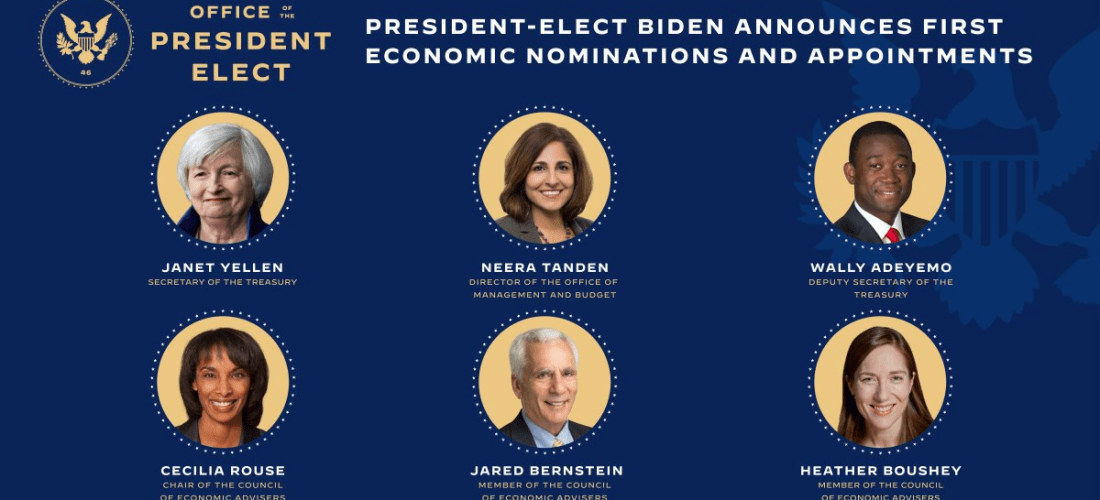
Pictured above are Biden’s economic nominations and appointments.

Soon after being sworn into office, President Joe Biden began appointing his cabinet members and various other positions. Some of these appointments may need to be approved by the Senate, while others have been approved or do not require approval. La Salle Alum William Burns has been appointed to be the director of the Central Intelligence Agency. Burns is president of the Carnegie Endowment for International Peace. He had a 33-year career in the foreign service, including serving as ambassador to Russia and earlier to Jordan. “Bill Burns is an exemplary diplomat with decades of experience on the world stage keeping our people and our country safe and secure,” Biden said. Burns was a member of La Salle’s Honors Program and studied history, which he says “gives you perspective.” Antony Blinken was  approved to serve as Biden’s secretary of state. The two worked together closely during Biden’s vice-presidency as Biden worked on the Senate Foreign Relations Committee while Blinken served as deputy national security adviser. In addition, Retired Gen. Lloyd Austin has been appointed and approved to be the secretary of defense. Austin is a retired U.S. Army four-star general who served in the military for 41 years. He is the first African American to fill this position. Biden’s administration continues to have “firsts” in the appointment of Rachel Lavine as assistant health secretary. If confirmed by the Senate, Levine, a pediatrician by trade, would become the first openly transgender federal officer in the United States. According to Biden, “She is a historic and deeply qualified choice to help lead our administration’s health efforts.” Janet Yellen seeks Senate approval to be secretary of the treasury. Yellen was the first female to run the Federal Reserve, and, if confirmed, would be the first woman to run the Treasury Department. Ron Klain will serve as Biden’s chief of staff. Klain was a longtime aide to Biden during the Obama administration and oversaw the White House response to the Ebola epidemic in 2014. Pete Buttigieg, who endorsed Biden after dropping out of the presidential race, will serve as secretary of transportation. Buttigieg makes a jump from local politics in South Bend, IN to national-level politics with his appointment to this position. Jen Psaki will serve as press secretary. In the past, she served under the Obama administration as communications director and as the spokesperson for the State Department. There are various other positions that Joe Biden has appointed to fill his staff and some of these appointments make history. 

mcgovernk8@lasalle.edu 

The Biden Administration: 48 Months Overturned in 48 Hours

Politics

Danielle O’Brien, Staff

Chip Somodevilla/Getty Images
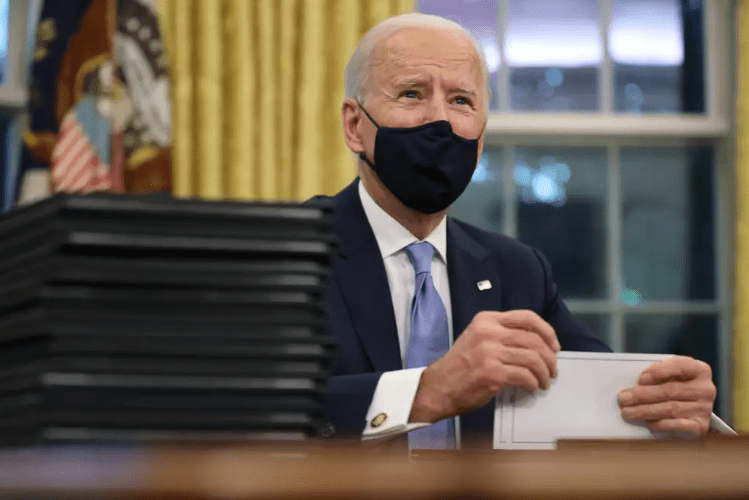
President Biden pictured with a stack of executive orders on his desk within hours of his inauguration. 

As the 46th President of the United States was inaugurated this past Wednesday, Jan. 20, former President Trump’s legacy — already quite controversial — began to crumble, not only throughout the Oval Office, but also through executive orders overturning previous ones conducted under the Trump administration. As of Jan. 27, President Biden has instituted thirty-three executive orders, ten of which directly reverse the executive orders instituted by the Trump administration. The executive orders cover topics from environmental issues, immigration, and the economy, to the ongoing pandemic. It is important, not only to review these orders, but to understand what they command in their power as well.

Environmentally,President Biden has reentered the United States into the Paris Climate Accord, which the Trump Administration  considered too costly . Furthermore, the President has halted construction of the Keystone XL pipeline, which posed a clear environmental threat to the Antarctic. 

Immigration wise, President Biden has lifted the “Muslism-ban” which has restricted the traveling of citizens from seven Muslim-majority countries. Furthermore, President Biden has undone former President Trump’s expansion of immigration enforcement through programs such as 297 (g) and universal victim techniques employed by ICE. President Biden has also ended the national emergency financial funding used to construct the southern border wall and has extended deferrals for Liberian-immigrants threatened with deportation and work permits until June of next year. Finally, he has reinstated DACA as a program undocummented citizens can now re-apply to. 

Economically, the president has enforced a pause on the payments of student loans and the accruing interest for said loans, implemented holds on bill collectors from enforcing evictions foreclosures until at least March 31 supported food banks and the unemployed, and finally has officially laid the foundation for a $15 minimum wage as well as protecting federal workers. 

Related to the pandemic, President Biden has signed orders to create federally-supported community vaccination centers, established the Pandemic-testing board, put into place a preclinical program to boost the development of therapeutics, expanded the federal financial support for states to distribute the COVID-19 vaccine, accelerated the distribution of vaccines through manufacturing and development, reentered the U.S into the World Health Organization, enhanced the communication of data of COVID-19, and most notably, enforced a mask mandate on federal property. President Biden has already set goals to accomplish within his first 100 days related to the pandemic, such as administering 100 million vaccines. This goal seems plausible to the CDC considering vaccinations have increased to over 1.3 million per day compared to a 900,000 a day average under the Trump administration.

There are many more executive orders to be included in this long list such as: making the national census inclusive of undoccumented Americans, enforcing prevention of workplace discrimination, requiring appointees of the executive branch to sign an ethics pledge and even overturning the Trump administration’s ban on transgender Americans enlisting in the military. 

With most of these executive orders put in place within the first 48 hours of Biden’s inauguration, in overturning the last 48 months, the future of the Biden administration seems to hold a lot of potential. Addressing the economy, the pandemic, crucial environmental issues, racial injustice issues and overall Biden’s plan for “healing this country” are the main priorities set by the Biden administration, which it has already started to act on. This list of executive orders is only expected to increase within the upcoming days. The Biden administration will have plenty of trials and tribulations to overcome in its path with the looming global pandemic, and now with the second impeachment trial of  former President Trump consuming the Senate. Nevertheless, it seems the administration will tackle these issues with a fast pace as exemplified through President Biden’s first 48 hours, hinting to an underlying theme of getting right to work within the new administration.

obriend11@lasalle.edu