The Votes Are In: Biden’s Bipartisan Infrastructure Bill

Politics

Rachel Phillips, Staff

Header Image: Alex Brandon/AP

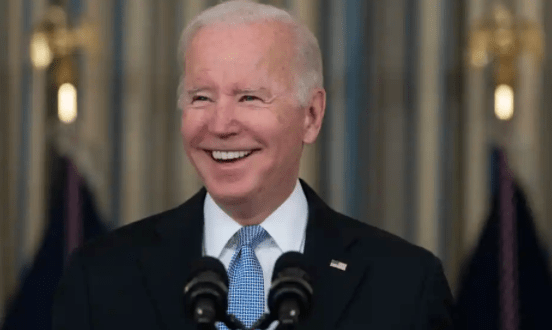
Despite the Democratic in-fighting and senate stalemates of recent months, Biden’s bipartisan infrastructure bill was finally passed on Friday, Nov. 6. While the plan does not include the passage of Biden’s ambitious economic plan, it does currently quell inter-party conflict and could bolster confidence in the Democratic platform, both of which were much-needed outcomes for the party following the election results of the previous week and in preparing for the upcoming election seasons. As for now, however, Biden’s administration can celebrate the 228-206 vote of this historic legislation, whose size and anticipated effect is comparable to Eisenhower’s interstate highway agenda in the 1950s.

The $1.2 trillion bipartisan infrastructure bill will provide increased funding for federal investments of national infrastructure, particularly by expanding America’s roads, bridges and public transport systems. In addition, this legislation will also increase the accessibility of drinkable water, by replacing lead pipes in both urban and rural areas with safer alternatives. Furthermore, the bill will also invest in broadband infrastructure, to mitigate the professional and education disadvantages certain demographics still face. By investing in high-speed internet, the Biden administration is hoping to lower the cost of internet service and close the digital divide that currently affects nearly 30 million Americans.

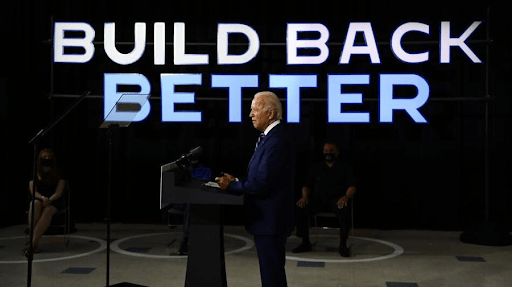
The administration was also careful to include environmental stipulations within each infrastructure program so as to continue to progress green initiatives nationwide. Moving forward, Biden’s team is hopeful that his economic bill, also known as the Build Back Better agenda, will experience similar bipartisan success. The next anticipated vote on the bill is scheduled for Nov. 15, and, if successful, could pass a variety of Democratic priorities and pillars of Biden’s campaign. 

Summit Scaries

Politics

Jeff J Mitchell/Getty Images

By Rachel Phillips

On Oct. 31, 2021, world leaders will meet in Glasgow, Scotland to conduct the largest climate change conference since the implementation of the Paris Accord in 2016. The conference, which runs from Oct. 31 to Nov. 12, will hopefully encourage not only transparent discussion but immediate action to combat the climate crisis with a more unified global strategy. It is predicted that the primary topics of the conference will be emission reduction, particularly from leading contributors like the U.S., China and Russia, as well as possible solutions for minimizing global dependency on fossil fuels. Furthermore, the climate summit is hoping to enforce the previous policies of the Paris Accord more strictly. In 2016, it was predicted that the benefits of many global environmental programs were contingent on their ability to be successfully implemented by 2030, and with that year fast approaching it becomes increasingly crucial that the COP26 conference is successful. However, while many national leaders have enthusiastically responded to the criteria of the conference, others remain noncommittal in their attendance. Leaders from China, India and Russia are not currently expected to attend the COP26, despite being amongst some of the largest contributors of carbon emissions and reoccurring victims of climate change induced natural disasters. Many world leaders, including the Queen of England, have expressed disappointment at the unwillingness of countries to act, rather than just talk about the current and future issues prompted by climate change. Similar disappointment regarding inaction has also been expressed within the U.S. While Biden is attending the Glasgow summit with former President Barack Obama in an effort to prove the shifting dynamic in the United States following the Trump administration, his environmental plan has yet to be passed. This inaction has already been criticized on a domestic level by both Democratic voters and Senators, but the greatest punditry is likely to occur in Glasgow by leading environmentalists. The United States’ inability to implement substantial changes within their own environmental structures weakens their pleas for global solidarity against climate change. If a country who leads in global carbon emissions remains hesitant to change, it becomes increasingly likely that smaller, less culpable countries will mimic the complacency. If this ripple effect occurs, the goals of the Summit are likely to be unsuccessful. However, beyond just the success of this single Summit, Glasgow may represent one of the final opportunities to minimize the potentially devastating effects of climate change on a global front. 

Could “Build Back Better” Save Biden’s Declining Approval Ratings

Politics

Rachel Phillips, Staff

Upon entering the White House, Joe Biden’s approval rating of 53% reflected a widespread optimism of most Americans, particularly regarding vaccination rollout and economic recovery. In the following months, his administration encouraged such optimism by passing a 1.9 trillion-dollar aid package that provided most American families with a 1400-dollar stimulus package and extended unemployment benefits. It was these popular policies that allowed Biden’s approval rating to remain largely unscathed well into the summer months. However, following the American exit from Afghanistan and increasing concerns over the Delta variant, Bidens most recent approval rating sits at 44.2%, just 6 percentage points higher than Donald Trump’s final weeks in office.  In a recent poll conducted by the Pew Research Center, 10,371 Americans were surveyed to evaluate the Biden administration in categories of public issues, international handlings, economic revival and personal competency. Much like the national poll, the Pew survey reflected a decrease in Biden’s approval ratings in nearly every sector of his presidency since July. Support of his ability to handle the physical and economic setbacks of Covid-19 have decreased from 65% to 51%, with the largest declines occurring from polled independent voters. Similarly, belief in his ability to unify the country has dropped 14 percentage points and now sits at just 34%. The polls also reflect increased scrutiny regarding Biden’s age and mental sharpness. Skepticism in both categories has steadily climbed since the summer and now indicate that fewer than half of the poll participants find the president fit for the position. However, the poll does suggest one potential light at the end of the dark and seemingly unending tunnel of 2021. The most positive feedback from the survey reflects widespread support for Biden’s political agenda. His recently passed infrastructure bill which included increased funding for roads, bridges and the power grid, as well as renewed interest in clean energy, polled at 51% in favor of. In addition, polls reflected 49% support for the Build Back Better Agenda, a plan that would expand Medicare, increase taxes on the wealthy and reduce Carbon Emissions. Although it has yet to be passed, Build Back Better has the potential and popularity to curb Biden’s downward spiral and save his first year in office. 

F-35 Fighter Jets Moving to Europe

Politics

Elizabeth Boyle, Staff

U.S. Air Force Lockheed Martin F-35 Lightning stealth fighter flies over the San Francisco Bay, on Oct. 13, 2019.

When you look up at the sky on a sunny day you may see airplanes flying above and they seem to be traveling at such a high speed. You are most likely looking at a commercial airline and not an F-35 fighter jet, which the U.S. recently activated in Europe. 

In early October the US Air Force, working with the United Kingdom’s Royal Air Force, transported its first squadron of F-35 jets to the Royal Air Force Laken-heath Airbase. By the end of this year, the U.S. is hoping to have up to 27 jets in England. This is an important moment because it is the first time F-35 jets have been permanently stationed in Europe. 

A Lockheed Martin F-35 Lightning II fighter jet is an American model all-weather stealth fighter. The jet has one seat and one engine and is a multifunctional aircraft that can be used in airstrikes, reconnaissance missions, and electronic warfare. This jet is different from your average commercial airline not only in size and speed but how it is able to take off and land. 

It can do a conventional take-off and landing using a traditional runway and if it is not carrying a heavy payload, it also has the capability to take off and land without a runway using short take-off and vertical landing (STOVL) technology. The plane is used in the U.S., several North Atlantic Treaty Organizations (NATO) partners, as well as Israel, Japan, South Korea, and Singapore.

The plan for the F-35s in the U.K. is for the U.S. and Royal Air Force to work together in training missions. The U.K. will also be able to use this squadron of F-35s and needed by their Air Force, in preparation for receiving up to 48 F-35s of their own in the next year. 

The U.S. is continuing its initiative from 2019 when it brought a squadron of F-35s to Italy in order to work on the European Deterrence Initiative. This initiative was meant to strengthen U.S. relationships and counter aggression from potential enemies. 

Local artist Key describes politics’ power through art

Politics

Jada Urbaez, Writer

Political conversations often turn heavy especially if those participating are in disagreement. Oftentimes, people cannot think of the correct words to express their thoughts, or sometimes there simply are no words to communicate them. Luckily, when words fail, art prevails, even when it comes to politics. 

An inspiring anonymous artist who goes by Key is a young local talent whose work is centered on human rights issues and politics. Key describes how they express their emotions through their art. In a recent interview with the Collegian, Key was asked what art has the potential of portraying. In response, Key stated, “Think of it as if someone were to state their opinion, but in image form”. The illustrator continued by expressing that with politics and world issues, it provides a visual representation rather than a conceptual one. For instance, if someone were to read about hungry children, they would more than likely continue their day unaffected afterward. Nonetheless, Key declares that if the same idea was a work of art, society would be emotionally touched in a way words cannot do. 

With digital paintings being this artist’s concentration, dozens have been published to Instagram including a handful of them with thousands of likes. One of Key’s digital paintings exceeded twelve thousand likes on this social media platform back in February of 2021. When the young talent was questioned about why they think this particular post  got this much recognition, Key replied, “it forced people to face reality- you can’t ignore an image”. 

@key_theartist

Out of the dozens posted to their Instagram profile (@key_theartist), Key shared that their favorite digital painting so far is the one posted on February 22, 2021. It depicts a Black trans woman in support of LGBTQ+ rights. Key stated they decided to do a Black trans woman because “the Black community tends to be excluded from the LGBTQ+ rights movement”.

As an artist who cares about politics and human rights, Key is a talented creator who believes that art plays an important role in sending a message. Being a person of color in the art industry, Key emphasizes that illustrating for current events always comes with a load of emotion and passion.

Biden avoids partial government shutdown

Politics

Gibson McMonagle, Staff

Header Image: National Geographic Society

With very little time left, President Biden signs Legislation to avoid partial government shutdown and keep government funding until Dec. 3.  

Government shutdowns occur when there are funding gaps in the federal budget. Since 1976 there have been a total of 22 funding gaps, ten of which have led to employees being furloughed. During the 1980s, funding gaps started to lead to government shutdowns due to the opinion of Attorney General Benjamin Civiletti, who suggested the government shut down during those times. The opinion was not always listened to, but since that time, most funding gaps lasting more than a few hours have led to government shutdowns. 

Government shutdowns cause the disruption of government services and programs. National parks and institutions also shut down during this time due to shortage of employees. Some of the most significant shutdowns in history include the 21-day shutdown during the Bill Clinton administration, the 16-day shutdown during the Barack Obama administration and the 35-day shutdown during the Donald Trump administration.  

The economy is mostly affected when a shutdown occurs. The government mostly loses their revenue due to having to pay furloughed employees as well as not being paid back fees because the businesses are not running. During longer shutdowns the economy starts to take a toll. In 2013 the shutdown had taken $24 billion out of the economy and shaved 0.6 of annualized fourth quarter GDP growth. 

On Sept. 30, President Biden had signed legislation to keep government funding through Dec. 3. This happened with hours to spare since the current budget year ended at midnight. The house approved the short-term funding 254-175 shortly after it went through the senate 65-35. Passing this legislation has allowed more time for lawmakers to craft the spending measures that will fund federal agencies. 

After the success of signing the legislation, Biden stated, “There’s so much more to do, but the passage of this bill reminds us that bipartisan work is possible, and it gives us time to pass longer-term funding to keep our government running and delivering for the American people.” 

The short-term spending legislation will provide roughly $28.6 billion in disaster relief for those affected and recovering from hurricane Ida and other natural disasters. $10 billion of that will be used to help farmers cover crop loss from disasters such as fires, droughts and flooding. Additionally, $6.3 billion will be used to help support the resettlement of Afghanistan evacuees from the war between the U.S. and the Taliban. Once the government is funded temporarily, the Democrats will go back to their original plan of raising the limit of federal borrowing, which is currently at $28.4 trillion.

Women Are Not Ovary-Acting: 2021 Women’s March

Politics

Jada Urbaez, Staff

Header Image: Jasmine Rivera

This past Saturday, Oct. 2, the nation unified and marched for women’s reproductive rights as thousands gathered in cities around the United States. Some major participating cities included New York, Philadelphia, Los Angeles, Atlanta and Honolulu. The first nationwide Women’s March took place in 2017, but this year was extra unique due to the recent controversial abortion ban in Texas. The Texan government prohibits access to abortion procedures once a heartbeat can be detected in a fetus, which can be as early as six weeks into a pregnancy. This law was enacted on Sept. 1, 2021, causing major distress amongst Texan women and women across the country. 

Great passion was once again brought to this year’s Women’s March, with artistic signs reading “My Body, My Choice,” “We Are Not Ovary-Acting,” and other creative phrases to express the importance of reproductive rights. The Philadelphia march in particular began at 12 noon Saturday Oct. 2, beginning from Philadelphia’s Museum of Art to  City Hall, a brisk-thirty minute walk, a distance of 1.2 miles. 

A Rutgers University student, Jasmine Rivera, tells of her experience at this year’s Women’s March, stating “Every woman should be included in this fight- transwomen, Asian, Hispanic, Black and every other racial group”. Rivera recalls feeling a sense of racial divide amongst the participants at Philadelphia’s 2021 Women’s March, saying she hopes it changes and that all people can unify for the cause of women’s rights. Rivera shares the sentiments of many women, not only those who marched in Philadelphia the past weekend, but across the U.S.

Blurred Lines : The U.S Justice Department Sues Texas over New Abortion Law Upheld by Supreme court while Mexico Overturns it 

Politics

Danielle O’Brien, Editor


Taylor Lowder via Dallas Innovates
From left to right: Texas State Flag, American Flag, Mexican Flag

Tensions run high in the U.S. this week as Texas enacts a new abortion law, which bans women from getting abortions after six weeks of pregnancy. This is just one point of the bill which remains controversial, as frequently, women do not know they are pregnant until the six week mark or later. Another controversial point of the law is that it does not allow any exceptions to those who are victims  of incest and rape. 

Furthermore, the law also affects those who conduct the procedure or help women to gain access to abortions, including Uber drivers. The law calls on Texans to report women they know  who undergo the procedure after six weeks to a website. It also allows civil lawsuits to be filed against these women. One of the most divisive applications of this law is that Texans reporting or suing women who havean abortion after six weeks can earn up to $10,000 in damages from a lawsuit. 

The law, which was put into effect September 1, puts forth many questions surrounding how accurately it could be carried out in the state because of its incongruities. Nevertheless, it was upheld by the Supreme Court on September 8 in a five to four vote where the Supreme Court refused to block the law from going into effect. It is important to note that refusing to block does not mean the same thing as endorsing the law. However, the law can only be overturned if another case is brought to the Supreme Court. 

24 hours after the Supreme Court decision, the U.S. Department of Justice announced a lawsuit against the state of Texas. Remarked by the U.S. Attorney General Merrick Garland, “this kind of scheme, to nullify the constitution of the United States, is one that all Americans, whatever their politics or party, should fear.”

Meanwhile, on the other side of the Rio Grande, the attitude towards abortion is moving in the opposite direction. The Mexican Supreme Court ruled on September 7 to decriminalize abortion. While Mexico’s supreme court ruling does not automatically make abortion legal throughout Mexico, it does allow women who have been incarcerated for having an abortion to sue the state’s authorities and have their prior charges dropped. The ruling of Mexico’s supreme court not only sets a precedent for the rest of South and Central America, but also for the North. One of the largest Catholic countries is voting against it’s inherently conservative ideas, while it’s neighboring country, the United States, is still struggling to stick to a legal consensus on abortion. Only time will tell if the U.S. will be able to reach a general public conclusion on the abortion debate, as well as stand by it.

Trouble facing U.S. forces leaving Afghanistan

Politics

Elizabeth Boyle, Staff

The Atlantic
Image depicts American troops in Afghanistan.

Last February, the Trump administration negotiated with the Taliban and a plan was agreed upon that U.S. troops would leave Afghanistan by May 1, 2021. President Biden decided to proceed with the plan to leave, but decided to adjust the timeline. Biden declared that all U.S. forces would leave Afghanistan by September 11, 2021, exactly 20 years after the attack on the U.S. by the Islamic extremist organization Al-Qaeda.

         Since the U.S. has failed to meet the agreed upon May 1 deadline, the Taliban has announced that it believes the U.S. has violated the terms agreed to in February 2020. At that time, the Taliban agreed not to attack U.S. troops through the May 1 deadline, and they did indeed stop the attacks. The Pentagon is now concerned that U.S. forces might be attacked while in the process of moving out because it is beyond May 1.      

The U.S. military tries to always be prepared for potential threats, and currently has an aircraft carrier nearby, and is ready to move multiple B-52 bombers as well as an Army Ranger task force into the area. The U.S. State Department has also instructed diplomatic personnel in Kabul, Afghanistan to vacate the country unless it is absolutely necessary that they remain. Military specialists say there is hope for a peaceful withdrawal but also potential for the Afghan government to fall soon after the U.S. departs.

Russia orders withdrawal of troops at Ukrainian border

Politics

Elizabeth Boyle, Staff

NPR
Depicted above is the Ukrainian and Russian border.

During the week of April 14, 2021, Russia increased its military presence along the Ukrainian border, setting off warning flags for the U.S., Ukraine’s ally.

Russia invaded Ukrainian territory near the Crimean Peninsula in February of 2014. Since then, Russia and Ukraine have been in conflict with each other. Two weeks ago, Russia massed the largest number of its troops near its border with Ukraine since the initial invasion in 2014. That same week, President Joe Biden had a phone call with Russian leader Vladimir Putin and emphasized the U.S. alliance with Ukraine. Western officials speculated that Putin is either testing President Biden or instigating a military conflict in Europe.

In the week of April 22, 2021, Russia ordered the withdrawal of its troops from the Ukrainian border. President Biden is stressing the importance of de-escalating the tension and reducing Russia’s military presence in Crimea and in other areas adjacent to Ukraine. Moscow said the troops will be returning to their normal bases but there has not been any movement yet. Moscow says the date for completing the withdrawal has been set for May 1, 2021. Ukrainian President Volodymyr Zelensky welcomed the removal of troops because it reduces tension and helps to ensure Ukraine’s safety. 

 Russia claims that its movement of forces on Russian soil was training to insure unit readiness. Russia’s Ministry of Defense has stated that the presence of enhanced troop units near the Ukrainian border shows no threat to the status quo. 

Ukraine has requested additional weapons and military aid from the U.S. to deter further Russian aggression. In the future, President Biden may meet face-to-face with Putin, as the Russian president was already involved in President Biden’s virtual climate summit which happened this past week.