Biden avoids partial government shutdown

Politics

Gibson McMonagle, Staff

Header Image: National Geographic Society

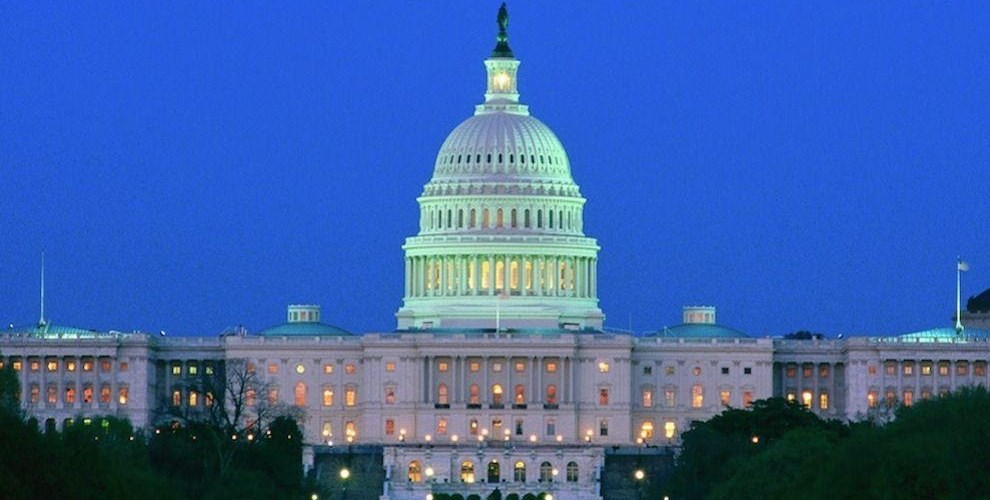
With very little time left, President Biden signs Legislation to avoid partial government shutdown and keep government funding until Dec. 3.  

Government shutdowns occur when there are funding gaps in the federal budget. Since 1976 there have been a total of 22 funding gaps, ten of which have led to employees being furloughed. During the 1980s, funding gaps started to lead to government shutdowns due to the opinion of Attorney General Benjamin Civiletti, who suggested the government shut down during those times. The opinion was not always listened to, but since that time, most funding gaps lasting more than a few hours have led to government shutdowns. 

Government shutdowns cause the disruption of government services and programs. National parks and institutions also shut down during this time due to shortage of employees. Some of the most significant shutdowns in history include the 21-day shutdown during the Bill Clinton administration, the 16-day shutdown during the Barack Obama administration and the 35-day shutdown during the Donald Trump administration.  

The economy is mostly affected when a shutdown occurs. The government mostly loses their revenue due to having to pay furloughed employees as well as not being paid back fees because the businesses are not running. During longer shutdowns the economy starts to take a toll. In 2013 the shutdown had taken $24 billion out of the economy and shaved 0.6 of annualized fourth quarter GDP growth. 

On Sept. 30, President Biden had signed legislation to keep government funding through Dec. 3. This happened with hours to spare since the current budget year ended at midnight. The house approved the short-term funding 254-175 shortly after it went through the senate 65-35. Passing this legislation has allowed more time for lawmakers to craft the spending measures that will fund federal agencies. 

After the success of signing the legislation, Biden stated, “There’s so much more to do, but the passage of this bill reminds us that bipartisan work is possible, and it gives us time to pass longer-term funding to keep our government running and delivering for the American people.” 

The short-term spending legislation will provide roughly $28.6 billion in disaster relief for those affected and recovering from hurricane Ida and other natural disasters. $10 billion of that will be used to help farmers cover crop loss from disasters such as fires, droughts and flooding. Additionally, $6.3 billion will be used to help support the resettlement of Afghanistan evacuees from the war between the U.S. and the Taliban. Once the government is funded temporarily, the Democrats will go back to their original plan of raising the limit of federal borrowing, which is currently at $28.4 trillion.

Women Are Not Ovary-Acting: 2021 Women’s March

Politics

Jada Urbaez, Staff

Header Image: Jasmine Rivera

This past Saturday, Oct. 2, the nation unified and marched for women’s reproductive rights as thousands gathered in cities around the United States. Some major participating cities included New York, Philadelphia, Los Angeles, Atlanta and Honolulu. The first nationwide Women’s March took place in 2017, but this year was extra unique due to the recent controversial abortion ban in Texas. The Texan government prohibits access to abortion procedures once a heartbeat can be detected in a fetus, which can be as early as six weeks into a pregnancy. This law was enacted on Sept. 1, 2021, causing major distress amongst Texan women and women across the country. 

Great passion was once again brought to this year’s Women’s March, with artistic signs reading “My Body, My Choice,” “We Are Not Ovary-Acting,” and other creative phrases to express the importance of reproductive rights. The Philadelphia march in particular began at 12 noon Saturday Oct. 2, beginning from Philadelphia’s Museum of Art to  City Hall, a brisk-thirty minute walk, a distance of 1.2 miles. 

A Rutgers University student, Jasmine Rivera, tells of her experience at this year’s Women’s March, stating “Every woman should be included in this fight- transwomen, Asian, Hispanic, Black and every other racial group”. Rivera recalls feeling a sense of racial divide amongst the participants at Philadelphia’s 2021 Women’s March, saying she hopes it changes and that all people can unify for the cause of women’s rights. Rivera shares the sentiments of many women, not only those who marched in Philadelphia the past weekend, but across the U.S.

Blurred Lines : The U.S Justice Department Sues Texas over New Abortion Law Upheld by Supreme court while Mexico Overturns it 

Politics

Danielle O’Brien, Editor


Taylor Lowder via Dallas Innovates
From left to right: Texas State Flag, American Flag, Mexican Flag

Tensions run high in the U.S. this week as Texas enacts a new abortion law, which bans women from getting abortions after six weeks of pregnancy. This is just one point of the bill which remains controversial, as frequently, women do not know they are pregnant until the six week mark or later. Another controversial point of the law is that it does not allow any exceptions to those who are victims  of incest and rape. 

Furthermore, the law also affects those who conduct the procedure or help women to gain access to abortions, including Uber drivers. The law calls on Texans to report women they know  who undergo the procedure after six weeks to a website. It also allows civil lawsuits to be filed against these women. One of the most divisive applications of this law is that Texans reporting or suing women who havean abortion after six weeks can earn up to $10,000 in damages from a lawsuit. 

The law, which was put into effect September 1, puts forth many questions surrounding how accurately it could be carried out in the state because of its incongruities. Nevertheless, it was upheld by the Supreme Court on September 8 in a five to four vote where the Supreme Court refused to block the law from going into effect. It is important to note that refusing to block does not mean the same thing as endorsing the law. However, the law can only be overturned if another case is brought to the Supreme Court. 

24 hours after the Supreme Court decision, the U.S. Department of Justice announced a lawsuit against the state of Texas. Remarked by the U.S. Attorney General Merrick Garland, “this kind of scheme, to nullify the constitution of the United States, is one that all Americans, whatever their politics or party, should fear.”

Meanwhile, on the other side of the Rio Grande, the attitude towards abortion is moving in the opposite direction. The Mexican Supreme Court ruled on September 7 to decriminalize abortion. While Mexico’s supreme court ruling does not automatically make abortion legal throughout Mexico, it does allow women who have been incarcerated for having an abortion to sue the state’s authorities and have their prior charges dropped. The ruling of Mexico’s supreme court not only sets a precedent for the rest of South and Central America, but also for the North. One of the largest Catholic countries is voting against it’s inherently conservative ideas, while it’s neighboring country, the United States, is still struggling to stick to a legal consensus on abortion. Only time will tell if the U.S. will be able to reach a general public conclusion on the abortion debate, as well as stand by it.

Trouble facing U.S. forces leaving Afghanistan

Politics

Elizabeth Boyle, Staff

The Atlantic
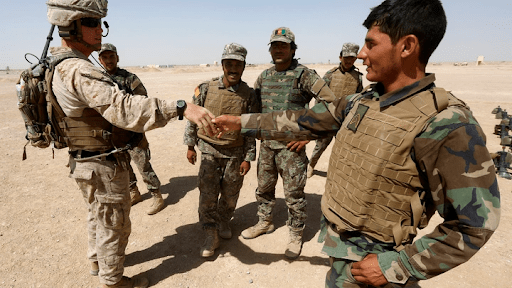
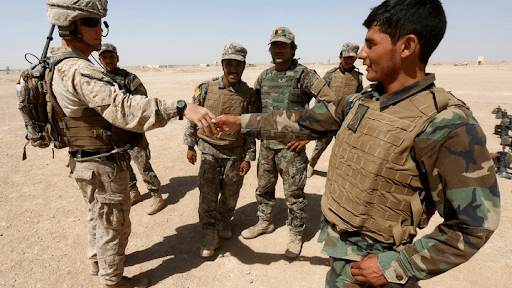
Image depicts American troops in Afghanistan.

Last February, the Trump administration negotiated with the Taliban and a plan was agreed upon that U.S. troops would leave Afghanistan by May 1, 2021. President Biden decided to proceed with the plan to leave, but decided to adjust the timeline. Biden declared that all U.S. forces would leave Afghanistan by September 11, 2021, exactly 20 years after the attack on the U.S. by the Islamic extremist organization Al-Qaeda.

         Since the U.S. has failed to meet the agreed upon May 1 deadline, the Taliban has announced that it believes the U.S. has violated the terms agreed to in February 2020. At that time, the Taliban agreed not to attack U.S. troops through the May 1 deadline, and they did indeed stop the attacks. The Pentagon is now concerned that U.S. forces might be attacked while in the process of moving out because it is beyond May 1.      

The U.S. military tries to always be prepared for potential threats, and currently has an aircraft carrier nearby, and is ready to move multiple B-52 bombers as well as an Army Ranger task force into the area. The U.S. State Department has also instructed diplomatic personnel in Kabul, Afghanistan to vacate the country unless it is absolutely necessary that they remain. Military specialists say there is hope for a peaceful withdrawal but also potential for the Afghan government to fall soon after the U.S. departs.

Russia orders withdrawal of troops at Ukrainian border

Politics

Elizabeth Boyle, Staff

NPR
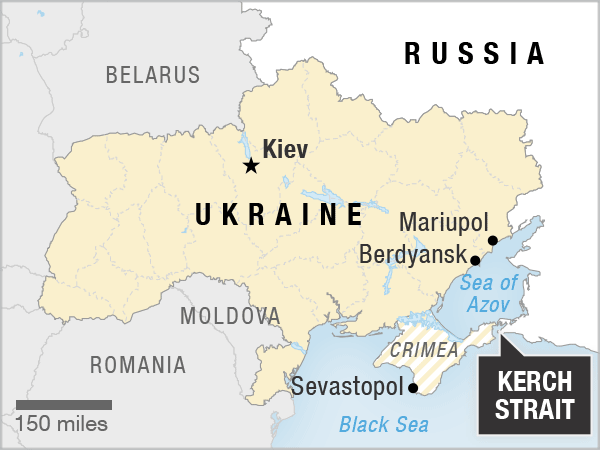
Depicted above is the Ukrainian and Russian border.

During the week of April 14, 2021, Russia increased its military presence along the Ukrainian border, setting off warning flags for the U.S., Ukraine’s ally.

Russia invaded Ukrainian territory near the Crimean Peninsula in February of 2014. Since then, Russia and Ukraine have been in conflict with each other. Two weeks ago, Russia massed the largest number of its troops near its border with Ukraine since the initial invasion in 2014. That same week, President Joe Biden had a phone call with Russian leader Vladimir Putin and emphasized the U.S. alliance with Ukraine. Western officials speculated that Putin is either testing President Biden or instigating a military conflict in Europe.

In the week of April 22, 2021, Russia ordered the withdrawal of its troops from the Ukrainian border. President Biden is stressing the importance of de-escalating the tension and reducing Russia’s military presence in Crimea and in other areas adjacent to Ukraine. Moscow said the troops will be returning to their normal bases but there has not been any movement yet. Moscow says the date for completing the withdrawal has been set for May 1, 2021. Ukrainian President Volodymyr Zelensky welcomed the removal of troops because it reduces tension and helps to ensure Ukraine’s safety. 

 Russia claims that its movement of forces on Russian soil was training to insure unit readiness. Russia’s Ministry of Defense has stated that the presence of enhanced troop units near the Ukrainian border shows no threat to the status quo. 

Ukraine has requested additional weapons and military aid from the U.S. to deter further Russian aggression. In the future, President Biden may meet face-to-face with Putin, as the Russian president was already involved in President Biden’s virtual climate summit which happened this past week.

Is the U.S. headed into a foreign policy conflict?

Politics

Elizabeth Boyle, Staff

Brilliant Maps
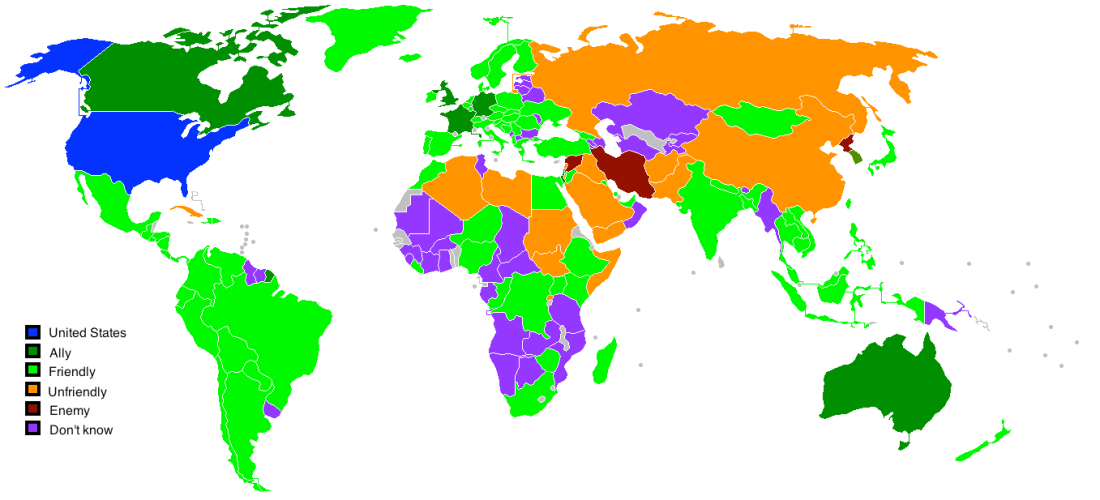
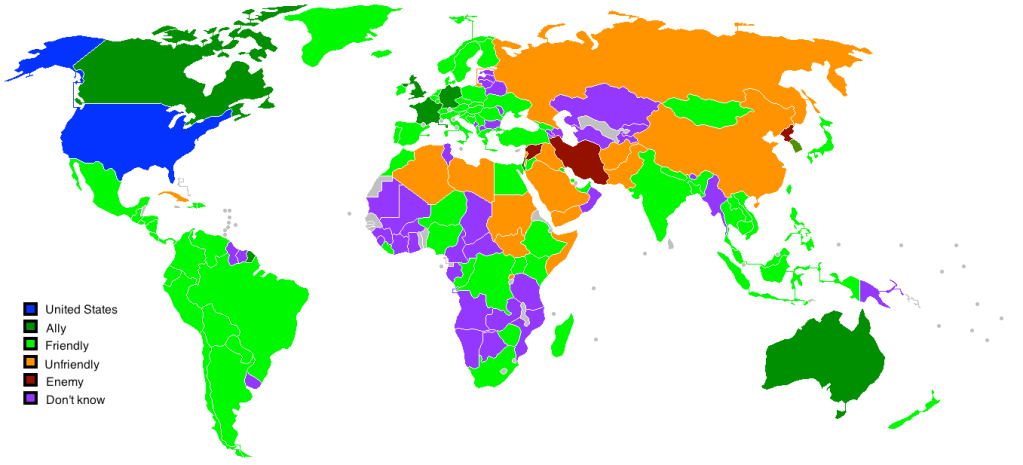
Map of the United States and their relations with other nations.

Today, in America, two big things are changing. The hegemony of the American military used to be an absolute, and now it is in question, not only by U.S. citizens but by other countries. Second, other countries know they are closing the gap between their militaries and the U.S.’s. Mindful of this situation, the U.S. could be headed for foreign policy crises in the near future in Ukraine and Taiwan. 

 David Ochmanek is a former senior Defense Department official who helps run war games for the Pentagon and the RAND Corporation think tank. Ochmanek uses simulations to look at potential outcomes of conflicts and makes educated predictions as to when potential conflicts could occur. In one of his recent simulations, he looked at China attempting to invade Taiwan and the U.S. almost always loses. There is a “blue team” representing the Americans and “red team” representing the Chinese. In the simulations, Taiwan’s entire air force is wiped out in minutes. These simulations are relevant because they could be predicting actual invasions. 

 Recently, there has been an increase in tensions between Russia and Ukraine. Russia has moved approximately 80,000 troops close to its border with Ukraine. It has been estimated that the combined NATO European forces, as currently constituted, could not defeat Russian forces close to the Russian border. In order to defeat Russia, they would need reinforcements from the U.S. mainland. 

            How likely is it that the U.S. will actually engage in these conflicts if they occur? Well, if Taiwan or Ukraine were attacked, there are no legal obligations for the U.S. to fight in those conflicts. However, we have seen in the past that global participation in a conflict can occur and escalate very quickly. The U.S. has been planning to send troops to Taiwan if it is ever attacked, but does not have plans to do so if Ukraine is attacked. This could mean potential U.S. intervention in Ukraine would be postponed, perhaps figuring into Russian calculations about whether attacking Ukraine stands a higher probability of success.

            We should look to President Joe Biden for upcoming news on these topics as he has proposed a summit with Russia to reduce tensions and continues to try to restart relations with China. 

U.S. and Iran Indirect Nuclear Talks

Politics

Elizabeth Boyle, Staff

            On Tuesday, April 6, indirect nuclear talks began between Iran and the U.S. The Joint Comprehensive Plan of Action (JCPOA), also known as the Iran Deal, could potentially be revived. On July 14, 2015 in Vienna, Austria, an agreement concerning the Iranian nuclear program was reached between Iran and the six permanent members of the United Nations Security Council: the U.S., U.K., China, France, Germany and Russia. In 2018 Former President Donald Trump withdrew the U.S. from the JCPOA. President Biden is pushing to restart the JCPOA and started negotiations with Tehran, the capital of Iran, albeit through proxies.

            The U.S. and Iranian diplomats are not speaking directly to one another. The talks from the past week were mediated by the other signatories of the agreement. The two main goals of the meeting right now are for Iran to agree to strict limitations on their nuclear program and for the U.S. to agree to lift the sanctions placed on Iran by President Trump. Iran is refusing to agree to anything until the sanctions are lifted. On the other hand, President Biden is hesitant to remove the sanctions because Iran has an upcoming election and the U.S. is concerned Iran will elect someone less likely to be open to diplomacy.

            The negotiations are expected to take a long time, seeing as neither side wishes to change. Russian diplomat Mikhail Ulyanov has been tweeting about how he is pleased that the negotiations have begun and that work toward the goals has been started. Jason Brodsky, a senior analyst at Iran International and former policy director at United Against Nuclear Iran, cautioned President Biden about rushing into a new deal and reminded the U.S. that other countries are watching these negotiations unfold.

The globe experiences inequitable progress on COVID-19 vaccinations

Politics

Elizabeth Boyle, Staff

Michigan Health Lab
Image depicts a person being given a COVID-19 vaccination.

As the weather in Philadelphia finally starts to feel like spring, you may be thinking back to what you were doing last year at this time before the pandemic. A year ago this March was the beginning of the government shutdowns due to the COVID-19 pandemic. In one year multiple companies, including Moderna, Pfizer and Johnson and Johnson, have made and released COVID-19 vaccines approved by the FDA for emergency use. The various COVID-19 vaccines have been distributed first to those 65 years of age and older or those with underlying health concerns. Currently many states, such as Illinois, have made plans to start vaccinating everyone over 16 years of age as early as April 12. 

            Based on the number of vaccines produced and distributed, one would expect to see the world-wide number of COVID-19 cases decreasing. However, this is not the case in Europe. . Europe was one of the first places to have widespread deaths due to COVID-19, primarily in Italy. Recently the European Union (EU) vaccine distribution has been slower than expected, especially relative to Great Britain and the U.S., and positive cases of COVID-19 are rising. There are several potential reasons for Europe’s unexpected predicament. First, it took the EU longer to come together and sign an agreement with vaccine producers. The EU waited for all 27 member countries to come to an agreement about vaccine procurement, whereas other countries rushed into individual agreements to try and move along the process. A second reason is that Europeans have been more vaccine-skeptical than many other developed areas. Nature Medicine Journal published a survey of 19 countries that were asked how comfortable they were with receiving a COVID-19 vaccine that was “proven safe and effective.” China had the highest national response rate with 89 percent positive response compared to  the United States’ 75 percent. The European countries had much lower approval rates; for example, Germany had 65 percent approval and France had 56 percent. 

            For many European countries, an increase in positive COVID-19 cases seems like a step backwards. Conversely, the U.S., Britain (which left the E.U. in January 2020) and Israel are continuing to see an overall decrease in cases subsequent to an increase in vaccinations according to the New York Times, health agencies and hospitals.

Syrian Dilemma for President Joe Biden

Politics

Elizabeth Boyle, Staff

BBC
Image of one of the many wreckages throughout Syria.

As President Biden begins his third month in office, we continue to see shifts in international relations. This week there has been debate about President Biden’s position on the U.S. troops in Syria. 

            Currently, the U.S. has approximately 900 troops on a military outpost in a natural gas field in eastern Syria. Syria has been in a Civil War since 2011. The war is between the Ba’athist Syrian Arab Republic, which is led by President Bashar al Assad, and various foreign and domestic allies who oppose the Syrian government. In 2016 the United Nations estimated that 400,000 Syrians had been displaced or fled the country. The Syrian Army is conducting its own fight on behalf of Assad with the help of Russia and Iran. Because of them, Syria is supplied with warplanes and drones.

            Those who believe the U.S. troops should be removed, such as former U.S. ambassador to Syria, Robert Ford, think the U.S. is wasting resources. Ford argues that the Islamic State is contained and is not posing a threat to Europe or the U.S. He argues the Arab population now resents the U.S. alliance with the Kurdish militia. The Kurds are an Iranic ethnic group native to a mountainous region of Western Asia known as Kurdistan. Those who want the U.S. troops to stay would argue that the Syrian Democratic Forces (SDF), Assad’s primary domestic antagonists, have a portion of land outside of President Assad’s control. They have created stability in that area while the country continues to fight a decade-long war.If the U.S. troops were to be removed from Syria it could cause a security issue that the Islamic State could take advantage of. The stability created by the SDF is at risk. 

When President Obama was in office, he primarily used political negotiations in an effort to remove Assad. He also sent a small contingent of U.S. troops to help train the Kurds and Syrian rebels. When President Trump was in office, he increased U.S. forces in Syria to fight the Islamic State, and almost withdrew troops after the death of Islamic State leader Abu Bakr Baghdadi and the defeat of the Islamic State as a cohesive fighting force. Trump was advised against it, and agreed to keep U.S. forces present to work with the SDF to secure oil fields. In February 2021, President Biden ordered an airstrike on a camp in Syria near the Iraq border in retaliation for an Iranian-backed militia attack on a U.S. base in Iraq, during which a U.S. civilian contractor was killed.

As President Biden enters his third month in office and continues to expand the U.S. international relations, it will be interesting to see what he chooses to do moving forward.

boylee2@lasalle.edu

America’s State of Hate

Politics

Danielle O’Brien, Staff

Jim Wilson/The New York Times
Image depicts protestors of violence against Asian American

With America already suffering a state of peril due to the COVID-19 pandemic, another unexpected increase in cases has risen: cases of hate crimes. The Asian-American community has especially suffered throughout the pandemic through lack of small business support, as well as an increase in xenophobic hate crimes directly resulting from this pandemic. It is observed that from 2019 to 2020, there has been a dramatic increase in hate crimes directed against the Asian-American community throughout the United States. It is possible that the COVID-19 pandemic has highlighted the existing xenophobic tendencies and state of hate which lay in America today.

2020-2021 was a rough year for most Americans because of the pandemic, but it has especially affected the Asian-American community. Hate crimes targeted towards the Asian-American community have in fact skyrocketed since the beginning of the pandemic. In 2020 alone, The NYPD reported that hate crimes against the Asian-American community in New York skyrocketed 1,900 percent. Over 2,800 hate crimes towards the Asian-American community were reported between 2019 and 2020. While this has been an ongoing trend in itself within the past, Asian related hate crimes have only been recently brought forth by major media outlets. Only three months into 2021, there have been countless acts of violence committed against the Asian-American community, especially the elderly. In February, for example, a 61 year old Filipino man, Noel Quintana, was slashed across his face with a box cutter on the New York subway, leaving a scar which is still visible today. Videos have surfaced of a 91 year old Chinese man being pushed to the ground as people call for justice for such senseless violence. But the examples of hate crimes against the elderly Asian-American community does not stop there. Attacks against all ethnicities within the Asian community, including Chinese, Thai, Korean, Vietnamese, Filipino and many more groups. These hate crimes could likely be attributed to the stigma which surrounds the Asian community as they are blamed by some for the ongoing pandemic. The former POTUS who described  COVID-19 as the “Kung-Flu” or “China-virus” did not help to discourage this stigma. However, the pandemic could only serve as an excuse for xenophobic Americans to act out on their hatred towards the Asian community. 

Politically the situation is being addressed as President Biden put in place an executive order which condemns the hate crimes and xenophobia being committed against the Asian community. The order, which is available for viewing on  Whitehouse.gov, hints to government contribution to this state of hate, stating “The Federal Government must recognize that it has played a role in furthering these xenophobic sentiments through the actions of political leaders, including references to the COVID-19 pandemic by the geographic location of its origin.  Such statements have stoked unfounded fears and perpetuated stigma about Asian Americans and Pacific Islanders and have contributed to increasing rates of bullying, harassment, and hate crimes against AAPI persons.”  The executive order further acknowledges the contribution the Asian-American community has given to the United States, denouncing the stigma and blame for COVID-19 which has been inflicted on the community. With Biden’s goal of uniting the country and bringing back the “soul” of America, there is still more work to be done beyond simply denouncing xenophobia. However, it is important to acknowledge that this is a step in the right direction for the White House in how to address issues of discrimination and hate which we are witnessing at this time.

obriend11@lasalle.edu