NATO on standby as Russia places troops on Ukrainian border

international politics, Politics

Danielle O’Brien, Editor

An estimated 100,000 Russian troops are currently poised at the Ukrainian border, ready to invade the country. Tensions are high as the threat of Russian invasion in Ukraine comes only less than a month into the new year. Vladimir Putin denies allegations that Russia will in fact move in on Ukraine, however, the mass of soldiers at Ukraine’s border tells otherwise. The threat of invasion comes just a month after President Biden and Putin met via video call to discuss the repercussions Russia can expect if it does invade Ukraine. 

The threat is due in part to the refusal of Russian demands for the pulling of NATO from Ukraine, and to avow never to admit Ukraine into joining the organization. NATO’s refusal to do so is sparking Putin’s outrage. Instead of the intended purpose of placing Russian troops at the border to pressure NATO in retracting its presence in Ukraine, it has had the rather opposite effect. In fact, aside from the arms and troops already placed in Ukraine, NATO is reported as sending more military support such as ships and fighter jets to Ukraine. The U.S. plans to contribute 8,500 American troops to Ukraine which is currently on standby for deployment. It is important to note, however, that this was not the desired outcome for President Biden. 

In his meeting with the Kremlin in December, Biden took a more diplomatic path to resolve the issue, warning that harsh sanctions from the U.S. towards Russia will be put in place to deter Russia from invading. Sanctions, however, may be an unfulfilling threat towards Russia. President Biden is familiar with the effect of U.S. sanctions against Russia, considering he witnessed the invasion of Ukraine by Russia in 2014 while he was vice president, where sanctions against Russia had been put in place with little effect. One of the more promising things threatened to be sanctioned which may have a larger effect on the Russian economy is the Nord Stream 2, a natural gas pipeline between Russia and Germany. In this way, Germany’s sanction of this economic powerhouse for the two countries might encourage Russia to rethink its next steps.  

Russian influence has remained apparent in Ukraine considering it was once a part of the Soviet Union. Since its removal from the Soviet Union, Ukraine has had the freedom to make great democratic leaps. In 2016 it joined in agreement with the European Union, Georgia and Moldova to create the Deep and Comprehensive Free Trade Areas (DCFTA). DCFTA established the three countries as common grounds of free trade. Furthermore, in 2019, Ukraine amended its constitution, putting it on track to becoming a formal member of the EU. Unfortunately, however, the credible organization for measuring democracy since 1941, Freedom House, would establish that there is still much improvement to be made in Ukraine as it is not even considered a full democracy. According to Freedom House’s 2021 democracy scores, Ukraine received a 39 out of 100, establishing it as a Transitional or Hybrid Regime. This scoring is due in part to the submission of the Ukrainian government to the aggression witnessed by the Russian government in threats of military invasions such as the one we are witnessing now. A La Salle professor in the political science department with a special interest in Ukraine, Dr. Mark Thomas, provided a statement on the situation. Thomas has an impressive background in many high-profile jobs including experience as an operations specialist for the U.S army in Eastern European countries as well as receiving a NATO medal for Kosovo Forces in 2014. 

Thomas stated, “The situation at the border is undoubtedly one of concern. Putin’s demands that NATO pledge in writing not to allow Ukraine to accede is one which NATO cannot make given it opened Pandora’s box when it admitted former Warsaw Pact members into NATO in the 1990s, which violates a verbal promise by then-Secretary of State Jim Baker to Eduard Schevardnadze. It was never put in writing and the U.S. and NATO relied on a statement in the Helsinki Accords which stated every country had the right to choose which alliance to belong to. Putin’s second demand for NATO to withdraw its forces from the NATO members on Russian borders places NATO at risk of undermining its alliance commitments and causing members to lose their faith in NATO. I warned my NATO bosses in 2016 that placing troops in the Baltics and Poland was the first step in walking NATO into a direct confrontation with Russia. NATO expansion and placing troops, even on a rotating basis as done through the NATO Assurance Measures, go against the basic Russian strategic objective to avoid encirclement by a hostile power. So I understand the fears Putin is using to justify the confrontation. That said, Ukraine poses no significant military threat to Russia.  Ukraine poses an existential threat. Having another democratic country on its borders, especially one which has such historical, cultural, and linguistic ties to Russia risks a potential contagion effect on the Russian populace. Every authoritarian leader is looking over his/her shoulder for threats to his control.  There is one Russian strategic concern that mitigates against a full-fledged invasion: Prevent destruction of the homeland and avoid Russian casualties.  

A full-fledged invasion of Ukraine would be costly in terms of casualties. Even with its involvement in Donetsk and Luhansk and Crimea, Putin has avoided putting ethnic Russians in significant harm’s way.  He and his generals have in the back of their minds what happened in their invasion of Afghanistan in the 1980s and what happened in Chechnya in the 1990s. Both had a significant toll on support for the regimes.

In practical terms, the former Ukrainian defense minister from 2019 to 2020, Andrii Zahorodniuk, made an astute observation that he does not believe Putin will invade Ukraine.  Amidst the 120,000 troops on the Ukraine/Russia border, there is not the logistics, notably not the medical supplies to support an invasion.  

Also, China does not want Russia to steal the spotlight in the coming month.  China, as Russia’s closest ally, wants the world focused on the Winter Olympics.  Xi made a comment early this week that power is more than using force to accomplish influence.  This was as much oriented at Biden as it was at Putin.

All that said, Russia and the U.S. are playing a game of brinkmanship to see who blinks first. Both are likely seeking a way out without a confrontation. It is possible Russia will seize a zone between the Donbas and Crimea so Crimea has access to freshwater, which comes from either Russia or historically from Ukraine. The U.S./NATO response could be less than what Biden said would be serious sanctions”.

Following Dr. Thomas’s analysis, it is clear that Russia, following the dissolution of the Soviet Union, is clinging to any ties it still has in countries such as Ukraine. Russia dreams to recover its lost ground in reunifying former Soviet countries back into a communist power to challenge the democratic ideals of the West. Whether the United States and Europe will allow Russia’s dream to come true, however, remains up to time to tell.

Critical Race Theory is not being taught in K-12

Politics

As a result of the COVID-19 pandemic, where thousands of students K-12 were forced to learn from home, we see parents becoming more and more involved in their child’s education, as the average American home has transformed into both the work space for the parent and the school for the child. While parents defend their interest in their children’s education as looking to ensure the education their children are receiving is quality, the overinvolvement in curriculum has rather the opposite effect. Critical Race Theory (CRT) is a concept parents in recent months have been avidly protesting against teaching to K-12 students. Contrary to this opposition, however, Critical Race Theory is not being taught in K-12 at all.


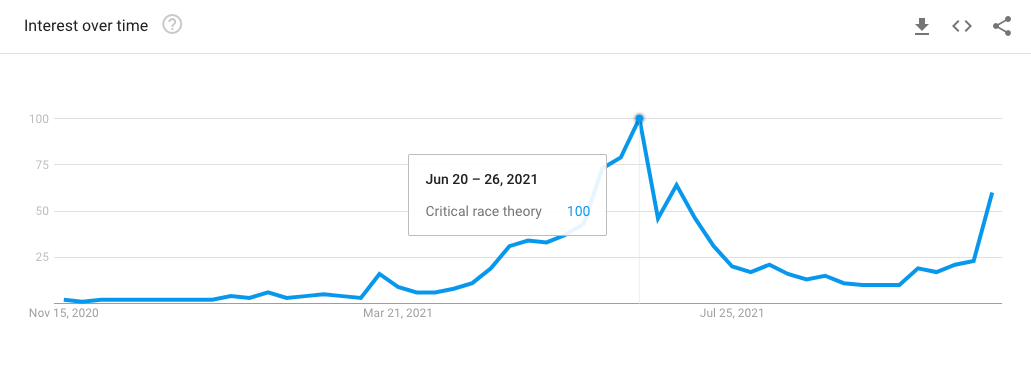
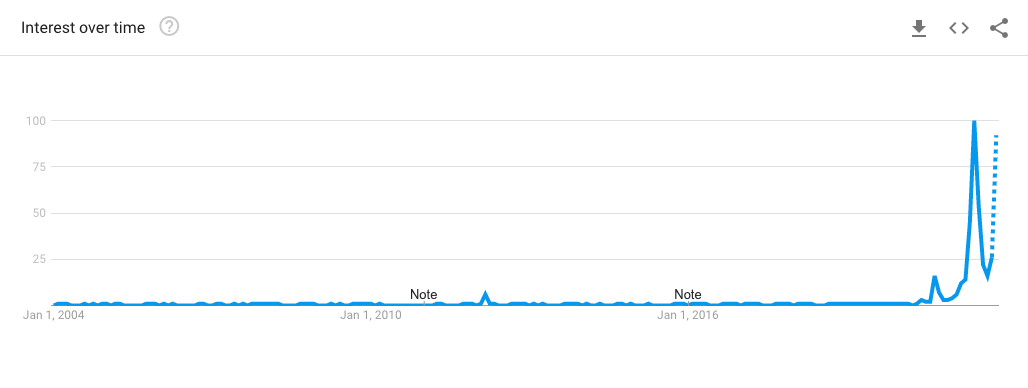
Google search records of “Critical Race Theory” since 2004
google search records of “Critical Race Theory” since the beginning of the year

In a 17 year Google Trends highlight, search results for “Critical Race Theory” have only exploded in interest since June of 2021. This implies that people are ill-informed about what CRT is in the first place. 

CRT refers to a theorem practiced in law concerning the intersection of race and law and further explorations of a racially biased justice system. While this theorem may be controversial to some parents, it is not actually being taught in K-12 schools, as it is a high level law theorem discussed in law school. Thus, this begs the question — if parents are not protesting the teaching of CRT in their child’s school… what are they protesting?

What parents are protesting is the blaming of one specific racial or ethnic group in teaching history as they believe it is the political-division of America today. The Idaho State law bill NO. 377 entitled “Dignity and Nondiscrimination in Public Education Act” bans teaching in history that, “individuals, by virtue of sex, race, ethnicity, religion, color or national origin, are inherently responsible for actions committed in the past by other members of the same sex, race, ethnicity, religion, color or national origin.” This law, similar to others being introduced across the country, asserts that educators are banned from teaching students history from a specific perspective or describing how this history involves race, ethnicity, gender and religion.

Nevertheless, this is not what the law is being used to ban in practice, as there is a gray area of what educators are permitted to say about historical issues involving race, religion and ethnicity. Slavery and the Holocaust fall within this area. For example, the statement “white people have contributed to slavery because of the racial hierarchy of the time, which has effects on racial relations today,” would be banned as a result of the Idaho bill, as this statement discusses a racial group heading an action and furthermore that the historical action has effects on society to this day. The bill seeks to avoid involving discussions of race, ethnicity, gender and religion in teaching topics that concern these very concepts, such as slavery.

The bill also impacts the teaching of ethnicity-related historical events such as the Holocaust. In one Texas school district, the executive director of curriculum and instruction for the Carroll Independent School District, Gina Peddy, was recorded on tape as saying “Just try to remember the concepts of [House Bill] 3979… And make sure that if you have a book on the Holocaust, that you have one that has an opposing, that has other perspectives.” The application of the House bill in which Peddy was referencing is being used to teach America’s children an unbiased view of underlined racial events in world history such as the Holocaust, however, “unbiased” and “Holocaust” in the same sentance does not seem to make much sense ethically to some protestors, and neither does avoiding discussions of race in inherentley race-related topics such as that of slavery.

 Discussions surrounding race-related history may be uncomfortable for some, however, there is no sugarcoating history, and race is impossible to remove from events such as slavery and the Holocaust. Several bills like Idaho’s have been passed throughout the country since September, which raises questions surrounding what type of history will be taught to the younger generations. States including Arkansas, Florida, Iowa, New Hampshire, Oklahoma and Tennessee have passed similar legislation which bans the teaching of CRT. With curriculum surrounding race-related events in history being controlled in certain aspects, it begs the question of whether this will improve the quality of education and, furthermore, the wellness of our society, or worsen it.

The humanitarian crisis next door

Politics

Danielle O’Brien, Editor

Within the past month the United States has seen an increased number of migrants at the Texan border from Haiti following Haiti’s 7.2 earthquakes in August and the assassination of their president in July. Nevertheless, the manner in which the issue has been addressed raises concerns about the message America is putting forth about who is welcome in the U.S.

More than 15,000 migrants, especially Haitians, had started camping since September just beside the border in Del Rio, Texas as they waited for their asylum petitions to be processed. 12,000 of those migrants were admitted into the U.S. to have had petitions evaluated while two thousand were deported back to Haiti, according to the Department of Homeland Security. 

Of those two thousand migrants deported back to Haiti, several of them hadn’t lived in their home country for over a decade but rightly belonged to countries such as Chile, Brazil, and Panama where they had built lives for themselves. They, too, had ventured north to the U.S. looking for opportunity or to be reunited with their families, but instead found themselves deported without question of their real homes or of how they would get there after their plane landed in Port-Au-Prince, Haiti. According to NPR, many migrants describe that they were misled to believe by U.S. border agents that the plane they we’re taking would relocate them to Florida. It was only until they stepped foot in the Port-Au-Prince airport in Haiti that they realized they had been deported.

Alejandro Mayorkas, the secretary of the U.S. The Department of Homeland Security stated on Sept. 8 that the United States extended the protection for Haitians who had arrived before July 29 to receive temporary asylum, while those who arrived after were not covered. 

As stated by Mayorkas, “We are very concerned that Haitians who are taking this irregular migration path are receiving false information that the border is open or that temporary protected status is available… I want to make sure that it is known that this is not the way to come to the United States. Trying to enter the United States illegally is not worth the tragedy, the money or the effort”.

But what Mayorkas fails to describe in his statement is what exactly is the right way to come to the U.S. There is a specific source from which comes the misinformation on the proper way to come to the U.S . During the Trump administration, those seeking a life in the U.S. were instructed to wait in Mexico for a court date to review their case through the “Remain in Mexico Policy”. And since this policy was deemed a violation of International Law by the Supreme Court, there has not been a clear path put forth by the current administration concerning how to apply for asylum within the U.S.

It was only after the deportation of thousands of Haitain migrants that the Department of Homeland Security announced its cancellation of the border wall contracts, angering Republican counterparts who remark that this will not solve the crisis the U.S. is experiencing at its border.

The Biden Administration’s reputation remains up in the air with approval ratings further demonstrating this, part of the cause being the administration’s handling of the border, criticism coming from both sides of the political spectrum. 

In September, after the Taliban took over Afghanistan following the evacuation of U.S. troops, over 65,000 Afghans were evacuated from the country. The U.S. was quick in aiding those in peril in Afghanistan to act as a sanctuary. Thus this hypocritical response raises the question: why does Haiti differ? With Haiti’s 7.2 magnitude earthquake which hit the country this last August, one of the worst earthquakes in Haitian history, as well as the political turbulence Haiti has experienced following the assassination of President Moise this past July, what other country perfectly meets the “asylum seeker” qualifications than Haiti? Does America pick and choose who they will give asylum to and if so how? Disturbing images of Haitians being corralled by border patrol agents on horseback may describe the difference in which the U.S treats its neighbors. The long reins of the photo below captured by Paul Ratje can easily be mistaken for that of whips. Ratje makes it clear, “I’ve never seen them whip anyone,” Ratje said. “He was swinging it, but it can be misconstrued when you’re looking at the picture”. Nevertheless, this controversial photo has sparked investigation by the Department of Homeland Security into possible misconduct by border patrol agents against migrants refugees. As of October 27th, a suspension of the usage of horses at the border has been put in place as the investigation by the DHS remains ongoing of whether said reins were weaponized against refugees.

The disturbing image of using whips which the picture below may resemble has shocked many Americans at first glance, reminding them of a dark time in American history.

DHS chief Alejandro Mayorkas pushes back on Haitian migrant abuse claims -  R6Nationals
PAUL RATJE/AFP via Getty Images

The most crucial week of the Biden administration

Politics

Danielle O’Brien, Editor

Header Image: South China Morning Post

This week is critical in establishing President Biden’s legacy as the House plans to vote on the $1 trillion infrastructure bill passed by the Senate back in August, the $3.5 trillion Build Back Better Plan which also passed in the Senate following the $1 trillion bill as well as a bill to increase the debt ceiling and negotiate spending bills for the fiscal year which begins Oct. 1. With so many bills on the line, and each one having a different value or motive in getting passed, it is important to understand what each and every bill does and the challenges in the way of passing them. 

Initially the bipartisan $1 trillion infrastructure plan was said to be voted on the past Monday, Sept. 27. However, fears over division within the Democratic party over the bill’s passing has prompted Speaker of the House Nancy Pelosi to delay the vote to Thursday, Sept. 30. The $1 trillion infrastructure bill which passed in the Senate back in August with flying colors (69 to 30) was a light leadway for Congressional Democrats to introduce the larger and more dividing $3.5 trillion infrastructure bill. However, the bill’s vote being postponed to only 24 hours before the 2022 fiscal year starts (which has yet to be worked out) poses real danger to the vitality and support of said bill. The $1 trillion infrastructure bill is said to include: $110 billion for roads and bridges, $66 billion for railroads, $65 billion for the power grid, $65 billion for broadband, $55 billion for water infrastructure, $47 billion for cybersecurity and climate change, $39 billion for public transit, $25 billion for airports, $21 billion for the environment, $17 billion for ports, $11 billion for safety, $8 billion for Western water infrastructure, $7.5 billion for electric vehicle charging stations and $7.5 billion for electric school buses. The bill emphasizes influsing green energy with infrastructure to transform the future of the U.S. This bipartisan bill passed in the Senate, however, a stalling of votes in the House may promote delay in support.

The $3.5 trillion infrastructure bill has generally the same motivations behind it but different allocations of money. The bill includes: $135 billion for the Committee on Agriculture, Nutrition, and Forestry, $332 billion for the Banking Committee, $198 billion for the Energy and Natural Resources Committee, $67 billion for the Environment and Public Works Committee, $1.8 trillion for the Finance Committee, $726 billion for the Health, Labor, Education, and Pensions Committee, $37 billion for the HSGAC Committee, $107 billion for the Judiciary Committee, $20.5 billion for the Indian Affairs Committee, $25 billion for the Small Business Committee, $18 billion for the Veterans Affairs Committee, and $83 billion for the Commerce Committee. The Senate passed the outline of the $3.5 trillion bill back in August on a 50 to 49 vote. Republican counterparts have apprehension towards supporting trillions more dollars on a second infrastructure bill. Thus, the viability of this bill, as well as the opportunity for it to even have a vote, remains up in the air, as Friday is the first day of the 2022 fiscal year. Nevertheless, there is no agreement of a fiscal budget to go off of, which proposes the threat of a government shutdown.

The House faces another issue in passing a yearly bill determining the 2022 fiscal spending budget, which is supposed to be completed Oct. 1. With so many bills being passed this week, there is little time to put forth a bipartisan fiscal 2022 budget. Instead, Democrats proposed a temporary budget outline, which could be changed in order to avoid a shutdown. Nevertheless, Republican counterparts are voting down the bill as it does not adhere to the debt ceiling (acting as an emergency fund), even if temporary. The issue with so many bills being voted on this week, rather than a new budget for the 2022 fiscal year which starts Friday, is that if a fiscal budget is not passed by Oct. 1 (which it looks like it will not), the government risks shutting down. A shutdown would further block the Biden Administration’s legislation from passing, as well as create other issues, such as federal workers not getting paid. This week transformative legislation, the legacy of the Biden administration, and the threat of a potential government all lie with the House.

A Nation’s Admission of Guilt: Derek Chauvin guilty on all three charges for the murder of George Floyd

Politics

Danielle O’Brien, Staff

Victor J. Blue/The New York Times
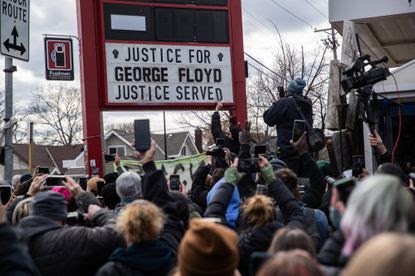
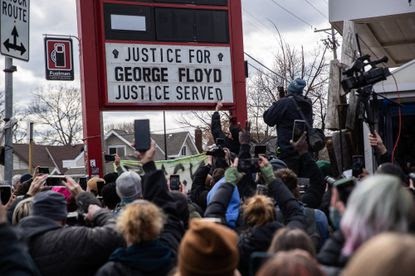
A group of protestors gathers beside a sign that reads “Justice for George Floyd Justice Served” after receiving news of the jury’s verdict for the George Floyd case.

April 20, 2021 will be a date that will be remembered as former police officer Derek Chauvin was found guilty for all three charges of second and third-degree murder, as well as second-degree manslaughter. After almost a year since the murder of George Floyd, suffocated by Chauvin’s knee for 9 minutes and 29 seconds, a ruling was finally made, signifying a long overdue holding of accountability of the racial injustice in today’s criminal justice system. 

Nevertheless, while justice for George Floyd indicates the victory of one battle, there is undoubtedly still injustice for victims of police brutality that have not had their day in court, such as Elijah McClain, Breonna Taylor, Sandra Bland, Michael Brown, Tamir Rice, Eric Garner and so many more. While police brutality has always been an issue within the United States, it is only after the verdict of this case that it has been made clear: nobody is above the law. The verdict of the case finds Chauvin to be the first white police officer to be found guilty of murdering a civilian in Minneapolis. While this fact in itself describes the state of the American criminal justice system, the case may have political implications to truly make a change in preventing horrors like these from happening again.

The George Floyd Justice in Policing Act of 2021 has been introduced for the Senate to pass, promoted by the family of George Floyd and even the President and Vice President of the United States on National TV. The legislation, if passed, would reform the policing system as the bill seeks to end the disproportion at which people of color are being killed by the criminal justice system. The bill seeks to accomplish this by ending no-knock warrants which contributed to the death of Breonna Taylor, as well as the chokeholds which evidently killed Eric Garner and George Floyd. Furthermore, the act calls for ending racial and religious profiling by law enforcement officers, racial profile training and educating officers about the different communities they serve, requiring the wearing of body cams and, most importantly, investigating police misconduct and holding such misconduct accountable through court. The act, passed by Congress on March 3, 2021, would introduce improvements to prevent racial discrimination witnessed in the justice system, nevertheless, it will face an uphill battle to pass through Senate. 

In his address to the nation regarding the verdict of the case and discussing the implications of the bill, President Joe Biden stated, “but we can’t stop here, in order to deliver real change and reform, we can and we must do more to reduce the likelihood that tragedies like this will ever happen and occur again… to ensure the Black and brown or anyone so they don’t fear interactions with law enforcement, that they don’t have to wake up knowing that they can lose their lives in the course of just living their life.” Here, Biden is referring to the legislation helped put forth by his own Vice President. “(Our) administration’s priorities to root out unconstitutional policing and reform our criminal justice system, and they deserve to be confirmed, we also need Congress to act. George Floyd was murdered almost a year ago. There’s meaningful police reform legislation in his name, you just heard the vice president speak of it, she helped write it…legislation to tackle systemic misconduct in police departments to restore trust between law enforcement and the people that are entrusted to serve and protect.” President Biden, in his speech to the nation concerning the act, hints at the struggle it may face in its journey to become law. This demonstrates that while the verdict reached by the trial is pivotal for minorities victimized by police brutality, as well as promoting that police officers can be charged for their crimes, legislation is not promised to pass which would prevent instances of police brutality from occurring again or at least with consequence. 

It is unfortunate that the murder of a human being must be politicized to prevent further instances of police brutality that disproportionally affect minorities in this country or even that legislation that would reform such a system is not assured. The future can only tell if the act will pass. While the politicians of the congress and senate would establish a connection to the communities most affected by police brutality in passing the act, the tensions between constituents prohibit progress concerning the subject and further politicalizes police brutality yet refuses to solve it through legislation and change. Nevertheless, hopes are high that the verdict of this case will cause a sea of change in politics concerning the racist undertones of today’s criminal system, and that, as a result, the act will pass with flying colors. Nevertheless, with one win in the pocket of Americans, time will only tell if it is a winning or losing streak to come.

The Modern Day Russian Revolution

Politics

Danielle O’Brien, Staff

NYTimes
A Russian protest for the unjust arrest of political dissidents.

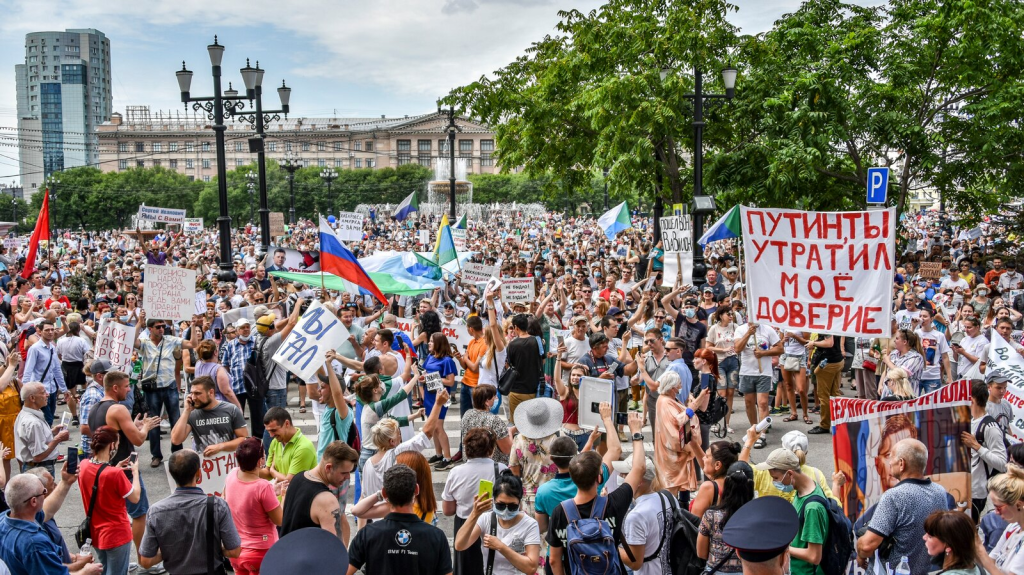
As the world watches Russia erupt into pro-democracy protests, we must question what has been the catalyst to push them into this state? Was it the long periods of systematic oppression? The silencing of people’s freedom of speech? There are many explanations as to why the Russian people are tired of the status quo, but the martyr of these protests could be Alexei Navalny, the Russian opposition leader who escaped an assassination attempt last August, has now been sentenced to serve three years in prison for seeking treatment outside of Russia.

 Alexei Navalny, an outspoken political opponent to Vladamir Putin, has gained support from the youth of Russia as he promises to return Russia to its rightful owners: the people. Navalny, a lawyer, is a popular geopolitican, posing as a threat to President Putin himself best known for his bravery to stand against Russian corruption even in his early days as a lawyer, exposing insider trading. Navalny has attracted his youth following through his connections to social media and YouTube channels dedicated to investigating the higher ups in Russian society, including President Putin himself. Navalny posed a clear threat to Putin in the upcoming September elections with his rapidly growing following. Recently, however, Navalny’s political career has taken a bleak turn;within this last week, he has been sentenced to spend the rest of a previous house arrest sentence in jail. The sentencing was an obvious reach for the Russia government trying to hold back Navalny from becoming involved any further in politics. However, the government had missed out on their chance to silence Navalny in August considering he has an even bigger following now, specifically as a result of such blatant corruption. 

Navalny was poisoned last August, by poison nerve agent novichok, a poison specific to Russia. Miraculously, Navalny survived. As Navalny was transported to a hospital in Germany for treatment of his poisoning, he was to be charged with violation of his sentencing from a previous embezzlement case, and arrested as soon as he landed back in Russia.  In 2014, Navalny and his brother were put on trial for embezzlement, a case which was deemed by the European court of human rights as “arbitrary and manifestly unreasonable.” During his retrial in 2017, his brother was sentenced to three years in prison, while Navalny was released to five years on house arrest. Russian officials who charged Navalny with violating the terms of his suspended sentence point to his recovering in Germany and supposed “failure to report ” to his scheduled reporting times. Considering Navalny had spent two years of his sentence on house arrest, the remaining almost three years will be spent in prison, one can assert that Navalny’s imprisonment is a clear sign from the Russian government of his powerful effect on the Russian public which government officials, like President Putin, wish to silence. Nevertheless, this is even more unlikely now considering the support Navalny has gained in the face of Russian corruption. In fact, thousands have taken to the streets to break their silence on the issue.

It is reported that 5,100 protestors have been arrested in Russia as a results of these protests. Clips of the treatment of such protests by police have been circulating throughout social media.. Even from prison, Navalny continues to urge on his supporters, pleading for them to “overcome their fear and free the country from a bunch of thieves.” In a cold Russia, we are witnessing history being made as hundreds of thousands of Russians are breaking their silence to take a stand against the Russian establishment.

obriend11@lasalle.edu

Chaos on Wall Street creating Bipartisanship on Capitol Hill

Politics

Danielle O’Brien, Staff

NBC news
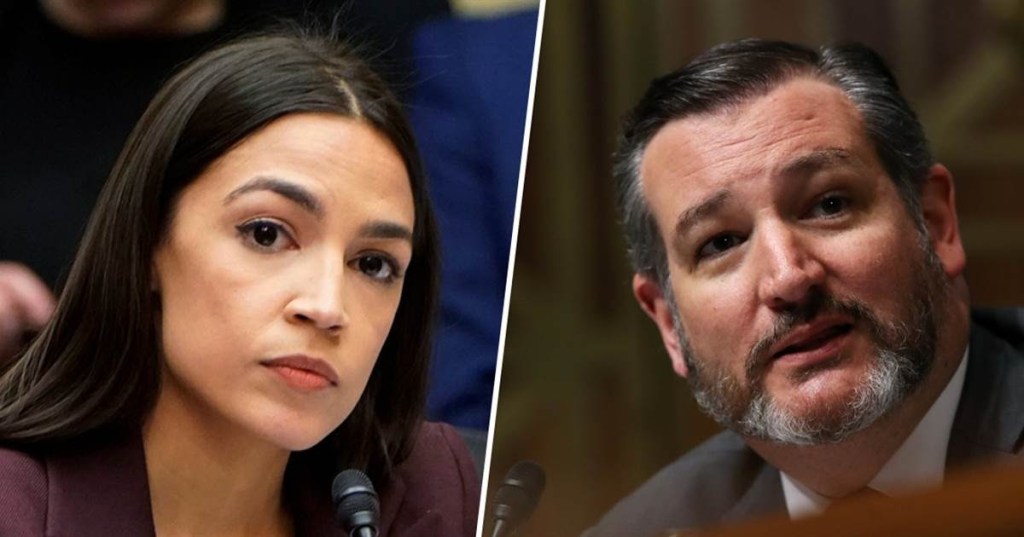
Congresswoman Alexandria Occasio Cortez (left) Senator Ted Cruz (right)

As of last Thursday, chaos has consumed Wall Street in what seems to be a war between multi-million dollar hedge fund holders and retail stock holders. If you lack an account with the popular social media platforms, TikTok or Reddit, this ongoing battle may appear nonexistent. Essentially, the hedge funds of Wall Street planned to short sell a few companies who were estimated to go bankrupt by the end of the year including companies such as GameStop, AMC and Nokia. A series of redditors on the subreddit entitled “r/WallStreetBets” had advised regular retail holders (normal people who invest in stock through apps such as Robinhood or Cash App), to buy shares of these companies Wall Street has been betting on going bankrupt, thus, skyrocketing the price of the shares, specifically starting with company GameStop ($GME). $GME, a stock Wall Street has profited off by betting on its  bankruptcy, displayed share prices in early January that stopped at $17 a share. A share of $GME was $347 as of last Wednesday. With the average person and a collaboration of redditors forcing a phenomenon on the capitalists of Wall Street referred to as “short squeezing,” the apps that support the investments in these companies for the common people have suspiciously stopped working. 

Robinhood, one of the biggest platforms for retail stock trading, faced a suspicious technical difficulty amongst stock prices of GameStop rising, further preventing investors to buy shares of companies such as GameStop, Nokia and AMC since last Thursday when prices were beginning to soar. This has sparked lawsuits against Robinhood by retail shareholders, claiming these actions prevented users of potential profits they could have made by investing in these stocks. Besides uniting people all over the country to overturn hedge fund holders, it is possibly introducing some bipartisanship to tackle the suspicions introduced around investing apps.

Congresswoman Alexandria Ocasio-Cortez (AOC) has commented on the suspicions surrounding platforms such as Robinhood from blocking investors from getting in on overthrowing Wall Street. AOC issued a tweet last Thursday describing the situation as “unacceptable,” and implied that she would be open to an investigation of Robinhood’s “decision to block retail investors from purchasing stock while hedge funds are freely able to trade the stock as they see fit.” Although this reaction may be viewed as typical from AOC considering her progressive politics, what was not anticipated was Senator Ted Cruz’s support of AOC’s tweet, replying “fully agree.” Her colleague’s reply did not sit well with her, considering Senator Cruz’s involvement in recent events which AOC claims has posed a threat to her life. AOC responded to Senator Cruz’s reply by saying, “I am happy to work with Republicans on this issue where there’s common ground, but you almost had me murdered 3 weeks ago so you can sit this one out. Happy to work w/ almost any other GOP that aren’t trying to get me killed. In the meantime if you want to help, you can resign’.’ 

Other politicians have commented on the situation including Bernie Sanders and Elizabeth Warren. Sanders, who has famously had a complicated relationship with the “billionaires on Wall Street,” issued a tweet last Friday regarding hedge fund owners such as Leon Letterman’s complaints about the situation. Sanders said, “Oh look, another billionaire is mad that he might have to pay more taxes while children in America go hungry and veterans sleep on the street. Cry me a river”. Sanders has highlighted the need to ensure that capitalists on Wall Street pay their fair share in taxes throughout his campaigns, but especially during this historic economic event. Warren has also pushed this agenda, questioning as to why the Robinhood app had stopped retail holders from trading stocks such as GameStop, AMC and others in a pivotal moment. Like Sanders, Warren has run her political campaigns highlighting how this is not random on Wall Street, but a result of long periods of corruption. Warren is quoted as saying, “Understand: What’s happening with GameStop is just a reminder of what’s been going on on Wall Street now for years, and years and years. It’s a rigged game… we need a market that is transparent, that is level and open to individual investors. It’s time for the SEC to get off their duffs and do their jobs.”

The billionaires of Wall Street, however, have commented on the situation, suggesting that stocks will drop, and, according to Fox Business commentator Stuart Varney, “end in tears.” The real “Wolf of Wall Street” himself, Jordan Belfort, has put his own two cents into the situation. Belfort, in an interview with CNN, insinuated that the redditors colluded to create an economic phenomenon with repercussions, furthermore defending platforms such as Robinhood from protecting their best interests legally rather than siding with the billionaire hedge fund holders against retail stockholders. Belfort echoes the cries of other billionaires, stating “when this is over, and it will end, and all these stocks come crashing back down to their fundamental values, there are going to be lawsuits flying aimed at Robinhood, Ameritrade, all the platforms that did the trades…”. In response to a post sent out by r/WallStreetBets which essentially stated they did not have the resources to bail themselves out of bankruptcy if all goes wrong, unlike the hedge funds of Wall Street, Belfort stated “I love you guys, but it is laughable because what you will do it to hire a class action attorney and sue everybody on your behalf.”

With an economic battle  occurring between retail stockholders and billion dollar hedge fund holders, politicians and economic commentators are taking sides. What side certain public figures fall on may go on to shape the future of the stock market in America and the way Wall Street is operated well into the future.

obriend11@lasalle.edu