“Wuthering Heights”: is controversy the best marketing strategy?

Arts & Entertainment

Jack Wagner, Editor

Despite being plagued with controversy from announcement to release and beyond, Emerald Fennel’s “Wuthering Heights” had a strong opening weekend, collecting $38 million in the domestic box office and a total of $83 million worldwide. But can the initial success quell the displeasure of those who were hoping for a faithful adaptation of a classic 19th-century Gothic romance novel? And does it deserve to?

The film faced backlash from the very beginning when Margot Robbie and Jacob Elordi were cast as the story’s central characters, Catherine Earnshaw and Heathcliff. Robbie’s casting was controversial due to her age – the star is 35, whereas Catherine (in the novel) is a teen. Picking Elordi drew accusations of whitewashing, as Heathcliff is heavily implied to be a person of color in the novel, which plays a central role in crafting the character’s role as an outsider. 

“Wuthering Heights” casting director Kharmel Cochrane was unbothered by the criticism,  stating, “You really don’t need to be accurate. It’s just a book. That is not based on real life. It’s all art.”

 While many adaptations of the novel have featured white actors as Heathcliff, this is only one of a long list of inaccuracies that bother fans of Emily Brontë’s genre-defining work. Like most other adaptations, the movie completely ignores the second half of the book, which depicts the effects of Catherine and Heathcliff’s toxic romance on their descendants. More so than any other, however, Fennel’s version seems to gleefully run away from any illusion of an accurate portrayal of the novel.

Several key characters are completely absent from the film, including Catherine’s brother, Hindley, and Mr. Lockwood, the nosy neighbor who serves as one of the primary narrators of the novel. The greatest change, however, is most likely the relations between the characters. In the book, there is very little actual physical intimacy between the characters. The movie is very little but physical intimacy between characters.

One review, by Jordan Ruimy from “World of Reel,” wrote the movie was “stripped of emotional nuance and full of salacious detours that serve shock value.”

Another from “The Independent” says the movie transforms the “brutish dynamic of lust and loathing into basic, Fifty Shades kink.”

A third by Justin Chang of “The New Yorker” called Robbie and Elordi little more than paper  dolls dressed up in the world, with some passion but nothing at all beyond the surface.

Of course, the movie is not without its proponents. Many reviews enjoyed what one called “a marvellously asinine exercise in style and panache, both as sumptuous and breathtaking as it is completely terrible.” One early reviewer called it a “bodice-ripping crowd-pleaser,” and the film’s success does seem to speak for itself.

Caryn James from BBC called it an “extravagant swirl: sexy, dramatic, melodramatic, occasionally comic and often swoonily romantic” in her review, a stark contrast to more critical reviews.

Fennel is no stranger to controversy, with her previous films “Promising Young Woman” and “Saltburn” sparking some level of outrage due to their salacious nature. When asked about the controversy surrounding “Wuthering Heights,” she said that it was more based on the version she remembered reading when she was 14, full of things she wished had happened but didn’t. “It is “Wuthering Heights,” but it isn’t,” Fennel said.

The film currently sits at a 60% rotten tomatoes score, and critics remain split over the movie’s merit. But, looking at its box office performance and the director’s previous work, one has to ask: Is it really about the controversy?

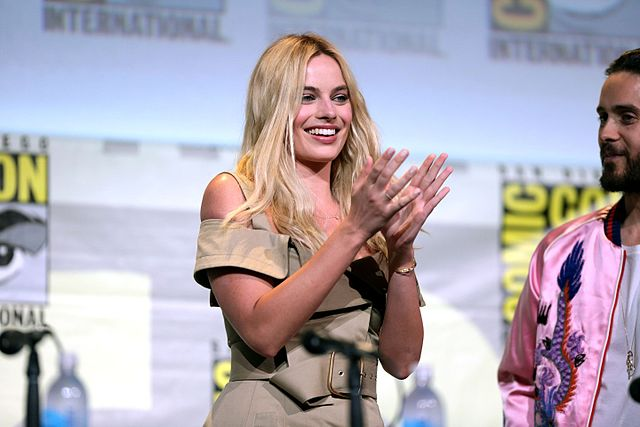
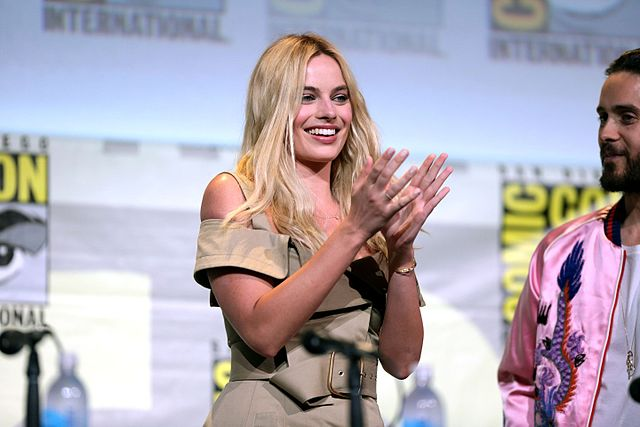
Margo Robbie via WikiCommons

The Politics Behind Bad Bunny’s Super Bowl Show

Arts & Entertainment

Claire Herquet, Editor

When Bad Bunny stepped onto the Super Bowl LX halftime stage last weekend, he wasn’t just performing; he was entering the center of America’s culture. What should have been a celebration of music quickly became a public vote on identity, language and national belonging. The performance, delivered almost entirely in Spanish, ignited a political storm in the media that revealed far more about the country’s divisions than about the artist himself.

The selection of Bad Bunny (formally named Benito Antonio Martinez Ocasio) as the first solo Latin artist to headline a Super Bowl halftime show had already triggered polarized reactions. Media coverage leading up to the event stated that the choice ignited controversy and placed the Puerto Rican singer under fire even before he sang a note US President Donald J. Trump stated the selection was “absolutely ridiculous,” as asserted in the New York Times. In the week prior, many celebrities, including Bad Bunny, had taken public jabs at President Trump’s immigration policies, prompting speculation about whether or not the halftime show would carry political undertones.

Once the performance aired, the backlash was immediate. President Trump blasted the show as “one of the worst ever” according to Fox News, criticizing its Spanish‑language dominance and its opposition to American culture. Right‑wing influencers and activists echoed the sentiment. Turning Point USA attempted to counterprogram the halftime show entirely, hosting an alternative broadcast in protest, featuring Kid Rock, Brantley Gilbert, Lee Brice and Gabby Barrett. Despite the boycotting efforts here, Bad Bunny’s halftime show performance remains as the second most watched show in Super Bowl history with 128 million views (at the time of writing this piece). 

Bad Bunny’s halftime show may be remembered less for its choreography or guest appearances and more for what it represented: a shift in who gets to occupy America’s biggest stage and how that presence is interpreted. The show unfolded as a full‑blown wedding, complete with a processional, symbolic staging and visual messages that moved from celebration, to conflict, to reconciliation. Ocasio made a bold choice for a broadcast that typically prioritizes spectacle over storytelling; this signaled a shift in what a Super Bowl halftime show can really be.

Bad Bunny’s finale is what cemented the performance – as he sang his song “DtMF,” a massive sign illuminated the football field in bold lettering: “THE ONLY THING STRONGER THAN HATE IS LOVE.” It was a direct, unmistakable message. After weeks of backlash, political commentary and cultural debate, Bad Bunny closed his show with this statement as a metaphor for the possibility of unity in a country that often feels like it is pulling itself apart.

Perhaps that’s the most telling part: the 2026 halftime show didn’t become political because Bad Bunny made it so. It became political because America did.

What could the record-breaking nominations for “Sinners” mean for cinematic horror?

Arts & Entertainment

Jack Wagner, Editor

The Oscar nominations for this year’s awards are out, and with them comes speculation and even a new record. “Sinners,” directed by Ryan Coogler, received 16 nominations, more than any other film in Academy Awards history. However, the recognition this film is receiving raises another question: as a horror film — a genre historically dismissed by the academy — how likely is it to win?

Horror movies have long been found almost exclusively in the technical categories of the awards. While Friedric March did win Best Actor for his starring role in 1932’s Dr. Jekyll and Mr. Hyde (jointly with Wallace Berry in “The Champ”), no horror film received a nomination for anything other than effects, cinematography or sound design until “Psycho” in 1960 – and no horror film won anything until “What Ever Happened to Baby Jane?” received an Oscar for best costume design in 1962. Horror movies have not had an Oscar drought that long; however, they are still frequently less popular with the Academy.

In the 96 years the Oscars have been running, only seven horror movies have ever been nominated for Best Picture: “The Exorcist” (1973), “Jaws” (1975), “The Silence of the Lambs” (1991), “The Sixth Sense” (1999), “Black Swan” (2010), “Get Out” (2017), “The Substance” (2024), and now “Sinners” (2025). The Silence of the Lambs is the only one of these nominees to win as of now.

Saying these films only lost due to their genre would be unfair to their competitors, as they were up against stiff competition. “One Flew Over the Cuckoo’s Nest,” the film that beat “Jaws” for Best Picture at the 1976 Oscars, is listed at #20 of the American Film Institute’s 100 greatest American Films of all time, for example. But, it is true that horror movies are rarely nominated for the biggest awards and are commonly snubbed.

Coogler is aware of the unpopular nature of the horror genre with the Academy, and did not expect as much recognition as “Sinners” received.

 “I did not have any expectations when it came to the recognition of what [the team] did,” Coogler said in a panel hosted by Deadline. “For me, people just showing up to the movies and having a good time, that would’ve been enough.”

He also said that the record-breaking number of nominations and the attention he saw the people who worked on the movie receiving was very rewarding.

Michael B. Jordan, who starred in “Sinners” as twin brothers Smoke and Stack and received his first-ever best Actor nomination for his performance, also spoke about how he felt. 

“I’ve been in this industry for a long time. I’ve admired and seen the Academy and the other actors in the movies and filmmakers that I’ve looked up to and been inspired by my whole life,” Jordan said in an interview with The Hollywood Reporter. “To be in those conversations and in that company is a solidifying feeling.”

Jordan also expressed his support for his co-stars Wunmi Mosaku and Delroy Lundo, who received nominations for Best Supporting Actress and Supporting Actor, respectively.

However many Oscars “Sinners” leave the ceremony with, there are some clear takeaways: the film has left its mark on the industry, and perhaps horror is finally in with the Academy.

Netflix and the future of the film industry

Arts & Entertainment

Sean Musial, Managing Editor

Netflix is a billion dollar media conglomerate that originally started as a DVD rental service when it was founded in 1997. Now, it has revolutionized the ever growing world of streaming. The popularity the company has received over the past decade and a half is all chalked up to the many options on the platform, such as movies, TV shows, originals, specials and more. With Netflix recently buying the century dominating film company, Warner Bros. for $72 billion dollars, the entirety of Netflix is being shifted into even greater heights and the entertainment industry has been flipped on its head. 

The amount of media that Netflix has spit out to its trusty subscribers and audience is immense. It’s a huge reason for their success. Shows like “Stranger Things,” “Peaky Blinders,” and “Narcos are some of the most successful originals of the platform that have garnished widespread acclaim. Movies such as “The Irishman,” “Marriage Story” and the most recent “Frankenstein” remake tells us that viewership isn’t just because of the TV shows they have. Other entertainment mediums such as docu-series, stand-up comedy specials, non-Netflix originals that come and go, sports events and even games in most recent years. Because of all these things, it reaches so many diverse interests of consumers.

The smart thing about it and the reason behind their financial glory is the subscription model. Without the subscription, anyone could watch what they have for free. Subscriptions create a supply and demand for the media they have; that’s a reason for the price range slowly progressing upwards as well. Originally, $7.99 was the starting off price for a Netflix subscription. In 2025, the standard subscription plan for Netflix skyrocketed to $17.99 per month. A premium subscription has even gone up to $24.99 a month. 

Because of the settlement with Warner Bros, the “supply and demand” will continue to skyrocket. The amount of new content that Netflix will be obtaining has the potential of making even more people who haven’t become fans of the platform join. Film series like “Harry Potter,” “The Lord of The Rings,” and the entirety of the DC Universe along with many other film series and solo movies will join Netflix. In the TV show department, they will be obtaining hits like “Game of Thrones,” “Friends,” “The Sopranos” and many other classics. For the most part, the running theme here is that a good portion of what was previously in HBO Max’s portfolio will now be passed over to Netflix. 

The dominant force that Netflix has over the years is undeniably impactful. Their legacy will already be guaranteed entry into the history books of “Hollywood” as a changing point for the industry during modern times. The future of the entertainment industry has found itself at an eerie crossroads though because of all streaming platforms. Also including Amazon Prime, Disney+, Hulu and many others that don’t include Netflix, these things in itself are impacting this new generation of viewers. 

This world of streaming has stunted the movie going experience in more ways than one. Going to the theaters is not as popular as it once was. There is no doubt that people still go, but the amount has definitely begun to shrink. Pricing, streaming and timing are all factors that can stop a person from going to the theaters. With streaming, people don’t have to go out from the comfort of their own homes and pay for a movie; they can simply wait a couple months for it to enter a streaming service. More times than not, that’s the defining factor, along with paying something on top of the subscription bills they are already paying because of their streaming service(s). 

The concerns that many directors have over the Netflix deal asks many questions. Christopher Nolan, a famous director and the President of the Directors Guild of America (DGA), is at the forefront of asking the questions that need to be asked. The DGA aims for an industry that ensures vibrancy, creativity and encourages a genuine competitive environment to express the talent of each director. Nolan has expressed the negative impact this deal could have on directors and their teams. Also, the merger has a strong possibility of shifting the Hollywood power dynamic and the content that they control. The DGA in this situation are making sure that the deal won’t affect the livelihoods of the creative professionals that make these films.  

With the future of the film industry being very unsteady due to Netflix buying up the little over a 100-year-old company, many think that what Hollywood has become in the 21st century will change forever. Streaming can change viewership in more ways than they already have been. The jobs of the creative minds behind these films can become jeopardized or start to be much more formulaic rather than individually free. It will be a strange time for the industry over the next couple of years, and Netflix will be one of the primary notches for which direction they decide to take it. 

What is known about the development for the upcoming fourth Mummy installment

Arts & Entertainment

Jack Wagner, Editor

PHILADELPHIA- A new addition to the popular “Mummy” franchise from the late 1990’s to early 2000s is reportedly in the works, with stars Brendan Frasier and Rachel Weisz in talks to reprise their roles in the franchise. The two actors have not worked together since the second movie in the trilogy, “The Mummy Returns,” in 2001, and fans are excited at the prospect of a new entry to the series.

The “Mummy” franchise was highly successful in its time, with the first two movies, “The Mummy” and “The Mummy Returns” grossing over 400 million dollars worldwide on production budgets under $100 million. Their success prompted a spinoff film, “The Scorpion King,” starring Dwayne “The Rock” Johnson, that came out a year after “The Mummy Returns,” and later the 2008 film “The Mummy: Tomb of the Dragon King,” which saw Frasier return without Weisz.

The franchise was so popular that attractions based on the films were built in Universal theme parks in Orlando, Hollywood and Singapore, titled “Revenge of the Mummy.”

Universal Studios attempted to reboot the franchise with the 2017 film “The Mummy” starring Tom Cruise as a part of their push for a cinematic universe based on classic movie monsters. While it grossed over $400 million at the box office, the film was critically panned and shelved Universal plans for years.

Little is known about the upcoming film, as Universal has not yet released any information about the rest of the cast or any kind of plot summary. What is known is that Matt Bettinelli-Olpin and Tyler Gillett have been tapped to direct. The two have worked together previously as part of the film collective Radio Silence, which created films such as the 2022 “Scream” reboot, its sequel “Scream VI” and “Ready or Not.”  The script is being written by David Coggeshall, who has previously written the script for “The Deliverance” and “The Family Plan.” Frasier and Weisz are both listed as executive producers for the upcoming film, signaling a higher level of creative involvement than they had in previous installments.

Frasier and Weisz are currently the only actors confirmed to be returning to their roles, with no word on other franchise actors such as John Hannah or Arnold Vosloo and whether or not they will be a part of the project. It is also uncertain how the films will handle a necessary time jump, as it has been 17 years since the last entry in the franchise, and nearly three decades since the original movie was released. The release date for the new entry is also uncertain, as the film is still too early in development for any sort of real estimate to be made. There has been some industry speculation that the film will be hoping for a 2027 release, but without more detailed information, that remains purely conjecture.

Regardless of the final release, it will be interesting to see how Universal handles the revival of one of the most iconic action-adventure franchises of the 1990s-2000s.

Meet the artists who will rescue you from a music rut

Arts & Entertainment

Sarah Doherty, Editor

Have you ever been listening to music and felt like you were tired of the same songs? Everyone’s been there, but finding new music can often feel tedious and sometimes frustrating. To help with the struggles, I am going to introduce you to four small artists who will cure your music slump! 

Annabelle Dinda

Annabelle is a very talented artist with a wide catalog. You may know her from her viral song, “The Hand,” however she has a lot to offer throughout her discography. She falls in the alternative genre, focusing on deep, complicated lyricism that feels inspiring. For example, in her song “Nuclear Fission,” she says, “Am I meant to believe them when they say time is good; time is water rotting wood.” She is a cross between Lizzy McAlpine’s lyrics and Noah Kahan’s melodies. Her creativity and passion shines through everything she writes. 

Five songs to introduce yourself to Annabelle Dinda!

  1. Sacred 
  2. Restatement of Romance 
  3. Eliana
  4. Want Want Want 
  5. Love Lines 

Audrey Hobert 

Audrey Hobert is a national treasure. She is known for her song, “Sue Me” and for her friendship with Gracie Abrams. Audrey’s take on pop music is incredibly refreshing and relatable. Audrey is a very new artist, with only her debut album “Who’s the Clown” available on streaming. Although she doesn’t have a large quantity of songs, the quality of the 12 songs she has released is incredible. 

Five songs to introduce yourself to Audrey Hobert!

  1. Drive 
  2. Bowling Alley
  3. Phoebe
  4. Sex and the City
  5. Shooting Star  

Olivia Dean 

I was unsure if I wanted to put Olivia Dean on this list because she might be a bit too big to be considered a small artist, but her music is entirely beautiful and deserving of recognition. She falls under the pop genre, but her music isn’t hard hitting or made solely to be a hit. Her music comes from her heart and it’s laced with pure passion. She is known mostly for her song, “Man I Need.” She feels like a romantic Friday night with someone you can’t stop thinking about. 

Five songs to introduce yourself to Olivia Dean!

  1. Nice To Each Other 
  2. So Easy (To Fall In Love) 
  3. A Couple Minutes 
  4. Loud
  5. Close Up

Nothing But Thieves 

Nothing But Thieves are an English rock band who deserve loads more credit. They transfer their sound between heavy metal such as “Ce n’est Rien” and soft, vulnerable sounds such as “Before We Drift Away.” They have a complex sound fitted for a variety of listeners. 

Five songs to introduce yourself to Nothing But Thieves! 

  1. If I Get High 
  2. Phobia 
  3. Before We Drift Away
  4. Live Like Animals 
  5. Hell, Yeah
Microphone via Pexels

“The Life of a Showgirl” album review 

Arts & Entertainment

Sarah Doherty, Editor

Taylor Swift’s highly anticipated album, “The Life of a Showgirl” was released on Oct. 3. With most albums, reviews were mixed at first, with some fans wanting the songwriting found in her albums “Folklore” and “Evermore,” while others were expecting a Broadway-esque soundtrack. 

“The Life of a Showgirl” was neither of those things. This album was an uplifting, love-filled album that mainly included modern pop songs with ballads mixed throughout. Personally, Swift’s music is something I have been known to enjoy, however this album threw me for a loop.

The album begins with the lead single, “The Fate of Ophelia.” This song is a very enjoyable pop song with clever writing and interesting production. Personally, this is the highlight of the album. 

The second track is “Elizabeth Taylor.” Again, this is an excellent song, with a base drop in the chorus that adds volumes. 

The third track is “Opalite,” a fun, light-hearted song about finding your own happiness in life. This song is pure enjoyment. 

The fourth track is “Father Figure,” and this is where the album starts to dip for me. The concept is clever, but the execution is confusing. While there are enjoyable parts of the song, such as the bridge, “Confuse my kindness for weakness and find your card cancelled,” the song is generally a little bland. 

The fifth track is “Eldest Daughter,” and sweet merciful Jesus, this song sucks. If this song were satirical, it would be hilarious, but she genuinely used the words “trolling and memes” in a track five ballad. This song was just a miss, the only redeeming part of it is the bridge, but even then it’s not an enjoyable song.

The sixth track is “Ruin the Friendship,” which is a cute song about regret and always taking the risk even if it means ruining a friendship. This is a really good song, but it doesn’t stand out. 

The seventh track is “Actually Romantic,” and it’s actually really corny. No thirty year old woman should call another thirty year old a “boring Barbie.” 

The eighth track is “Wi$h Li$t,” another love song with some clever lyrics and a good beat, but again, it blends in and doesn’t stand out. 

The ninth track is “Wood.” I wanted to slam my head into wood when I heard the poet that wrote “The Lakes” use the word “dickmitized” in a song. 

The tenth track is “CANCELLED!,” and it is, again, corny. I think Swift, a thirty-year old cat lady who is engaged to a frat boy football player, needs to stop trying to be edgy. 

The eleventh track is “Honey,” and this is such a great song. I feel so happy when I listen to it, and I appreciate the smart lyricism. 

The final track is “The Life of a Showgirl” ft. Sabrina Carpenter, and it is very musical theater-esque. I love the storytelling in this song, and the fun beat adds to the song’s theatrics. 

Overall, this is not my favorite album of Taylor’s, but as an artist, I will always respect her creativity and commitment.

Five films to watch this Halloween season

Arts & Entertainment

Jack Wagner, Editor

It’s Halloween season again which means it’s time to cozy up under some warm blankets and screen some scary cinema. But what movie is right for you? Here is a list of several spooky movies to pick from so you can get the just right level of horrifying haunts.

Addams Family Values

Featuring the ever delightfully Macabre family, this 1993 film is perfect if you want to get into the Halloween spirit but are not in the mood for frights and nightmares. Follow the Addams as they send Wednesday (Chrsitina Ricci) and Pugsley (Jimmy Workman) to a camp woefully unprepared for the siblings, welcome new addition Pubert to the family and deal with the evil babysitter Debbie (Joan Cusack), who sinks her claws into Uncle Fester (Christopher Lloyd). There’s ghosts, arson, guillotines and electric chairs, everything necessary for some fearsome (mostly) family-friendly fun. The movie is a sequel to the 1991 Addams Family, but each film stands well on its own, so there is no need to watch both. Or do… they’re both good fun.

Tucker and Dale vs. Evil

Moving to a film with some real frights, but still none too severe, Tucker and Dale vs Evil is a 2010 horror-comedy starring Alan Tudyk and Tyler Labine. It follows friendly country pals Tucker (Tudyk) and Dale (Labine) as they finally fulfill their dream of buying an old lake house to restore. Unfortunately, a group of foolish (and very clumsy) college students, led by the hillbilly hating Chad (Jesse Moss), mistakes them for crazy backcountry murderers, leading to a whole host of horrifying hijinks. The main draw of this movie is the humor, and there is a lot of it. There is also a lot of blood and gore, earning the movie its R rating. If you’re looking for some Halloween laughs and have a stomach for blood but not for serious scares, Tucker and Dale vs Evil is an excellent pick.

A Quiet Place

The 2018 horror/science-fiction movie A Quiet Place is in a good position as a movie with scares that odds are you can still get a good night’s sleep after. The film is about the Abbot family as they try to survive in a world destroyed by an invasion of seemingly invincible aliens that hunt by sound. Evelyn Abbot (Emily Blunt) is pregnant, and the family must do their best to make sure the birth goes smoothly without attracting the monsters. The movie thrives off the tense atmosphere created by forcing the characters to be near silent at all times, no matter what is happening to or around them. It’s not a gory film, being rated only PG-13, but it still has plenty of good thrills and frights for your viewing pleasure. A Quiet Place also spawned a couple of other films in the same universe, A Quiet Place: Part II and A Quiet Place: Day One, so if you enjoy the movie make sure to check those out as well.

Halloween

One of the forefathers of the slasher movie genre, the 1978 horror movie Halloween is appropriately one of the very best movies to get you into the scary season spirit. The film follows the swath of bloody murder escaped mental asylum patient Michael Myers (Nick Castle) who cuts through the city of Haddonfield, Illinois, chased by Dr. Samuel Loomis (Donald Pleasance), while teen Laurie Strode (Jamie Lee Curtis) tries not to be his next victim. Halloween does a great job building suspense and tension, helped along by a simple but eerie score that is possibly one of the best of the genre. Like all slasher films, it has some very graphic violence and some not-as-graphic-but-still-pretty-graphic nudity, earning its R rating with room to spare. Halloween is an excellent film if you want some real scares for your viewing pleasure.

The Thing

1982 horror movie The Thing is my pick for the scariest and final movie on this list. Following a group of researchers in a remote Antarctic station during the winter as they are hunted and killed by a shapeshifting alien being that can take on the appearance of anything it kills, the movie creates a delightfully bleak and terrifying atmosphere that really puts you in the mood to hide beneath your blankets. The Thing has a lot of excellent but very gruesome practical special effects, and manages to combine gore and tension in a way that elevates both. I have to mention for honesty’s sake that The Thing is my favorite horror movie of all time, but I still would say it earns its spot as one of the best and scariest films to watch as All Hallows’ Eve draws near.

This list is meant to have a spooky film that all levels of horror enthusiasts can enjoy. Whether you are terror prone or a hardened horror fan, I hope this list helps you find something to watch during this Halloween season.

Adaptation: The Art of Transforming Books into Movies

Arts & Entertainment

Sean Musial, Editor 

Books are a cultural phenomenon that have been around for over 4,000 years. They’ve been rooted in the basis of society for knowledge growth, entertainment exploration and the mass production of any written work. They give outlets for the writer to express their creative freedom to the world, and a desire to unfold every page. 

Film and television are relatively new platforms for entertainment. Though they have become arguably the most prominent platforms for stories to be told over the last century, books still have a richer history by a long shot. Since the creation of film/TV, adapting books into these mediums has become almost inevitable. Here’s how different directors have shaped an author’s book faithfully, or not so faithfully. 

One classic adaptation of a film came to screens all the way back in 1939 with Gone with The Wind. It was a four-hour epic that took the spirit of the 900-page novel by Margaret Mitchell and turned into one of the most influential films of all time that still holds up today. In 1962, Harper Lee’s novel, To Kill a Mockingbird, was adapted with Gregory Peck giving audiences a world class performance as Atticus Finch. Both films received many Oscars for their accomplishments including Best Picture, Best Actor, Best Actress and Best Adapted Screenplay.

A mainstream figure who has had more than a 100 adaptations of his work is the horror icon Stephen King. His first book that was adapted happened to also be his first published book, Carrie. It was an early film of acclaimed director Brian De Palma, and was praised for being faithful to its source material. Stanley Kubrick adapted one of King’s most influential books, The Shining. Though the movie is considered one of the most iconic horror movies of all time, it controversially diverged from the books and King has publicly disapproved of it. Within the last decade, Andy Muschetti took on the daunting task of adapting one of King’s longest novels, It. Muschetti turned it into two movies over a three-year span, becoming a major success in the process and arguably being the best adaptation of the extremely long novel. 

Mario Puzo’s The Godfather was faithfully adapted into a trilogy between 1972 to 1990 by director Francis Ford Coppola, with Puzo acting as co-screenwriter for all three of the films. The first film was the one that most closely followed the book, while character expansions, cut down subplots and omitted plot points had to be added to fit into the entire trilogy.

 “First rule about F*** C*** is: you don’t talk about F*** C***” is a rule that changed when David Fincher decided to adapt Chuck Palahniuk’s novel, Fight Club, back in 1999. The film preserved the tones and themes of the book, but altered the ending to make it seem more cinematic, which was done perfectly. 

The 1991 faithful adaptation of Thomas Harris’s The Silence of The Lambs, elevated the character of Hannibal Lecter into an iconic figure in cinema thanks to Anthony Hopkins’ chilling performance. The film deviated slightly from the book with minor changes for pacing and structure purposes. 

Considered to be one of the greatest film trilogies of all time, Peter Jackson adapted J. R. R. Tolkien’s The Lord of The Rings into a cinematic spectacle. Because of the grand scale of the story, a good bit of the overall narrative was either cut down, condensed or deleted completely so it could be fit into the three films. 

The eight part Harry Potter film series comes from the seven books J. K. Rowling released from 1997 to 2007, giving the world possibly the best lore to ever come out of fantasy. Just like most of the other adaptations mentioned, it was mostly faithful with slight alterations due to the sheer density of all the books. The only exception comes in the final book, The Deathly Hallows, which was split up into two separate movies to express the depth and grand scale of the finale. 

Three of the best examples of shows that were derived from books are Game of Thrones, The Handmaid’s Tale and Dexter. George R. R. Martin’s series, A Song of Ice and Fire, is the primary influence on the early seasons of the show Game of Thrones, but the show begins to take its own creative freedom later since Martin hadn’t, and still hasn’t, finished the books by the time the last seasons came around. It can be argued that the final season failed after the previous seasons were considered peak television due to the books not being finished. In contrast, The Handmaid’s Tale TV show initially started off strong after the source material had been finished, adapting the book and creating new storylines. The final season saw the directors writing themselves into a corner since they didn’t see, or were given, a clear path to go. Darkly Dreaming Dexter is the first book in the series that the successful show is based off of, creating a cultural phenomenon in the process. The dark comedy, violent actions and cast of characters that the show had to offer gives the show its unique narrative, similar to the books. 
Books have long been the foundation of storytelling, offering depth, detail and a direct connection to an author’s vision. As film and television evolved, they provided new avenues to bring these stories to life, often with great success but also with creative liberties. From timeless epics like Gone with the Wind to modern fantasy phenomena like Harry Potter, adaptations continue to bridge the gap between the literary and cinematic worlds. Whether staying faithful to the source material or taking bold interpretative steps, these adaptations reflect not only the story being told but also the vision of the filmmakers behind them. The enduring power of these narratives, whether read or watched, proves that great stories transcend mediums.

White and Black Clapper Board via Pexels

Fan reactions to Hilaria Baldwin’s exit and Disney Night stir debate on “Dancing With the Stars”

Arts & Entertainment

Marc Regen, Editor

The latest season of Dancing With the Stars has sparked intense fan reactions, particularly surrounding the recent elimination of Hilaria Baldwin. Her departure from the competition has divided viewers, with some celebrating the news and others rallying in her defense, accusing online critics of bullying.

Baldwin, who was partnered with veteran professional dancer Gleb Savchenko, addressed her exit in a video interview with E! News, expressing disappointment and alleging that a group of “mean girls” on social media orchestrated a campaign to vote her off. 

“It wasn’t just about dancing,” Baldwin said. “It felt personal.” 

Her comments ignited a wave of responses, with some fans sympathizing and others doubling down on their criticism.

On TikTok, one user stated that Baldwin’s elimination was “good news,” while others accused her of lacking gratitude, echoing reports that Savchenko felt “humiliated” by her behavior. Still, many viewers defended Baldwin, arguing that the show is meant to showcase growth in non-dancers. 

“She had no prior experience and was improving,” one fan wrote. “That’s what the show is supposed to be about.”

The controversy has highlighted a broader conversation about the tone of fan discourse online. Some users have called for more compassion, criticizing what they see as toxic behavior in fan communities. “It’s a dance show, not a battleground,” one Reddit user posted.

Meanwhile, the show’s recent “Disney Night” episode also drew mixed reactions. While traditionally a fan-favorite theme, some criticized this year’s installment for feeling overly commercial. A Yahoo headline described the episode as resembling an “infomercial,” with extended promotional segments and branded content overshadowing the dancing.

Despite the criticism, several performances stood out. Robert Irwin and Witney Carson’s cha-cha routine earned widespread praise, with fans calling it “mirrorball-worthy.” Their energetic routine to the Disney classic “Try Everything” from Zootopia was hailed as one of the night’s best, showcasing Irwin’s charisma and Carson’s choreography.

Another highlight came from Scott Hoying and Rylee Arnold’s performance of “Bop to the Top” from High School Musical. Actress Ashley Tisdale, who starred and danced to the song in the original film, reacted positively to the routine, noting how closely the pair replicated the original choreography. 

“They nailed it,” she said in a social media post.

As the season progresses, fans have described it as “chaotic,” citing unpredictable eliminations, casting controversies and shifting dynamics among the judges. The mix of celebrity drama and standout performances has kept viewers engaged, even as debates rage over fairness and tone. Whether cheering for their favorites or critiquing the format, fans continue to make their voices heard. With several weeks remaining, Dancing With the Stars Season 34 promises more glitter, drama and passionate discussion.

Dancing with the Stars Logo via WikiCommons