Sean Bradley, Writer
During the first few weeks of classes, I had the fortune of harvesting and trying pawpaw. Now, many of you reading are probably wondering what a pawpaw is, and I’m glad you asked. In this Nature at La Salle article, we’ll learn about America’s forgotten fruit, the pawpaw.
What is a pawpaw? A pawpaw is an edible fruit in the “custard apple” family (Annonaceae) native to the eastern United States. In fact, it’s the largest edible fruit native to the U.S. While most fruits in this family are tropical, pawpaw are the northernmost fruit of this family and are found in temperate climates despite having the appearance of a tropical fruit.
The fruit comes from a forest understory tree that does best in fertile soils near water or on hillsides. Last fall, I found a specimen growing on campus in front of a bamboo stand near a runoff stream near the old Japanese Tea Ceremony House. This spring, I saw that the tree had lovely maroon blossoms that eventually transformed into fruits over the summer after being pollinated.
The fruit itself resembles a mango. One must treat a pawpaw like a mango when harvesting and eating one. During the first few weeks of classes, I harvested some pawpaw on campus and brought them home. When I initially harvested them, the fruits were hard, so I let them ripen over a few days by placing them into a brown bag with bananas. Once ripe, the skin should appear slightly yellow with brown spots and feel tender. The flesh should also appear yellow-orange when ripe. Although the flesh is custard-like, the taste is quite delicious and has a nice tropical flavor that’s sort of a combination of banana, pineapple, and mango. Since the skin and seeds are toxic, the easiest way to eat pawpaw is to cut it in half, remove the seeds and squeeze the flesh from the skin.
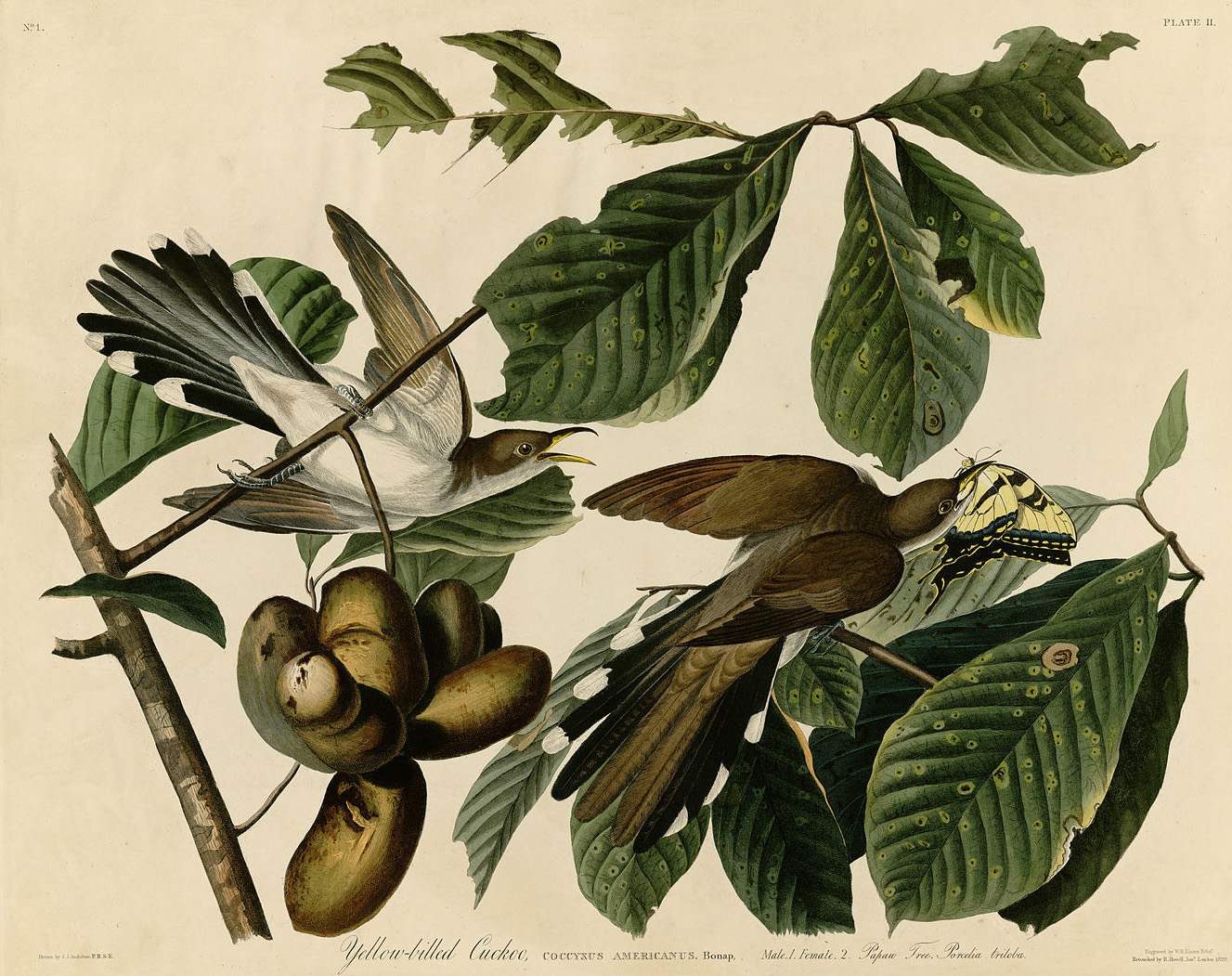
The pawpaw has a long history in America. For centuries, many indigenous tribes used the fruit for food and medicine. The word “pawpaw” is derived from early European explorers who confused the fruit with papayas. The species’ scientific name, Asimina triloba, is derived from an Algonquin word for pawpaw “assimin.” In 1541, Spanish explorer and conquistador Hernando de Soto noted seeing indigenous people of the Mississippi Valley eat pawpaw. George Washington and Thomas Jefferson both grew and ate pawpaw. Pawpaw was also eaten during the Lewis and Clark Expedition. Painter John James Audubon even included the fruit in a painting of yellow-billed cuckoos. There’s even a folk song about the fruit titled “Way Down Yonder in the Pawpaw Patch.” Since 1998, the Ohio Pawpaw Growers’ Association has annually sponsored the Ohio Pawpaw Festival near Albany, OH. Despite its presence in American culture, why isn’t the pawpaw talked about regularly?
Unlike apples, pawpaw fruits are not sold commercially due to their short shelf life. However, in recent years, interest in pawpaw cultivation has become popular among scientists and organic farmers, suggesting the fruit might one day become popular. Only time will tell.

via Sean Bradley
 The La Salle Collegian