

Cole Welsh, Staff
Following a string of primary election victories, Donald Trump and Joe Biden have each secured the nominations for their individual parties, meaning both candidates are poised for a general election rematch.
Last Tuesday, Trump and Biden won their parties’ presidential primaries in Georgia, Mississippi and Washington, with Trump also winning the Republican caucuses in Hawaii.
This shorter series of elections comes a week after Super Tuesday, when both candidates dominated with victories across the country.
With the exception of Vermont, Trump won all of the night’s GOP contests, with his strongest performances coming from Alabama and California. Following her disappointing Super Tuesday performance that only resulted in a narrow victory in Vermont, Trump’s last remaining challenger, former United Nations Ambassador Nikki Haley, dropped out of the race.
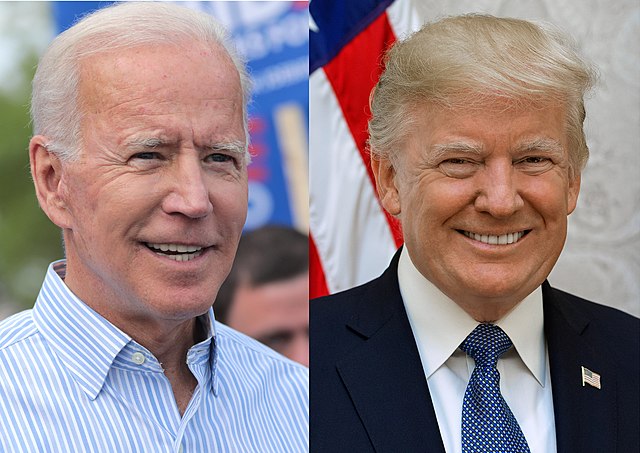
With a few exceptions, Biden similarly dominated in the Democratic election contests of the night. However, the incumbent lost his party’s caucuses in American Samoa, which were won by little-known challenger Jason Palmer. In a similar fashion to Haley, Biden’s main challenger, U.S. Congressman Dean Phillips, suspended his presidential campaign.
Despite the rematch that some believe will mirror the 2020 presidential election, both candidates face potential and unique challenges in their respective campaigns.
For Trump, there remains a great deal of uncertainty regarding his various criminal trials. However, there does appear to be a bright spot for Trump emerging, as a Georgia judge overseeing his election interference case recently dismissed some of the charges against him and compelled the special prosecutor overseeing his case to resign. In another victory for Trump, his hush money trial in New York City was recently delayed to at least mid-April.
For Biden, much of his challenges stem from his low approval ratings, which have persisted for months. Additionally, some fear that his age and mental condition may deter voters from backing the incumbent in the November election.
Biden faces a series of domestic and international issues. At home, Biden will need to convince voters that he is the best candidate to tackle the rises in crime, illegal immigration and inflation, which have all occurred under his presidency. Abroad, Biden will have to deal with both the Russia-Ukraine War and the Israel-Hamas War.
The conflict between Israel and Hamas is proving to be particularly problematic for Biden, as there is a growing movement for Muslim and progressive voters to vote “uncommitted” in Democratic primaries and caucuses over Biden’s perceived support for Israel. For example, in Michigan, a vital swing state, over 100,000 Michiganders (13.2%) voted “uncommitted” in the state’s Democratic primary election. Similarly, on Super Tuesday, Biden only earned 70.7% of the vote in Minnesota, with a significant share of the state’s Muslim and progressive voters selecting “uncommitted” at the ballot box.
Regardless, as polling still predicts a close race in some swing states, it remains to be seen how the general election will play out. With the election further complicated by Robert F. Kennedy Jr.’s independent presidential campaign, one can only speculate as to who will occupy the White House come January 20, 2025.
 The La Salle Collegian